
ADU Builders in Louisiana: What to Know Before You Build
Backyard spaces hold untapped potential when you need extra room for aging parents, college graduates returning home, or a quiet office away from household noise. What is an accessory dwelling unit? It’s a self-contained living space located on the same property as a primary single-family home, featuring its own kitchen, bathroom, and entrance. Building one in the Pelican State provides flexible living arrangements while generating steady rental income. Qualified ADU builders in Louisiana turn these backyard visions into functional, comfortable reality.
Why Property Owners Choose ADU Builders in Louisiana
Louisiana property owners are turning unused backyard space, detached garages, and oversized lots into practical secondary homes. In New Orleans, Baton Rouge, and Lafayette, backyard cottages and garage conversions can support family needs while adding flexibility and potential income to a residential property.
Working with experienced ADU builders in Louisiana helps owners address design, drainage, utilities, permits, and local construction requirements before work begins. A well-planned unit should feel like a natural part of the property, not an afterthought placed behind the main house.
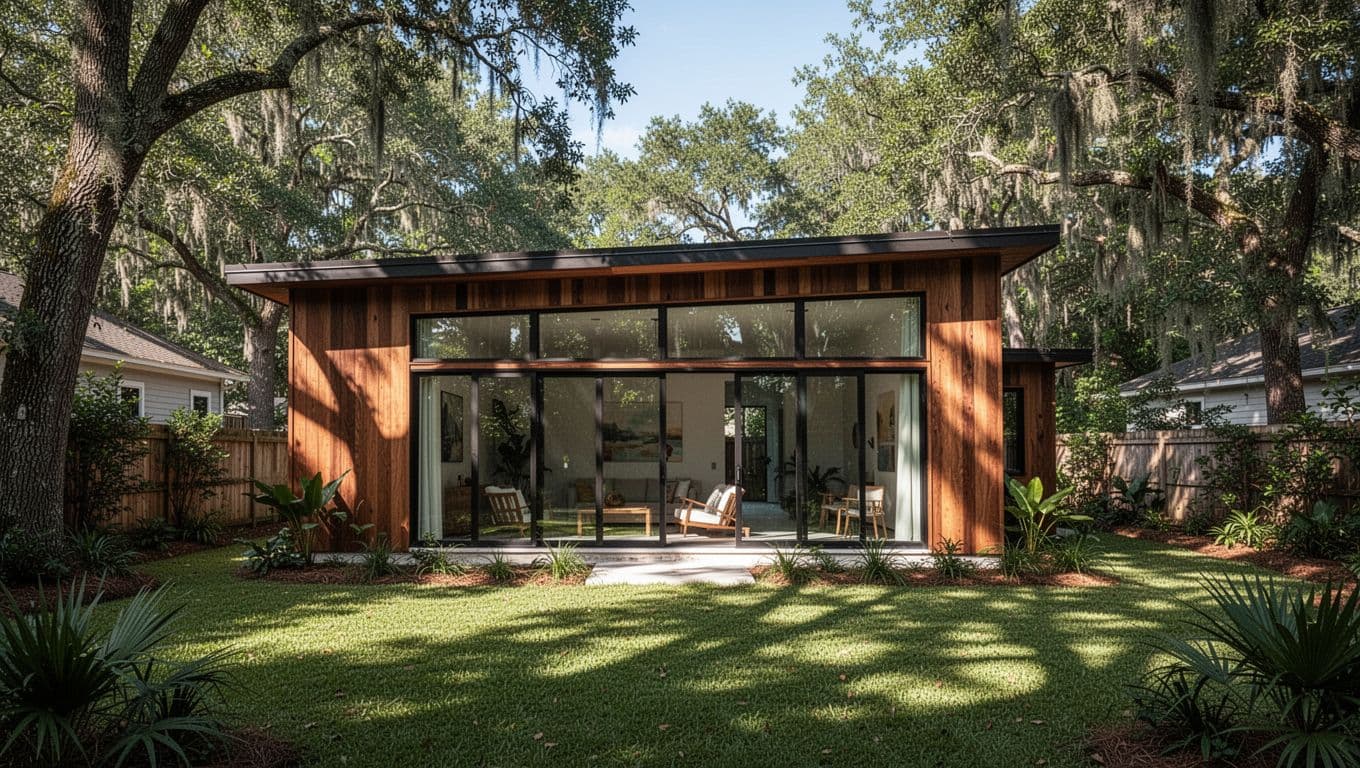
Creating Comfortable Spaces for Aging Parents
A detached or attached granny flat gives aging parents a nearby home without taking away their independence. They can enjoy a private bedroom, bathroom, kitchen, and entrance while remaining close enough for regular meals, appointments, and family support.
That balance matters. Your relative may want help within reach, but they may also want a quiet place to maintain familiar routines. A backyard home creates a comfortable middle ground between completely separate housing and sharing every room in the primary residence.
Attached ADUs can work well when a property has limited yard space or when the owner wants direct access from the main house. Detached cottages offer more separation and often provide better privacy for everyone. In either layout, builders can include features that make daily movement easier, such as:
- A step-free entry from a driveway or walkway
- Wider interior doors and hallways
- A walk-in shower with a low threshold
- Lever-style handles and easy-to-reach controls
- Bright, even lighting near entrances and bathrooms
Louisiana’s heat, humidity, heavy rain, and storm exposure also affect the design. Proper insulation, moisture control, reliable drainage, and durable exterior materials help keep the space comfortable throughout the year. A builder familiar with local conditions can coordinate those details with the floor plan instead of treating them as last-minute additions.
A successful in-law suite protects privacy while keeping support close enough to feel natural.
Garage conversions offer another path for families. An existing structure may already provide a roof, walls, and utility access, but it still needs careful inspection. The slab, ceiling height, insulation, ventilation, electrical system, and plumbing must meet the requirements for habitable space. A professional assessment can reveal whether conversion makes financial sense before you commit to the project.
Earning Extra Income Through Short-Term or Long-Term Rentals
A backyard ADU can also help a property earn its keep. Owners may rent the unit to a long-term tenant, visiting professional, student, or traveling nurse. Others choose short-term rentals when local rules allow them and when they can manage cleaning, guest communication, and maintenance.
Rental income may help offset mortgage payments, property taxes, insurance, or the cost of construction. The amount depends on the unit’s size, finishes, parking, location, privacy, and local demand. A well-designed one-bedroom cottage near employment centers, universities, hospitals, or tourist areas may appeal to a wider tenant pool than a poorly planned unit with limited access.
However, income projections should come after a zoning and permitting review. New Orleans regulates ADUs through its Comprehensive Zoning Ordinance, while rules can differ across Baton Rouge, Lafayette, and nearby parishes. Review local requirements for setbacks, height, lot coverage, parking, owner occupancy, licensing, and short-term rental limits. The Louisiana ADU regulations guide offers a starting point, but your local planning department remains the best source for property-specific answers.
Before hiring a builder, calculate more than expected rent. Include construction financing, utilities, furnishing, insurance changes, repairs, vacancy, cleaning, and management costs. Long-term leasing usually provides steadier income with less hands-on work. Short-term renting can produce higher gross revenue in some areas, but it requires more active management and may face tighter restrictions.
ADU builders can also plan separate entrances, sound control, compact laundry areas, durable flooring, and dedicated utility systems. Those details improve the tenant experience and make the unit easier to maintain. When the design serves both your property and its future occupants, a small backyard home can become a useful part of your long-term housing and financial plan.
Navigating Local Zoning Laws and Building Permits
Building a backyard secondary dwelling involves more than framing walls and pouring concrete. Local municipalities enforce strict rules regarding property lines, square footage, and structural heights. ADU builders in Louisiana must navigate these hurdles before any construction begins. Property owners often discover that what works on one side of a parish line fails to pass inspection across the street.
Understanding Parish Specific Rules and Setbacks
Every parish in Louisiana sets its own boundaries for secondary structures. Setbacks dictate how close a new building can sit to property lines, fences, and the primary residence. Violating these rules results in costly fines or orders to tear down completed work. Therefore, checking local municipal codes before hiring a contractor protects your investment from legal trouble.
Parishes also enforce maximum square footage limits for backyard homes. Some areas restrict units to five hundred square feet, while others allow up to twelve hundred square feet or a percentage of the main house size.
- Review local zoning maps to confirm your residential classification.
- Measure existing lot coverage to ensure the new footprint complies with maximum limits.
- Contact the parish permitting office to verify current setback requirements for accessory structures.
Taking time to review these details upfront prevents delays during the plan approval stage. Municipalities also look closely at utility connections, drainage plans, and parking requirements.
Working with the Historic Districts in Historic Towns
Building a secondary dwelling inside historic districts like the New Orleans French Quarter or the Garden District requires patience and careful planning. Architectural review boards in these areas hold absolute authority over exterior designs, roof pitches, siding materials, and window placements. Every detail must respect the surrounding historic context.
Contractors must submit detailed architectural drawings to local preservation commissions before applying for standard building permits. These boards reject modern materials or vinyl siding that clashes with historic streetscapes. Wood siding, traditional paint colors, and authentic architectural details usually satisfy review boards more quickly than contemporary designs.
Historic properties also face strict rules regarding height and visibility from the public right-of-way. If a backyard cottage rises above neighboring rooflines, the commission will likely require redesigns. Working with professionals who understand local historic guidelines saves months of waiting and reduces the risk of permit denials.
How to Finding and Hire the Right Contractor for Your Project
Finding the right professional transforms a chaotic construction site into a smooth operation. Selecting qualified ADU builders in Louisiana requires patience, thorough research, and a clear understanding of what questions to ask before signing any agreements. Because building a backyard home involves significant financial investment, you must protect your project by vetting candidates carefully. Local experience matters just as much as licensing, so look for specialists who understand soil conditions, permitting offices, and regional weather patterns across the Pelican State.
Questions to Ask Before Signing a Construction Contract
Protecting your investment starts with asking the right questions before any pen touches paper. You should interview multiple candidates and demand clear answers regarding timelines, warranties, payment schedules, and sub-contractors. Knowing these details upfront prevents costly misunderstandings and keeps your project on track.
- What is the estimated start date and total duration for the build?
- Do you carry general liability insurance and workers compensation coverage?
- What warranties do you offer on structural work and workmanship?
- How do you structure payment milestones throughout the build?
- Will you hire licensed sub-contractors, and do you manage them directly?
Establish a strict payment schedule tied to completed phases of work instead of large upfront sums. A reputable professional will provide a detailed contract outlining material grades, allowance amounts, and change order procedures. Review every clause carefully before signing on the dotted line.
Spotting Red Flags During the Contractor Interview Process
Protecting your property from dishonest operators requires vigilance during the initial interview phase. Unscrupulous individuals often target homeowners by demanding large cash deposits upfront or operating without proper state licensing. If someone asks for cash payments or refuses to pull permits, walk away immediately.
Legitimate professionals hold valid residential licenses issued by the state licensing board. You can verify these credentials online through state databases to ensure no active complaints or disciplinary actions exist against the business. Watch out for contractors who knock on your door offering deals that seem too good to be true. They frequently use substandard materials, abandon projects halfway through, or surprise you with hidden fees. Request physical references from past clients in your area and visit completed job sites whenever possible. Real professionals take pride in their previous work and welcome your inspection.
Understanding Costs, Budgets, and Financing Options
Building a backyard secondary dwelling requires a clear financial plan before you break ground. Prices vary widely based on square footage, site conditions, and interior finishes. Therefore, knowing where every dollar goes helps you avoid unexpected surprises halfway through construction.
Breaking Down Material, Labor, and Permitting Expenses
Site preparation often consumes the first chunk of your budget. Clearing trees, grading uneven soil, and running utility lines from the main house demand professional labor and heavy machinery. After site prep, foundation work begins. Slab-on-grade foundations cost less, but pier-and-beam setups protect structures from shifting Louisiana clay and high water tables.
Framing, roofing, plumbing, and electrical installations form the bulk of structural expenses. Licensed contractors charge for both materials and specialized labor to meet local building codes. Permitting fees add another layer of cost depending on your municipality. For instance, urban parishes charge more for plan reviews and inspections than rural areas.
Interior finishes dictate the final price tag. Choosing hardwood floors, custom cabinetry, and quartz countertops drives up material costs quickly. Alternatively, selecting luxury vinyl plank flooring and standard fixtures keeps expenses manageable. Budgeting an extra fifteen percent for unforeseen structural issues or material price spikes protects your project from stalling out.
Exploring Home Equity Loans and Renovation Mortgages
Funding a backyard cottage doesn’t mean draining your retirement savings. Many homeowners tap into their existing property value to cover construction costs. A home equity line of credit lets you borrow against your primary residence as expenses arise. This option offers flexibility because you only pay interest on the money you actually use during the build.
Renovation mortgages provide another practical path forward. Programs like Fannie Mae HomeStyle loans roll the purchase price and construction costs into a single mortgage based on the future appraised value of the property. Construction-to-permanent loans convert into a standard mortgage once builders finish the project and inspectors issue a certificate of occupancy.
Lenders require detailed architectural drawings, contractor bids, and realistic timelines before approving these loans. Comparing interest rates across multiple credit unions and banks secures the best terms for your budget. Planning your financing strategy early ensures construction moves forward without costly delays.
Designing for the Louisiana Climate and Weather
Louisiana weather is an active force. High humidity, heavy rainfall, and intense summer heat test every building material you choose. Therefore, successful ADU builders in Louisiana prioritize climate resilience from the ground up. You cannot treat a backyard structure here like a standard build in a dry, temperate climate. Moisture management and thermal control dictate whether your investment thrives or deteriorates.
Choosing Flood-Resilient Foundations and Elevated Designs
Water dictates construction methods across the Pelican State. Heavy downpours and high water tables mean ground-level slabs often invite disaster. Instead, reliable ADU builders in Louisiana frequently rely on elevated designs such as piers and stem walls. Raising the living space above grade allows floodwaters to move underneath the structure without entering the conditioned area.
Piers provide open ventilation beneath the floor joists. This airflow prevents moisture from trapping against the subfloor, which stops mold and wood rot before they start. Stem walls offer a more enclosed perimeter, but they still require flood vents to equalize hydrostatic pressure during severe storms.
Drainage systems finish the job. Grading the soil away from the foundation stops pooling water during tropical downpours. Installing French drains around the perimeter guides heavy runoff safely away from your backyard living space.
Energy Efficient Insulation and Cooling Strategies
Scorching southern summers push air conditioning systems to their limits. Keeping indoor spaces cool without breaking the bank requires superior insulation and strategic climate control planning. Spray foam insulation creates a tight thermal envelope in both walls and roof decks. This material blocks radiant heat and stops humid outdoor air from condensing inside your wall cavities.
HVAC setup matters just as much as insulation. Mini-split heat pumps work exceptionally well for compact backyard cottages. These ductless systems let occupants control temperatures room by room, which prevents energy waste in unused spaces.
Exterior choices also influence indoor comfort. Metal roofs reflect solar radiation far better than traditional asphalt shingles. Installing deep overhangs and operable windows on opposing walls captures natural breezes during milder spring and autumn days. When you combine these tactics, your backyard home stays comfortable through the stickiest August afternoons while keeping your monthly utility bills low.
Conclusion
Backyard cottages and garage conversions turn unused property into comfortable living spaces and dependable income streams. ADU builders in Louisiana help owners navigate local zoning laws, historical district guidelines, and regional climate demands like high humidity and flood risks.
Begin your project by researching municipal codes and talking to qualified professionals who know the area. Thoughtful planning today creates a functional backyard retreat that serves your household for years.