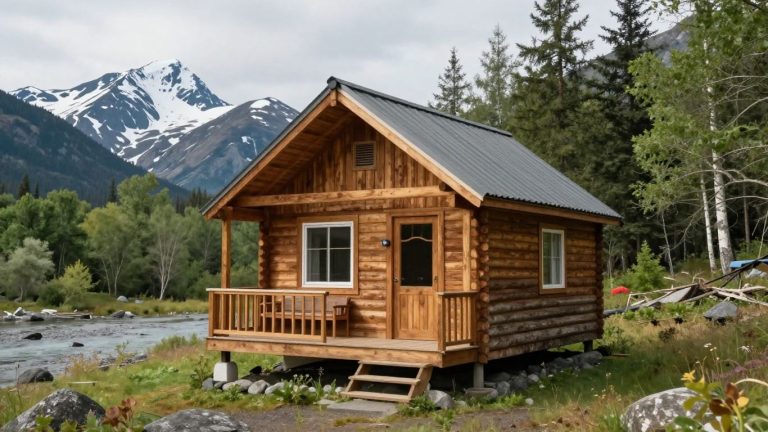
Buying Land for a Tiny Home: Expert Tips for Your 2026 Dream

For so many people, the real goal of tiny living isn't just a smaller house—it's genuine freedom. Buying your own plot of land is what truly makes that possible. It’s the move that gets you out from under endless lot rent, frees you from someone else’s restrictive rules, and lets you start building real equity.
Why Owning Land Unlocks the Tiny Home Dream

Let's be honest: the tiny house dream is about living a bigger life, not just a smaller one. Owning the ground your home rests on is the real foundation for that vision. It marks the shift from being a renter, subject to someone else's whims, to being the creator of your own homestead.
Instead of navigating a park owner's long list of regulations or paying monthly fees for a patch of grass you'll never own, you get to call all the shots.
The Smart Money Is on Land
In a housing market where affordability feels like a thing of the past, buying land for a tiny home has become an incredibly practical financial strategy. It's no surprise the global tiny homes market hit $21.9 billion in 2024 and is on track to reach $29.9 billion by 2033. A huge driver of this growth is the search for affordable land away from expensive city centers.
Consider the numbers. In some parts of the U.S., you can find rural land for as little as $5,000 to $15,000 an acre. Compare that to suburban lots that can easily command $50,000 to $200,000, and you can see the opportunity. You can dive deeper into tiny home financial insights to see how these cost differences are shaping the entire movement.
That massive cost savings frees up your money for what really matters—site improvements, a better-quality build, or just a healthier savings account.
Owning your land isn't just a purchase; it's a declaration of independence. It's the moment you stop asking for permission and start building your life on your own terms.
Taking Back Control
Beyond the numbers, owning your land gives you something priceless: autonomy. It's the ultimate break from landlords and the frustrating limits that come with living on property you don't own.
- Ditch the Lot Rent: Why keep paying for space you'll never own? Every dollar you put toward your land builds your own equity, not a park owner's.
- Your Rules, Your Way: You get to decide everything. Want a big garden? A workshop out back? A brightly painted front door? The property is your canvas.
- Real Stability and Peace of Mind: You'll never get a notice that the park is being sold or that the rent is doubling overnight. This is your permanent place to put down roots.
The rise of remote work has made this more achievable than ever. You’re no longer tied to a physical office in a crowded, expensive city. That quiet, tree-lined acre you've been dreaming of is now a real, tangible possibility. This guide is designed to give you the exact steps to find it and make it yours.
How to Find the Perfect Plot for Your Tiny Home

Finding the right piece of land can feel like the hardest part of the tiny home journey. It's easy to get overwhelmed, but with the right approach, you can cut through the noise and find a spot that’s truly yours. Forget generic advice—let's get into the real playbook that seasoned land buyers use to uncover those hidden gems.
The search almost always starts online, but it takes more than a simple "land for sale" search to get results. Learning to master the filters on marketplaces like Zillow, LandWatch, and Land.com is your first big step.
Instead of just browsing, get surgical with your search terms. I always tell people to start with keywords like "no restrictions," "unrestricted," or "no covenants." This one tweak can eliminate 90% of the properties that have strict HOAs or minimum square footage requirements that would immediately rule out a tiny home.
Mastering Online Land Marketplaces
To find what you're really looking for, you have to think like a pro. Go ahead and set up alerts for your target counties with your specific criteria. This puts your search on autopilot and gives you a head start the moment a promising new listing goes live.
Here are a few filtering strategies I've seen work time and again:
- Play with the Price Filter: Of course, you’ll set a realistic budget for the land itself. But don't just look at the top of your range. Filter for properties well below your max. Cheaper land might need more site work, but it’s often found in less-regulated areas where you’ll have more freedom.
- Narrow Down the Acreage: In my experience, the sweet spot is often between one and five acres. This is usually enough land to give you privacy and satisfy local zoning, all without the sticker shock and heavy upkeep of a larger tract.
- Think Outside the Box with Keywords: Beyond "unrestricted," try searching for terms like "RV friendly," "mobile home allowed," or even "camping allowed." These phrases are often code for a more relaxed local attitude toward land use.
These tactics aren't just about saving time; they're about improving your odds. It's a numbers game, but a smart filtering strategy is how you stack the deck in your favor.
And you're not alone in this search. Land ownership has become the bedrock of the tiny home dream, with a staggering 70% of alternative housing owners now securing their own plots to escape the hassles of renting. This is happening as the tiny homes market is projected to grow from $13.17 billion in 2025 to $14 billion in 2026, driven by people just like you who want a compact, affordable, and often off-grid setup. You can dig into the numbers and what they mean for buyers in this comprehensive tiny homes market report.
Raw Land vs. Developed Plots
As you start digging in, you'll see two main categories of land: raw and developed. It's easy to be tempted by a "developed" plot that already has utility hookups for water, sewer, and electricity. But be warned—that convenience almost always comes with a higher price and, often, more building restrictions.
Raw or undeveloped land, on the other hand, is a complete blank slate. It’s typically much cheaper upfront but puts the responsibility on you to invest in a well, septic system, and power connection. For many tiny dwellers, this is actually the preferred route because it offers maximum flexibility to design your homestead exactly how you want it.
Before you get too excited about a raw land listing, take a moment to compare the long-term implications of each option.
Land Type Comparison Raw vs. Developed
| Feature | Raw/Undeveloped Land | Developed Land (Utilities Ready) |
|---|---|---|
| Upfront Cost | Lower | Higher |
| Development Cost | High (septic, well, power can be $20k+) | Low to none |
| Flexibility | High (you choose placement and systems) | Lower (often tied to existing infrastructure) |
| Timeline | Slower (requires extensive site prep) | Faster (ready for building sooner) |
| Restrictions | Often fewer (especially in rural areas) | Potentially more (HOAs, existing covenants) |
Ultimately, choosing between raw and developed land comes down to your budget, timeline, and how much hands-on involvement you're ready for.
Pro Tip: Found a promising piece of raw land? Your first call shouldn't be to the listing agent. Call the local county planning and zoning department. Ask them directly about restrictions, minimum dwelling sizes, and requirements for septic and water. This call can save you weeks of wasted effort.
Looking Beyond the Listings
Real estate agents can be a fantastic asset, but only if you find one who gets it. Many residential agents have never handled a raw land deal and won't understand the unique challenges a tiny home buyer faces. I always recommend finding an agent who specializes in land, farms, or rural properties—they speak the language and know the local landscape.
Finally, don't limit yourself to what's officially on the market. Some of the absolute best properties are found "off-market." This means getting in your car, driving through areas you love, and looking for those classic "For Sale By Owner" signs. Sometimes, it even means respectfully approaching a landowner whose property looks like a perfect fit. You'd be surprised how often a polite letter or a friendly knock on the door can open a conversation that leads to your dream plot.
Alright, let's tackle the part of the journey that trips up more tiny home dreams than any other: navigating the maze of zoning laws and building permits.
This is, without a doubt, where the rubber meets the road. Getting this wrong is the most expensive mistake you can make, potentially leaving you with land you can't legally live on. The problem is simple: most local laws were written decades ago for traditional houses, and tiny homes just weren't on the radar. While some forward-thinking places are catching up, you’ll likely find yourself trying to fit a square peg into a round hole. Your job is to find the right-shaped hole from the very beginning.
To do that, you have to learn the language. Officials in planning departments have a specific vocabulary, and knowing the difference between an ADU and a THOW can mean the difference between a quick approval and a dead end.
Decoding the Local Rulebook
Before you fall in love with a piece of land, you need to put on your detective hat and dig into the local regulations. Your first stop should always be the county or city's Planning and Zoning department website. You’re looking for official documents with titles like "Zoning Ordinance" or "Land Use Code."
Yes, they're dense. And yes, they're boring. But buried inside that legal jargon are the answers you need. Specifically, you're hunting for:
- Minimum Dwelling Size: This is the most common showstopper. If a zone requires a primary home to be at least 800 square feet, your 400-square-foot dream is dead on arrival. You have to find this number.
- Accessory Dwelling Unit (ADU) Rules: In many communities, this is your golden ticket. If a lot already has a primary home, the rules for building a second, smaller home (an ADU) are often much more flexible on size.
- Camping and RV Ordinances: For anyone with a tiny home on wheels (THOW), this section is critical. Many towns have rules limiting how long an RV can be occupied on a property, sometimes as little as 30-90 days per year. This makes full-time living impossible.
Once you have a handle on these terms, you can start to see how your specific tiny home might fit into the local picture.
I can't stress this enough: Never assume. Don't assume the real estate agent knows the tiny home regulations—they often don't. Don't assume that just because you see another tiny home down the road, your project will be approved. Get every single answer and permission in writing, directly from the planning officials.
Wheels or No Wheels? Why It Changes Everything
The single biggest question a planning department will ask is, "Is it on a foundation or on wheels?" The answer sends you down two completely different legal paths.
Tiny Homes on a Foundation (THOF)
Think of a THOF as a very small traditional house. Because it's a permanent structure, it’s expected to meet the same standards.
- It has to comply with all state and local building codes for things like wiring, plumbing, and structural safety.
- It's subject to all zoning rules for that parcel, including minimum size requirements and setbacks (how far you must build from the property line).
- You will be required to install permanent utility connections to water, power, and a sewer or septic system.
Tiny Homes on Wheels (THOW)
Here’s where things get complicated. Legally, most places don't see a THOW as a house at all; they see it as a Recreational Vehicle (RV).
- RVIA Certification is often a prerequisite. Many areas will only permit THOWs that have been certified by the RV Industry Association, which proves they meet basic vehicle safety standards.
- The core conflict is parking vs. living. You can often park an RV on land you own, but local ordinances frequently make it illegal to live in it full-time.
- It must remain road-ready. That means the wheels, tires, and hitch generally have to stay on. If you take them off, some jurisdictions will reclassify it as an illegal permanent structure.
Thankfully, the landscape is slowly changing. Progressive cities like Fresno, California, have created specific ordinances to welcome movable tiny homes as legitimate full-time residences. On the other end of the spectrum, some rural counties have virtually no rules, which can be a blessing or a curse depending on your tolerance for ambiguity. For a closer look at what’s happening in your area, our guide on state-by-state tiny house zoning laws can provide more detailed insights.
Your most powerful tool in this process is a well-researched phone call. When you contact the planning department, don't just ask, "Can I have a tiny home?" You'll get a vague or negative answer.
Instead, be specific: "Hello, I am looking at parcel number [parcel ID] in the [zone name] zone. Could you please tell me the minimum square footage requirement for a primary dwelling in that zone? Also, could you point me to your ordinances regarding Accessory Dwelling Units?"
Specific questions get specific, actionable answers. And that’s what you need to confidently take the next step.
How to Finance Your Land and Tiny Home
Let's be blunt: walking into a major national bank and asking for a single mortgage to cover both a plot of land and a tiny house is usually a recipe for frustration. Their systems are built for traditional homes, and anything outside that box—especially a house on wheels—often gets a quick "no."
But don't get discouraged. This isn't a dead end; it just means you need a different playbook. The trick is to stop thinking about one big loan and start thinking about two separate, more achievable financing goals: one for the land, and one for the home.
Start with Local Lenders for Land Loans
When it comes to financing the land itself, your best allies are almost always local credit unions and regional banks. I’ve seen this time and time again. Unlike the big players, these institutions have a real stake in the local community and actually understand the market for smaller, undeveloped parcels. They're just more flexible.
When you talk to them about a raw land loan, they'll be looking for a few things that are different from a standard home loan:
- A Higher Down Payment: Raw land is seen as a riskier bet for lenders. Be ready to put down more skin in the game, typically 20% to 35%, though I've seen it go as high as 50% for certain properties.
- A Solid Credit Score: You’ll need to show you’re a reliable borrower. A credit score of 680 or higher is usually the minimum to get a decent interest rate.
- A Clear Plan: They want to know you've done your homework. Walk in with your research on zoning, a basic site plan, and some realistic cost estimates for getting utilities to the property. This shows them you're serious.
Financing the Tiny Home Itself
Once the land is sorted, you can focus on paying for the actual structure. How you approach this really depends on whether your tiny home is on a permanent foundation or on wheels (a THOW).
A common mistake I see people make is trying to wrap the land and a THOW into a single loan package. Lenders view these as fundamentally different assets. The land is real estate; the THOW is personal property, like a vehicle. You'll have much more success by pursuing separate financing for each.
If your tiny home is certified as an RV (look for the RVIA standards seal), an RV loan is a fantastic route. These are literally designed for movable dwellings and often have better interest rates and longer repayment terms than you’d get with a personal loan.
For any type of tiny home, a personal loan is another go-to option. Lenders like LightStream and SoFi have become popular because their unsecured loans are fast and flexible. While the interest rates can be higher, you can often get funded in a matter of days. We cover this in much more detail in our guide on financing a tiny house on wheels.
Creative and Alternative Funding Strategies
Sometimes, the best financing solution doesn’t come from a bank at all. If the traditional paths aren't working out, it’s time to get creative.
Seller Financing: This can be a game-changer. You essentially make a deal where the landowner acts as your lender. You give them a down payment and then send them monthly payments. It’s perfect if your credit isn't stellar, because you and the seller set the terms yourselves.
HELOC or Home Equity Loan: Already a homeowner? You might be sitting on your funding solution. A Home Equity Line of Credit (HELOC) works like a credit card backed by your home's equity, making it ideal for covering site prep and building costs as they pop up.
Family and Friends: Don’t underestimate the power of your personal network. Pooling money with family or friends to buy the land with cash can help you avoid lenders, interest, and fees altogether. Just make sure you get a formal legal agreement drawn up. It keeps everything clear and protects your relationships.
From Raw Land to Homesite: Your Prep Checklist
You’ve done it. You navigated the listings, decoded the zoning laws, and the closing papers are signed. Congratulations—the land is officially yours! Now, the real adventure begins: turning that raw piece of earth into a proper homesite. This is where your tiny home dream gets its hands dirty, moving from paperwork to groundwork.
Getting this part right is all about sequence. I've seen folks get excited and jump the gun, only to face expensive rework later. Before you can even think about where to place your home, you need to establish your boundaries, clear a space, and—most importantly—figure out how you’ll get water, power, and waste disposal sorted.
First Moves on Your New Property
Before you do anything else—and I mean anything—get a formal land survey. Even if a recent one was provided during the sale, getting your own is non-negotiable. It definitively marks your property lines, prevents any future headaches with neighbors, and is almost always required before you can get permits for a well, septic system, or foundation.
Think of the survey as the official blueprint for everything that comes next.
Once the corners are staked, you can finally pinpoint the perfect spot for your homesite. You'll likely be working with a professional excavator or land clearer to create a few key things:
- A clear, level building pad: This is the specific spot your tiny home will occupy.
- An access driveway: This isn't just a path; it has to be stable enough for heavy vehicles like the truck delivering your home, a concrete mixer, or a well-drilling rig.
- Utility corridors: You’ll also need clear paths for trenching power lines or water pipes.
The building pad itself depends entirely on your type of tiny home. A tiny home on wheels (THOW) might just need a compacted gravel pad, which is a relatively straightforward and affordable job. A tiny home on a foundation (THOF), on the other hand, demands much more extensive excavation for footers or a full concrete slab. It’s a completely different ballgame in terms of complexity and cost.
Expert Takeaway: I've seen too many new landowners get blindsided by the cost of site work. A beautiful, steep, or heavily wooded lot might look perfect, but clearing trees, grading a significant slope, and building a long driveway can easily tack on $15,000 to $30,000 (or more) to your budget before you’ve even touched utilities.
Tackling the Big Three: Water, Waste, and Power
For most people buying raw land, you won't be simply hooking up to city services. You're effectively building your own small-scale infrastructure for water, waste, and power. This is almost always the most expensive—and most critical—phase of preparing your land.
Water: The Well is Your Lifeline
Unless you get lucky and have access to a municipal water line, you're going to need to drill a well. The process involves hiring a licensed driller to find a viable underground water source on your property. They charge by the foot, and honestly, there's no way to know how deep they'll have to go.
A shallow well might hit water at just 100 feet, while I've seen others that had to push down 400 feet or more. This massive variability makes it one of the toughest items to budget for accurately. All in, a complete well system—including the drilling, pump, pressure tank, and running a line to your homesite—will likely run you somewhere between $8,000 and $20,000.
Waste: Installing a Modern Septic System
For wastewater, a septic system is the standard solution. This involves burying a large tank and creating a leach field to safely process your household waste. Before you can even apply for a permit, the county health department will require a percolation test (or "perc test") to make sure your soil can properly absorb water.
If your soil fails the perc test, it's not a deal-breaker, but it does mean you'll need a more complex (and expensive) "engineered" system. This can easily double the cost. For a small home, a standard, gravity-fed septic system typically costs between $10,000 and $25,000.
Power: Grid-Tied vs. Off-Grid Freedom
Finally, you need electricity. Here, you have two primary paths: connecting to the public grid or generating your own power with a solar system.
- Grid Connection: If a utility pole is already at your property line, the connection cost might be manageable—often a few thousand dollars. But if the utility company has to run new poles and lines a quarter-mile down your new driveway, that cost can explode to $25,000 or more.
- Off-Grid Solar: The alternative is energy independence. A professionally installed solar system robust enough to power a tiny home year-round (including batteries and an inverter) can range from $15,000 to $40,000. The upfront cost is significant, but the reward is having no monthly electric bill. If this path interests you, take a look at our guide on off-grid tiny home plans for some great ideas and practical advice.
Speaking of financing these big-ticket items, it all starts with securing the land itself. The image below shows a few common ways people finance their land purchase before even beginning the site prep we've just discussed.

As you can see, options like personal loans, specialized land loans, or even seller financing are common tools used to acquire the property. Once the deed is in your name, you can then move on to budgeting for the development costs.
To give you a clearer picture, here is a breakdown of what you might expect to spend on site preparation.
Estimated Site Preparation Costs
This table outlines the major expenses you'll encounter when turning raw land into a build-ready site. Remember, these are estimates—your actual costs will depend on your location, terrain, and the specific requirements of your lot.
| Task | Typical Cost Range | Key Considerations |
|---|---|---|
| Land Survey | $500 – $2,000 | Essential for defining legal boundaries and a prerequisite for most permits. |
| Land Clearing & Grading | $3,000 – $15,000+ | Heavily wooded or sloped lots will be on the higher end of this range. |
| Driveway Installation | $5 – $15 per sq. ft. | Cost varies by material (gravel is cheapest) and length. Must support heavy trucks. |
| Well Drilling | $8,000 – $20,000 | Price is highly variable based on depth required to hit a reliable water source. |
| Septic System | $10,000 – $25,000 | A failed perc test can require an engineered system, potentially doubling the cost. |
| Grid Power Connection | $3,000 – $25,000+ | Depends entirely on the distance from the nearest utility pole. |
| Off-Grid Solar System | $15,000 – $40,000 | A large upfront investment that eliminates future electricity bills. |
These numbers can seem daunting, but planning for them from the start is the key to a successful project. By budgeting for site prep just as you budget for the land itself, you'll avoid surprises and keep your tiny home dream on solid financial ground.
Your Top Land-Buying Questions, Answered
As you start seriously looking at properties, a whole new set of questions inevitably starts to crop up. These are the nitty-gritty concerns that can feel like major hurdles. We’ve been there. Here are the most common questions we hear from aspiring landowners, along with the straight-up answers you need.
Can I Actually Live in a Tiny Home on My Own Land?
Yes, but with a huge asterisk. This is, without a doubt, the single most important question you’ll need to answer, and the answer is hyper-local. It all comes down to the zoning and building codes in the specific county or municipality you're looking at.
Some progressive areas have rolled out the welcome mat for tiny homes, often by defining them as Accessory Dwelling Units (ADUs). Others, however, are stuck with old rules that enforce minimum square footage requirements, making a tiny home a non-starter.
If your tiny is on wheels (a THOW), you’re entering a different legal world. It's often classified as an RV, which means you could be facing limits on how long you can live in it—sometimes just 30 days at a time. Before you let yourself fall in love with a piece of land, your very first call must be to the local planning and zoning office. Get their answer in writing.
What's the Cheapest State for Tiny Home Land?
You’ll often see states like Arkansas, Tennessee, and West Virginia mentioned for having incredibly affordable raw land, with some lots advertised for under $5,000 per acre. But the sticker price is just the beginning of the story.
"Cheap" land can quickly become one of your most expensive mistakes. A $5,000 acre that needs a $15,000 driveway, a $20,000 septic system, and a $25,000 grid connection is no longer cheap. Worse, a cheap parcel where you can't legally live is worthless.
Your focus should always be on the total cost to make the land livable, not just the purchase price. A slightly more expensive plot with easy utility access and friendly zoning is almost always the smarter financial move in the long run.
How Much Should I Budget for Utilities on Raw Land?
This is where costs can really spiral, as they depend entirely on your location and the land’s topography. If you're looking at an undeveloped rural parcel, you need to be prepared for some big numbers.
Here's a rough breakdown of what you might face:
- Drilling a well: Plan for $5,000 to $15,000, though this can go higher if you need to drill especially deep to hit a good water source.
- Installing a septic system: A standard system typically runs between $8,000 and $20,000. If your soil doesn't pass a percolation ("perc") test, you'll need a more complex engineered system, which can double the cost.
- Connecting to electricity: If there’s a utility pole right at the edge of your property, you might get away with a few thousand dollars. But if the power company has to run new lines and poles a quarter-mile down a private road, you could easily be looking at a bill north of $25,000.
Don't guess. Get firm quotes from local contractors before you close on the land.
Is a Tiny Home Community a Better Choice?
This really boils down to what you value more: convenience or complete freedom.
Opting for a spot in a tiny home community is the path of least resistance. The zoning is already sorted out, and the utility hookups are typically installed and ready to go. It takes a massive amount of stress and guesswork out of the equation.
The trade-off? You’ll have HOA fees, rules to live by (governing everything from pets to paint colors), and you’ll be living closer to your neighbors. Buying your own private land gives you total autonomy, but it also puts every bit of the responsibility for permits, site prep, and legal compliance squarely on your shoulders. Neither option is universally "better"—it all depends on your budget, personality, and the lifestyle you’re trying to build.
Explore more tiny home living, design, downsizing, building, and lifestyle resources.