
Manufactured Homes in Montana Review
Wide-open land, mountain towns, and long winter nights make Montana living appealing, but rising housing costs can put a traditional home out of reach. For many buyers, manufactured homes in Montana offer a more reachable path to ownership, with flexible layouts and pricing that may fit a broader range of budgets.
The purchase involves more than choosing a floor plan. You’ll need to compare manufactured and modular homes, decide whether to buy land or place the home in a community, evaluate site preparation and utility costs, and check local zoning and building rules. Financing can also vary based on whether you own the land, while delivery, foundation work, permits, taxes, and ongoing expenses can change the total cost.
This guide walks you through the key costs, land decisions, local requirements, financing choices, and buying steps so you can plan your Montana home purchase with fewer surprises.
Key Takeaways
- Manufactured homes in Montana can cost less than traditional houses, but delivery, foundation work, utilities, permits, taxes, and site preparation affect your final budget.
- Buying land gives you more control, while a manufactured-home community may reduce upfront site costs and maintenance responsibilities.
- Confirm zoning, county permits, access, septic, water, snow loads, and foundation requirements before purchasing a home or parcel.
- Financing terms often improve when the home and land qualify as real property; compare lenders before signing a sales contract.
- Review land-buying guidance for manufactured homes before choosing your Montana location.
Manufactured Homes in Montana: What Buyers Should Know
Manufactured homes in Montana can offer a practical path to ownership, but the label on a listing does not tell you everything. Construction standards, foundation type, site work, utility connections, and local approvals all affect the home’s cost and long-term value.
Manufactured, Modular, and Mobile Homes Are Not the Same
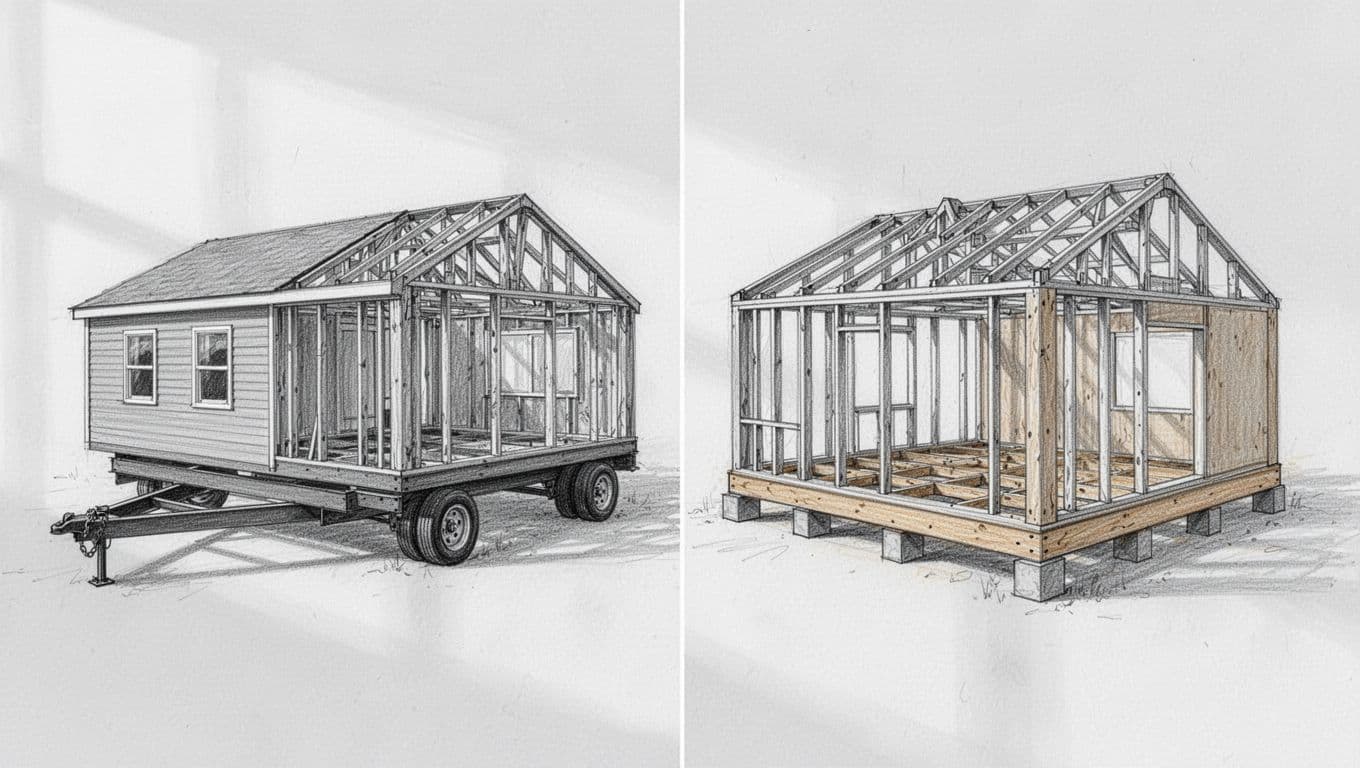
These terms are often used interchangeably, yet they describe different types of housing. The distinction can affect your loan, insurance policy, resale options, and which approvals you need before installation.
| Home type | How it is built | What buyers should know |
|---|---|---|
| Manufactured home | Built in a factory under the federal HUD Code | Usually constructed on a permanent steel chassis and transported to the site in one or more sections |
| Modular home | Built in a factory under applicable state and local residential codes | Often placed on a permanent foundation and treated more like a site-built house |
| Mobile home | Usually refers to a factory-built home made before the HUD standards took effect in 1976 | Age, condition, title status, and available financing can create additional concerns |
| Site-built house | Constructed at the property under local building regulations | Built on the lot, with construction schedules and costs tied to local labor and materials |
Modern manufactured homes must meet the HUD manufactured housing standards, which cover areas such as structural strength, fire safety, transportability, and durability. However, HUD rules don’t replace every local requirement. Montana counties and municipalities may regulate the foundation, grading, septic system, water connection, driveway, decks, garages, and other improvements.
A manufactured home may qualify for better financing when you own the land and permanently attach the home to an approved foundation. If you lease a lot in a community, the home may be financed as personal property instead. That structure can mean different interest rates, loan terms, insurance requirements, and resale procedures.
A model described as “manufactured” tells you how the home was built. It doesn’t confirm that your Montana building site is ready for installation.
Modular homes may follow a different approval path because they generally meet state and local residential codes. Their foundation and framing can also resemble a site-built house, which may help with appraisal or resale in some markets. Still, lenders and insurers review each property individually, so ask for written requirements before choosing a home type.
Which Home Styles Fit Montana Living?
Single-wide homes usually offer a narrower footprint and simpler transportation. They can work well on smaller lots, but the floor plan may provide less room for family living, storage, or a separate laundry area.
Double-wide and other multi-section homes create wider living areas, larger kitchens, and more open layouts. Modular-style designs may offer additional rooflines, bedrooms, porches, or garage options. None is automatically the best choice. Your budget, household, property, and access route should guide the decision.
Montana’s climate makes practical features more important than a model name. Compare homes with:
- A mudroom for wet boots, coats, and snow-covered gear.
- Closets or storage areas for winter equipment.
- Efficient heating, solid insulation, and well-sealed doors and windows.
- A porch or attached garage designed around snow removal and daily access.
Before ordering a large or complex home, inspect the final building site and delivery route. Narrow rural roads, sharp turns, low bridges, steep grades, overhead wires, and soft ground can affect transport and installation. A design that looks ideal on paper may become expensive if crews need road improvements or special equipment.
Quality also varies by builder, selected options, installation work, and maintenance. Judge the complete package, including the home, foundation, delivery, setup, utilities, and site improvements, rather than relying on the floor plan name alone.
What a Montana Manufactured Home Really Costs
The advertised home price is only one part of the budget. Your total cost depends on the home, the land, and the work required to make that land ready for occupancy. A home in an established community may need fewer site improvements than one delivered to a remote Montana parcel, so no single statewide price applies to every buyer.
Land, Home, and Site Work Can Create Three Separate Bills
When you purchase a manufactured home on private land, separate the project into three budgets:
- The home itself, including the base model, upgrades, appliances, delivery, and setup.
- The property, including the land price, closing costs, and possibly a land loan.
- Site preparation, including excavation, foundation work, utilities, permits, septic, water, driveway access, steps, skirting, decks, and landscaping.
A dealer’s base-model quote may exclude upgraded cabinets, heating equipment, porches, air conditioning, or other features you expect. Delivery and installation may also appear as separate charges. Ask whether the estimate includes foundation construction, tie-downs, leveling, utility connections, final inspections, and removal of transportation equipment.
Rural land can add costs that aren’t obvious during a showing. Unsuitable soil may require engineering, additional excavation, or a more expensive foundation design. Crews may need to remove buried rock before digging for a basement, septic system, or utility lines. Long trenches for power, water, and sewer connections can become expensive when the home sits far from the road.
Access creates another common surprise. A culvert may be needed where the driveway crosses a drainage ditch, while a steep driveway may require grading, gravel, retaining work, or special snow management. Before ordering a multi-section home, confirm that the transport truck can reach the building site. Sharp turns, narrow bridges, low branches, soft shoulders, and weak rural roads can require improvements or additional equipment.
Montana winters can delay delivery, excavation, concrete work, and utility installation. Frozen ground and heavy snow may push work into another season, which can affect temporary housing and storage costs. Get a written, itemized estimate and maintain a contingency reserve for conditions contractors cannot confirm until they excavate.
A remote parcel may have a lower purchase price but a much higher installation cost. Distance, terrain, and access can turn inexpensive land into an expensive homesite.
Remember the costs that continue after installation. Property taxes, homeowner’s insurance, community fees, snow removal, maintenance, and utility bills belong in your ownership budget. Sales tax and other transaction charges may also affect the final amount, so ask the dealer and closing agent how each charge applies.
How Financing and Taxes May Change the Deal
A permanently affixed home on land you own may qualify for real-property financing. This structure can offer longer repayment terms and different interest rates than personal-property, or chattel, financing. A home on leased land is often financed separately from the land, although lender rules vary.
Your cash requirement may include a down payment, closing costs, lender fees, appraisal expenses, insurance premiums, and reserve requirements. If you still need to buy land, compare a land loan with a construction loan or a loan that combines the home, land, and improvements. Each option can use different rates, terms, draw schedules, and underwriting standards.
Montana property taxes may depend on how the home is titled, attached, and assessed. Confirm the expected assessment with the county and ask how taxes will change after installation. Before signing a purchase agreement, compare lenders who regularly finance manufactured housing and request the complete payment, fee, insurance, and tax picture in writing.
Land, Zoning, and Site Preparation in Montana
The parcel often determines whether a manufactured home project succeeds. A home that fits your budget can still become impossible to place if the lot has restricted zoning, poor access, limited utilities, or soil that cannot support the planned septic system and foundation.
Montana has many counties, cities, towns, and special districts, so requirements can change across a property line. Before buying land, contact the local planning department, building department, health department, and utility providers. Ask for written answers, maps, permit requirements, and site-specific conditions instead of relying on a seller’s verbal assurance.
Questions to Ask Before Buying a Montana Parcel
Use this due-diligence checklist before making an offer:
- Confirm with the county or city planning office that a manufactured home is an allowed residential use. Ask about minimum home size, density limits, setbacks, parking, accessory buildings, and whether the property lies inside a city, town, or county jurisdiction.
- Ask the building department whether the planned foundation, garage, porch, steps, skirting, and driveway can meet required setbacks. A home may fit while a porch or garage does not.
- Verify that the delivery route uses a legal, usable road. Check private-road ownership, recorded easements, bridge limits, sharp turns, steep grades, overhead lines, seasonal closures, and whether delivery crews need permission to cross neighboring land.
- Request a survey or boundary review before planning the home location. Also examine drainage patterns, slope, standing water, rock, unstable soil, and space for snow storage.
- Contact the local health department about septic approval, soil testing, reserve drainfield space, and minimum separation distances from wells, streams, property lines, and the home.
- Confirm whether a public water connection is available. If not, ask about well feasibility, drilling conditions, water rights, testing, and required setbacks.
- Check power, propane, internet, and phone availability with each provider. Nearby service does not always mean an affordable connection to your homesite.
- Review FEMA flood maps and local floodplain rules. Ask whether the building site, driveway, septic area, or utility equipment needs special elevation or construction measures.
- Evaluate wildfire exposure, vegetation, slope, emergency access, defensible space, and local fire-safety requirements, especially in forested or mountainous areas.
- Read every subdivision covenant, deed restriction, and homeowners association rule. These documents may limit manufactured homes, require a minimum square footage, control roof pitch or exterior materials, or require approval before installation.
- If you are choosing a manufactured-home community, review its installation standards, lot lease, utility charges, parking rules, maintenance duties, age restrictions, and approval process.
Ask each office to identify the parcel by legal description or address. General statements about what is “usually allowed” may not apply to your lot.
Why the Foundation and Installation Matter
A manufactured home built to the HUD Code still needs proper installation and local approval. The foundation must match the soil, frost conditions, home design, snow and wind loads, and local requirements. Montana’s freeze-thaw movement can damage poorly prepared sites, especially when drainage directs water toward the foundation.
A qualified installer should handle leveling, anchoring, tie-downs, weather sealing, skirting, drainage, utility connections, and final setup. Permanent foundations may improve financing, insurance, and resale options, but the lender and county must accept the design and installation.
Plan excavation, concrete work, grading, and utility trenches around Montana’s winter conditions. Frozen ground and snow can delay work, while spring thaw can expose drainage or access problems. Before closing, review the installation manual, installation certificate, warranties, permits, and inspection records. Those documents provide proof that the home rests on a properly prepared site, not just a finished-looking foundation.
How to Buy a Manufactured Home in Montana With Fewer Surprises
A successful purchase starts before you choose a floor plan. Set a realistic budget, decide whether you’ll buy land or use a manufactured-home community, and confirm the site can support your plans. Then research dealers, compare complete proposals, secure financing, sign a detailed contract, complete permits and site work, schedule delivery, inspect the finished home, and close only after required corrections are documented.
How to Compare Montana Dealers and Builders
Start by checking each dealer’s licensing or registration where applicable, years in business, completed local projects, and installer experience. Ask for references from recent Montana buyers, then contact those buyers about delays, change orders, communication, and warranty service. You can also review complaint history through appropriate state and consumer-protection offices.
Visit a model home and, when possible, a recently completed property. Look beyond the staged furniture. Ask the salesperson to identify everything excluded from the advertised price, including delivery, foundation work, utility connections, steps, skirting, appliances, permits, grading, and final cleanup.
Compare the home itself, not only the monthly payment. Review:
- Construction specifications, insulation levels, windows, and exterior doors.
- The heating and ventilation systems, especially their suitability for Montana winters.
- Roof design, snow-load requirements, siding, flooring, cabinets, and appliance packages.
- Delivery distance, setup procedures, installation personnel, and expected completion date.
Request at least two complete, itemized proposals. A lower monthly payment may hide a longer loan term, higher interest rate, missing site work, or expensive upgrades. Before paying a deposit, read the cancellation and refund terms. Your contract should identify the exact model, included features, upgrade prices, delivery distance, installation scope, foundation design, utility connections, change-order rules, warranty terms, expected timeline, and responsibility for delays.
The Final Walkthrough Should Test More Than Appearance
Schedule the final inspection in daylight and bring your contract, floor plan, option list, and installation documents. Use a written punch list rather than relying on memory. Open every door and window, check locks and screens, test water pressure and every faucet, and look beneath sinks for leaks. Run toilets, showers, drains, and appliances long enough to reveal slow drainage or poor connections.
Test the heating system, ventilation fans, lights, switches, and every electrical outlet. Walk across each room to find soft or uneven floors. Inspect cabinets, countertops, trim, flooring, roof edges, siding, skirting, steps, and handrails. Outside, check drainage around the foundation, anchor points, utility entries, and signs of damage from transport or setup.
Photograph each defect with a wide view and a close-up. Send written notice to the responsible parties and keep copies, dates, and responses in one file. Ask whether the manufacturer, dealer, installer, or subcontractor must correct each issue. A warranty claim can stall when the wrong party receives it, so obtain contact information and submission procedures before closing.
Don’t treat a clean model home as proof of a complete installation. Water flow, heat, electrical function, drainage, anchors, and transport damage require hands-on testing.
The Benefits and Tradeoffs of Manufactured Housing in Montana
Manufactured homes in Montana can fit buyers who want a newer home without taking on every cost and delay of site-built construction. Factory production can reduce material waste, create more predictable schedules, and offer modern layouts with efficient insulation, heating, windows, and appliances.
However, the home is only one part of the project. Land, delivery access, foundation work, utilities, permits, financing, insurance, and maintenance all shape the ownership experience. Your long-term plans matter as much as the initial price.
When a Manufactured Home May Be a Strong Fit
A manufactured home may work well for a first-time buyer who wants a newer property but cannot afford a comparable site-built house. Buyers who already own rural Montana land may also gain more control over the home’s location, yard, privacy, and future improvements. That advantage depends on confirming zoning, septic feasibility, water access, road conditions, and utility costs before ordering the home.
Families often choose manufactured housing because factory production can shorten the building process compared with a fully site-built project. A predictable floor plan, modern kitchen, extra bedrooms, and energy-saving features may provide practical value without requiring a custom construction schedule. Still, winter weather, permitting, foundation work, and transportation can delay completion.
Downsizers may appreciate a smaller, easier-to-maintain layout after leaving a larger house. Meanwhile, owners replacing an aging mobile home can use a newer manufactured home to improve comfort, energy performance, safety features, and storage. The replacement may require demolition, title work, utility changes, or foundation upgrades, so compare the full project cost.
Before choosing this path, confirm that you can manage:
- A realistic budget for land, site preparation, setup, utilities, taxes, insurance, and repairs.
- Financing that matches whether you own the land and whether the home will become real property.
- Ongoing maintenance for roofing, siding, plumbing, heating, skirting, and exterior drainage.
A factory-built home can reduce construction waste and improve production consistency, but careful installation remains essential. Poor grading, weak anchoring, or inadequate drainage can create expensive problems in Montana’s freeze-thaw climate.
When Another Housing Option May Make More Sense
A site-built or modular home may fit better when local design rules restrict manufactured homes. Some subdivisions require particular rooflines, exterior materials, minimum sizes, or architectural features. A modular home may satisfy those requirements more easily, while a site-built house offers the widest design flexibility.
Delivery access can also decide the issue. A steep, remote, or heavily wooded parcel may require road improvements, wire removal, tree clearing, or specialized transport equipment. If those costs approach the difference between housing types, the advertised manufactured-home price loses its meaning.
Custom needs provide another reason to compare options. An unusual footprint, large attached garage, accessible layout, high-end finishes, or complex passive-solar design may be easier to achieve with modular or site-built construction. Financing can also favor another option if a lender has limited manufactured-home programs or treats the home as personal property.
Older mobile homes deserve separate consideration. They may have a lower purchase price, but age-related repairs, insurance limits, depreciation risk, and resale challenges can outweigh the savings. Compare the complete ownership picture, including land value, installation, loan terms, maintenance, and expected resale demand.
Your decision should rest on six questions: Do you own suitable land? Can you fund site work? How remote is the location? What design control do you need? How long will you stay? How much project management can you handle? The strongest choice is the one that fits those answers, not the option with the lowest sticker price.
Frequently Asked Questions
Buying a manufactured home in Montana involves details that do not always appear in a listing or dealer quote. These answers address practical concerns about weather, ownership, resale, insurance, and timing.
Can manufactured homes handle Montana winters?
Yes, a properly installed manufactured home can handle Montana’s cold, snow, and wind when the home and site meet applicable requirements. Pay close attention to insulation, heating capacity, window quality, roof design, skirting, anchoring, and protection from frozen pipes.
Ask the dealer for the home’s insulation specifications and confirm that the foundation and installation plan fit the local climate. Good drainage also matters because melting snow and freeze-thaw cycles can damage the foundation or create moisture problems.
Are manufactured homes in Montana difficult to insure?
Insurance availability depends on the home’s age, condition, location, foundation, title status, and risk factors such as wildfire or flood exposure. Some insurers also ask for installation records, photographs, inspection reports, or proof that the home meets current requirements.
Before closing, request quotes from more than one insurer. Give each company the same information about the home, land, foundation, heating system, outbuildings, and planned occupancy so you can compare coverage accurately.
Can I sell a manufactured home after I install it?
Yes, but resale depends on location, condition, title classification, financing, and buyer demand. A home permanently attached to land may appeal to more lenders and buyers than one treated as personal property, although local market conditions still control the final price.
Keep the purchase contract, HUD data plate information, installation documents, permits, foundation records, warranties, and repair receipts. These records answer questions that a future buyer’s lender, appraiser, or insurer may raise.
Can I move an existing manufactured home onto Montana land?
Possibly, but moving an existing home requires more than hiring a transport company. You must confirm the home’s structural condition, transport width, delivery route, foundation requirements, local approvals, utility plans, and whether the home can meet current installation standards.
Older homes may have limited financing or insurance options after relocation. Before buying, have a qualified transport and installation contractor inspect the home and provide a written estimate for moving, setup, permits, repairs, and site work.
How long does it take to complete a manufactured home project?
The timeline depends on land readiness, financing, permits, weather, factory scheduling, transport, and contractor availability. A prepared community lot may move faster than a rural parcel that needs a well, septic system, driveway, grading, and extended utility lines.
Build extra time into your plan for Montana’s winter conditions. Ask every party for a written schedule, then identify which delays could create temporary housing, storage, loan-rate, or construction-interest costs.
What documents should I keep after buying?
Create a permanent file for the home and property. Include the bill of sale, purchase contract, loan documents, title records, HUD labels or data plate information, permits, inspection reports, foundation plans, installation certificates, warranties, and utility approvals.
Keep photographs of the completed installation and update the file after major repairs or improvements. These records can make insurance claims, refinancing, property-tax reviews, and a future sale much easier.
Conclusion
Manufactured homes in Montana can make homeownership more attainable, especially when the home, property, and installation plan fit your budget. The strongest results come from treating the purchase as one complete project. Suitable land, local approval, sound financing, professional installation, and a written cost plan all matter as much as the floor plan.
Before you commit, contact the local planning office, test the parcel’s access, soil, septic, water, and utility feasibility, and compare complete dealer bids that include delivery and setup. Speak with lenders who understand manufactured housing, then review the loan terms, taxes, insurance, permits, and long-term maintenance costs.
A careful process protects you from expensive surprises and helps you choose a home that fits Montana’s weather, terrain, and daily demands. Preparation turns a promising home design into a workable Montana home.