
Manufactured Homes in Nevada Guide
Manufactured homes appeal to Nevada buyers because they can offer a lower purchase price, flexible floor plans, and a path to homeownership without the higher cost of a traditional site-built house. For downsizers, first-time buyers, and anyone seeking a simpler home, that combination can make a big difference in a state with fast-growing communities and varied housing costs.
Still, buying a manufactured home in Nevada involves more than choosing a floor plan. You’ll need to compare manufactured, mobile, and modular home types, confirm whether you’ll own or rent the land, and check local zoning, installation, and permitting requirements. Financing and insurance can work differently from a standard mortgage and homeowners policy, while Nevada’s heat, wind, and water concerns can affect maintenance and long-term value.
Rules vary by city and county, so a property that works in one part of Nevada may not qualify in another. The sections below explain the costs, regulations, and practical decisions to review before you buy.
Key Takeaways
- Manufactured homes in Nevada can cost less than comparable site-built homes, but your full budget must include delivery, site preparation, utility connections, permits, and installation.
- Confirm local zoning, deed restrictions, setbacks, and foundation rules before buying land or a home.
- Decide whether you’ll own the land or pay space rent in a manufactured-home community, since each option affects financing and resale value.
- Compare manufactured, mobile, and modular homes carefully because construction standards, taxes, and financing may differ.
- Review Nevada’s heat, wind, water, insurance, and maintenance concerns before making an offer, using this manufactured home buying guide as a planning resource.
Manufactured Homes in Nevada: How They Work and What You Can Buy
A manufactured home is a factory-built house transported to a homesite and installed on a permanent foundation or approved support system. Unlike older mobile homes, homes built after June 15, 1976, must follow the federal HUD Code, which sets standards for design, construction, safety, durability, and transport. You can review the HUD manufactured housing standards for the federal framework.
The home itself may be placed on privately owned land or in a manufactured-home community. That choice affects your monthly expenses, financing options, taxes, and future resale, so identify the land arrangement before comparing models.
Manufactured, modular, mobile, and tiny homes
These labels describe different types of housing, even though they can look similar from the street.
- A manufactured home is built under the federal HUD Code. It usually arrives in one or more sections and includes a HUD certification label.
- A modular home is built in a factory under Nevada’s state and local building codes. It typically arrives in sections, but it is treated more like a site-built house after installation.
- A mobile home generally refers to a factory-built home made before the HUD Code took effect. Its age can affect safety standards, financing, insurance, and placement rules.
- A park model is a small recreational vehicle designed for temporary or seasonal use. It isn’t the same as a full-time manufactured home.
- A tiny home can be built on a foundation or a trailer. Its classification depends on its construction, size, intended use, and local code requirements.
Because the rules differ, ask the seller for the home’s construction date, certification information, and title status. The Nevada Housing Alliance definitions provide additional terminology for comparing these categories.
Single-section and multi-section homes
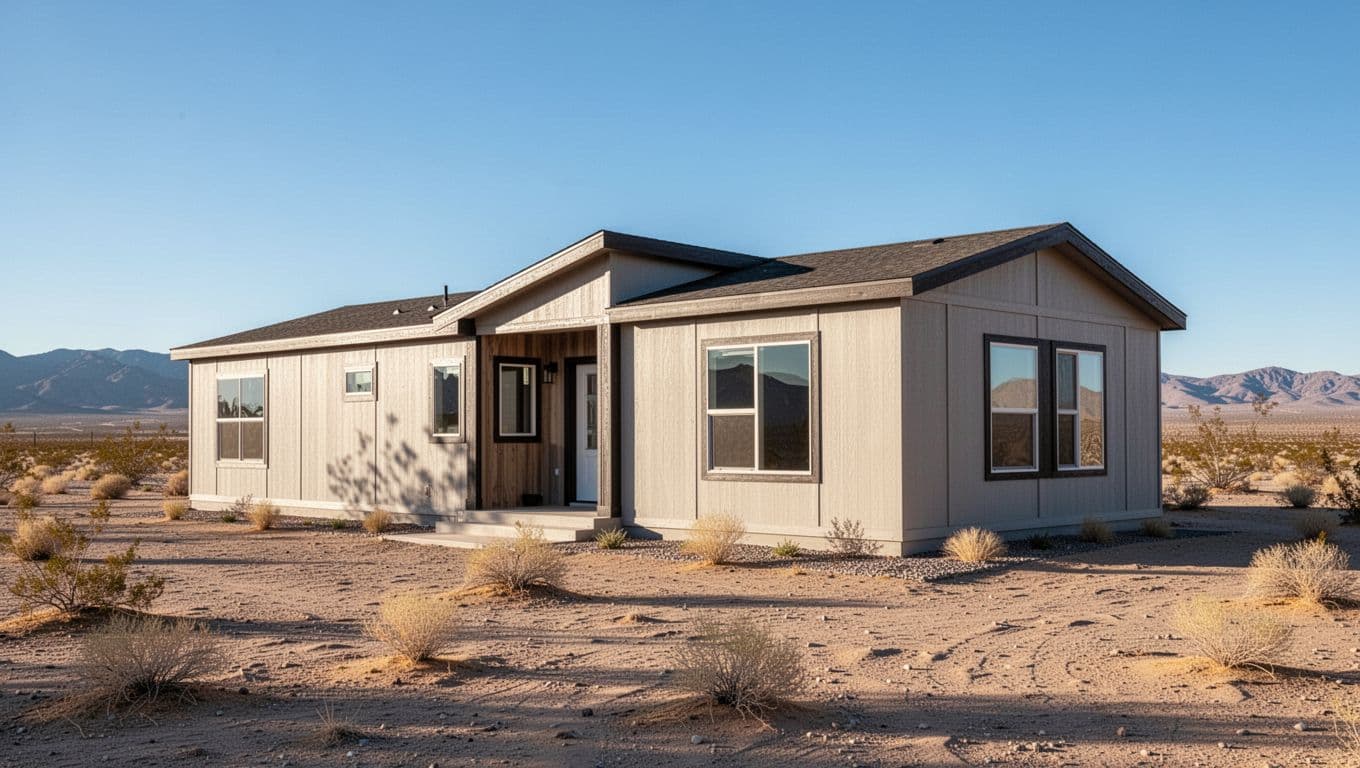
A single-section home is one long factory-built unit. It often costs less to transport and install, and its narrower footprint can work well on smaller lots.
A multi-section home, sometimes called a double-wide, arrives in two or more sections. Crews join the sections at the homesite, creating wider rooms and more flexible layouts. Buyers often choose these homes for larger kitchens, split bedrooms, open living areas, and additional storage.
You can buy a new home directly through a manufacturer or retailer, or choose a used home from a private seller, dealer, or community resident. New models may offer energy-efficient windows, upgraded kitchens, porches, and garage options. Used homes can reduce the purchase price, but inspect the roof, foundation, plumbing, cooling system, and prior alterations before making an offer.
How ownership is classified
A manufactured home may be treated as real property or personal property. The result depends on factors such as who owns the land, how the home is attached, whether the title was surrendered, and what the lender requires.
When the home and land qualify as real property, buyers may have access to mortgage financing and a resale process closer to conventional housing. If the home sits on rented land or retains a personal-property title, financing and resale can work differently. Confirm the classification with the county assessor, title company, and lender before signing a purchase agreement.
What Manufactured Homes Cost in Nevada
The advertised price of a manufactured home is only the starting point. Your final budget may also include land, transportation, site work, utility connections, permits, taxes, and dealer fees. Before comparing homes, request a current written estimate that separates every charge.
Typical manufactured home expenses
Planning ranges vary by home size, location, and site conditions. Use these figures for early budgeting, not as guaranteed quotes.
| Expense | Common planning range |
|---|---|
| New manufactured home | $90,000-$180,000+ |
| Delivery and setup | $8,000-$25,000 |
| Site preparation and grading | $5,000-$30,000+ |
| Foundation system | $6,000-$20,000+ |
| Utility connections | $5,000-$30,000+ |
| Permits and inspections | $1,000-$5,000 |
| Skirting, steps, and basic access | $2,000-$10,000 |
| Driveway and exterior work | $3,000-$20,000+ |
| Dealer, title, and administrative fees | $1,000-$6,000 |
The home price can change with its size, floor plan, insulation package, appliances, roof design, and interior finishes. Delivery may also cost more when the lot sits far from a major highway or requires special routing.
Site preparation often creates the largest surprise. Crews may need to clear brush, remove rocks, level sloped ground, improve drainage, or build retaining structures. A rural parcel may also require a septic system and leach field, a private well, a water-haul setup, or a long connection to a public utility.
Ask whether the quote includes the foundation, installation, utility trenches, permits, final inspections, and cleanup. If those items are missing, the advertised price is incomplete.
Why Nevada location changes the price
Costs differ sharply between Las Vegas, Reno, rural communities, and remote desert parcels. Developed neighborhoods near Las Vegas or Reno may already have roads, power, sewer, and water at the lot line. However, stricter local requirements, limited staging space, and higher labor costs can increase installation expenses.
Rural communities may offer less expensive land, but the savings can disappear when you need a long driveway, a private well, septic work, propane service, or a large power-line extension. Remote desert land can add trucking distance, difficult access, grading work, and special water-storage requirements. Confirm access for delivery trucks before you purchase the parcel.
A sample Nevada manufactured home budget
Consider a modest new home priced at $120,000 on privately owned land:
- Home: $120,000
- Delivery, installation, and foundation: $22,000
- Grading and site preparation: $14,000
- Water, sewer, and electrical connections: $18,000
- Permits, inspections, and taxes: $5,000
- Skirting, steps, driveway, and basic exterior work: $12,000
- Dealer and closing fees: $4,000
That produces a home-and-site subtotal of about $195,000, before buying land. A $60,000 parcel would bring the project near $255,000, excluding financing costs and major upgrades. Obtain written bids from the dealer, a licensed installer, utility providers, and local contractors before relying on any manufactured home cost estimate in Nevada.
Nevada Land, Zoning, and Placement Rules to Check First
Nevada does not have one statewide placement rule for every manufactured home and parcel. Counties, cities, zoning districts, homeowners associations, and recorded subdivision rules can all affect whether you may place a home. Before buying land or ordering a home, confirm the requirements with the local planning or building department.
Confirm zoning before buying land
Start by checking the parcel’s zoning designation and allowed residential uses. Some districts permit manufactured homes only in approved communities, while others allow them on private lots if they meet local standards. Rural zoning may still limit density, home size, road access, or utility methods.
Ask the planning department for written answers about:
- Whether a manufactured home is allowed outside a manufactured-home park.
- The minimum home size, lot size, and required setbacks.
- Rules for porches, garages, additions, skirting, and accessory buildings.
- Whether an HOA or subdivision declaration adds stricter design requirements.
- Whether the parcel lies in a floodplain, drainage area, or special hazard zone.
A real estate listing or seller’s statement cannot replace zoning verification. Requirements may differ between neighboring parcels, even within the same community.
Review permits, foundations, and installation inspections
Your project may need zoning approval, building permits, utility approvals, and inspections before anyone delivers the home. Local officials may require an approved site plan showing the home, driveway, septic system, well, property lines, setbacks, and drainage features.
The foundation or support system must meet the applicable state and local requirements. The home may also need approved anchoring, tie-downs, skirting, stairs, decks, and connections to water, sewer, gas, and electricity. Nevada’s heat, wind, rocky soil, and occasional flash flooding make professional site evaluation especially important.
The installer should coordinate required inspections, but you remain responsible for confirming that the work can receive final approval. Ask who handles permits, which inspections apply, and whether the written installation contract includes correction work if an inspection fails.
Check access, flood risk, and utilities
A parcel must provide a practical route for delivery trucks and installation crews. Narrow roads, steep grades, bridges, gates, overhead lines, and soft shoulders can prevent delivery or raise the cost. Confirm legal and physical access before closing.
Floodplain status also matters on desert land. A parcel outside a park may require drainage studies, elevation measures, engineered foundations, or other local approvals. Contact the local floodplain administrator before relying on a seller’s description of the property.
Utility approval is another early checkpoint. Verify public water and sewer availability, or obtain written feasibility information for a well, septic system, propane service, and electrical connection.
Understand Nevada agency roles
The Nevada Division of Housing oversees state manufactured-housing programs and related standards, while the Nevada Department of Motor Vehicles may handle title or registration matters for homes classified as personal property. Procedures can depend on ownership, installation, and whether the title is surrendered.
Because agency rules and local processes can change, confirm current requirements with the correct state office, county assessor, planning department, building department, and lender before signing a purchase contract.
Financing and Insurance Options for Nevada Buyers
The best financing option for manufactured homes in Nevada depends on two details: who owns the land and how the home is classified. Before applying, confirm whether the home will become real property with the parcel or remain personal property on a leased lot.
Compare manufactured home loan options
When you own the land and place the home on a permanent foundation, a lender may offer a conventional mortgage or a government-backed loan. Conventional loans often require stronger credit, stable income, a manageable debt-to-income ratio, and an appraisal that supports the home’s value. The lender may also review the land title, foundation, installation records, and comparable sales.
FHA, VA, and USDA financing can provide additional paths for qualified buyers, but each program has its own property, borrower, occupancy, appraisal, and eligibility rules. VA loans are generally for eligible veterans and service members. USDA loans may apply in eligible rural areas, while FHA financing can include certain manufactured homes that meet program requirements. Approval is never automatic, so ask lenders which programs they currently offer for your home type.
A chattel loan finances the home as personal property. It may work when you lease a space in a manufactured-home community, but it often has different terms, fees, and repayment periods than a real estate mortgage. Dealer-arranged financing can also be convenient, yet you should compare its total cost with offers from banks, credit unions, and lenders that specialize in manufactured housing.
Your down payment, credit history, income, and debt-to-income ratio affect the offer you receive. Appraisal problems can also delay closing if the home lacks comparable sales or the requested value exceeds the lender’s estimate.
Land-home packages versus home-only loans
A land-home package combines the manufactured home, land, site work, installation, and eligible improvements into one loan. This structure may simplify budgeting, but the lender will inspect both the home and parcel. A home-only loan covers the structure and may apply when you rent the lot.
Ask whether the loan requires a permanent foundation, title surrender, recorded ownership, or specific installation certifications. Those details can affect interest costs, taxes, refinancing, and resale.
Insure the home and the site
Manufactured-home insurance should cover the structure, personal belongings, personal liability, and additional living expenses if a covered loss makes the home unlivable. In Nevada, ask about wind, hail, wildfire, and flood coverage, because standard policies may exclude or limit some hazards.
Get several quotes and compare deductibles, exclusions, and replacement-cost terms. Ask whether the policy covers transport, installation, skirting, attached structures, and local site conditions. If you buy in a community, review the park’s insurance requirements and confirm where your responsibility begins.
Flood damage often requires separate coverage. Ask about it before closing, especially when the parcel is near a wash, drainage area, or mapped flood zone.
Insurance costs should appear in your monthly housing budget beside the loan payment, taxes, utilities, and space rent.
How to Choose a Manufactured Home and a Reliable Seller
Choosing among manufactured homes in Nevada requires more than comparing advertised prices. Set your total budget first, then evaluate the home, seller, land, installation plan, and long-term ownership costs as one purchase.
Set your budget and compare the full package
Start with your maximum monthly payment and total project budget. Include the home, land or space rent, delivery, foundation, permits, utility work, insurance, taxes, site preparation, and immediate upgrades. Ask each seller for an itemized quote so you can compare equivalent packages.
When comparing manufacturers and local dealers, review floor plans, construction materials, insulation, windows, HVAC equipment, roof design, appliance packages, and available warranties. A lower base price may exclude cabinets, steps, skirting, porches, or energy upgrades. Consider how you will use the home, too. Wide hallways, a main-level bedroom, accessible bathrooms, pantry space, and adequate storage can matter more than decorative finishes.
Energy performance deserves special attention in Nevada’s hot climate. Ask about insulation levels, window ratings, air sealing, shading, and the home’s cooling system. Also consider roof maintenance, exterior siding, plumbing access, and replacement costs for major equipment. If resale matters, choose a practical layout and durable materials rather than highly personalized upgrades.
Investigate every seller and contractor
A dealer may coordinate the purchase, but independent installers, transport companies, utility contractors, and land sellers can also affect the result. Ask who holds each license, who hires subcontractors, and who handles permits, inspections, corrections, and final cleanup.
Before signing, verify:
- The dealer and installer have current Nevada licenses where required.
- References include recent buyers with similar homes and site conditions.
- The seller has a clear complaint and litigation history.
- The written warranty identifies covered parts, exclusions, response times, and service contacts.
- Change orders show price increases and schedule changes before work begins.
- The delivery plan accounts for road access, overhead lines, staging, and crane or escort needs.
- A park operator provides written space-rent rules, fees, maintenance duties, and resale procedures.
Don’t rely on a polished model home, online listing, or verbal promise. Visit completed installations, speak with owners, and get every agreement in writing.
Complete a walkthrough and document review
During the model or final-home walkthrough, test doors, windows, faucets, toilets, outlets, lights, appliances, cabinets, locks, heating, and air conditioning. Look beneath sinks for leaks and inspect floors, ceilings, trim, siding, skirting, roof edges, and marriage-line areas for gaps or damage. Confirm that the floor plan, finishes, and included appliances match your signed order.
Review these documents before signing:
- Purchase agreement and itemized specifications.
- Delivery, installation, and foundation contracts.
- Warranty terms and the process for requesting repairs.
- Permit and inspection responsibilities.
- Land deed, title records, or community lease.
- Space-rent schedule and park rules, if applicable.
- Financing disclosures, insurance quote, and closing costs.
- Change-order, cancellation, refund, and completion provisions.
Have a qualified inspector, attorney, or lender review unclear terms. Final payment should wait until required inspections pass and agreed repairs are complete.
The Pros and Cons of Manufactured Home Living in Nevada
Manufactured homes in Nevada can offer a practical path to ownership, especially when traditional home prices exceed your budget. However, the best choice depends on land ownership, financing, location, and your plans for the property. A lower purchase price does not always mean lower monthly or long-term costs.
Benefits of manufactured home living
The biggest advantage is often the lower entry cost. Factory production can reduce construction waste and labor expenses, while standardized designs make pricing easier to compare. Buyers can also choose modern layouts with open kitchens, split bedrooms, energy-efficient windows, and updated appliances.
Construction is usually faster than building a site-built house from scratch. Once the land, permits, utilities, and foundation are ready, the home can arrive in sections and reach completion on a shorter schedule. New construction may also require less maintenance than an older house with aging plumbing, wiring, roofing, and mechanical systems.
Nevada buyers may gain access to private land or community amenities at a lower cost than a conventional subdivision. Some manufactured-home communities offer maintained roads, pools, clubhouses, or shared outdoor spaces. Community living can suit retirees, first-time buyers, and people who prefer fewer exterior responsibilities.
A smaller, efficiently built home may also use less material and energy than a larger house. Still, savings depend on insulation, windows, HVAC efficiency, utility rates, and how well the home handles Nevada’s intense summer heat.
Drawbacks to weigh before buying
The land arrangement often determines whether manufactured home living feels affordable. In a community, lot rent can rise over time, and you may also pay separate fees for utilities, maintenance, or amenities. Park rules or an HOA can limit pets, parking, exterior changes, additions, and home resale.
Financing may be harder when the home sits on leased land or remains titled as personal property. Chattel loans can carry different rates and terms than mortgages. Resale may also take longer because some lenders and buyers prefer homes permanently attached to land.
Transportation and installation create another risk. Rocky soil, steep access roads, overhead lines, long utility runs, and remote locations can increase delivery and setup costs. Nevada’s heat, wind, flash flooding, and wildfire exposure also require careful site planning, insurance review, and regular maintenance.
A manufactured home may be affordable while the land and installation costs are not. Compare the complete project budget, not just the home’s advertised price.
How manufactured homes compare with other choices
An apartment offers less responsibility for repairs and no land purchase, but you build no ownership interest and face rent increases. A traditional house usually provides broader financing and resale options, although it often costs more and requires greater upkeep.
A modular home follows state and local building codes rather than the federal HUD Code. It can resemble a site-built house and may appeal to buyers who want more design flexibility or conventional financing. Tiny homes typically use less space and may cost less, but zoning, utility, occupancy, and financing rules can be stricter.
Manufactured housing fits buyers who value affordability, speed, and efficient space. Before choosing it, confirm zoning, land terms, insurance, financing, and likely resale demand in the specific Nevada community.
Frequently Asked Questions
Buying a manufactured home in Nevada involves details that may not appear in a listing or sales brochure. These answers address common questions about taxes, resale, inspections, ownership records, and long-term use.
Are manufactured homes taxed like regular houses in Nevada?
The tax treatment depends on whether the home is classified as real property or personal property. A home permanently attached to land you own may be assessed with the parcel, while a home on leased land may follow different registration and tax procedures.
Ask the county assessor how the specific home is classified before closing. Your lender, title company, or tax professional can also explain how the classification affects property taxes, title surrender, and future resale.
Can I rent out a manufactured home in Nevada?
You may be able to rent out the home, but local rules and community documents can limit your options. Check city or county rental requirements, zoning, business-license rules, HOA restrictions, and the community’s lease before buying.
If the home sits in a manufactured-home park, the park owner may regulate subleasing, tenant screening, occupancy, or rental management. Review those terms in writing, and calculate whether rent will cover the loan, space rent, insurance, taxes, repairs, and vacancy periods.
How do I verify that a used manufactured home has clear ownership?
Request the home’s title, purchase records, HUD certification information, and any documents showing the title was surrendered or converted to real property. The serial number and HUD label information should match the home and the seller’s records.
A title company or county office can help identify liens, unpaid taxes, ownership disputes, and registration problems. Do this before paying a deposit, because missing records can delay financing or prevent a clean sale.
Does a manufactured home need a separate inspection?
Yes. A home inspection can identify problems with the roof, HVAC system, plumbing, electrical components, floors, windows, and visible foundation areas. You should also hire qualified professionals to review the foundation, tie-downs, utility connections, septic system, well, or drainage when those features apply.
For an older home, ask about past water intrusion, unapproved additions, roof repairs, and remodeling work. Repair costs can quickly reduce the savings of a low purchase price.
How long does it take to place a manufactured home on Nevada land?
The schedule depends on zoning approval, permits, utility availability, foundation work, site access, and the home’s production and delivery schedule. A developed lot may move faster than rural land requiring a well, septic system, grading, and long utility connections.
Before signing, request a written timeline with responsibility dates for permits, site preparation, delivery, installation, inspections, and final approval. Build extra time into your housing plans if the parcel has difficult access or special site conditions.
Can I move a manufactured home after buying it?
Relocation is possible for some homes, but it can be expensive and may require permits, route planning, disconnection work, a new foundation, and local approval at the destination. Older homes may also face placement restrictions or have components that don’t tolerate another move well.
Ask a licensed mover for a site-specific estimate before assuming relocation will protect your investment. In many cases, choosing the right parcel at the start costs less than moving the home later.
Conclusion
Manufactured homes in Nevada can make homeownership more accessible, but the advertised home price is only one part of the budget. Land, zoning, utilities, foundation work, permits, financing, insurance, maintenance, and your long-term plans all affect whether a property is truly affordable. Owning the land may support different financing and resale options than living in a community with monthly space rent.
A sound decision starts with current, written information for the specific property. Before you commit, complete this checklist:
- Choose a target Nevada city, county, or community.
- Contact the local planning department about zoning, setbacks, permits, and placement rules.
- Verify the parcel’s access, utilities, flood risk, and deed or HOA restrictions.
- Collect all-in quotes for the home, delivery, installation, foundation, site work, and utility connections.
- Compare lenders, loan terms, taxes, and insurance coverage.
- Arrange an independent inspection of the home and related site improvements.
With those details confirmed, you can compare manufactured homes on their full ownership cost rather than on the base price alone. The right choice is a home, land arrangement, and financing plan that fit both your current budget and your future needs.