Tiny Homes for Rent in Arizona: Desert Stays Under the Stars

At sunrise, red rock cliffs catch the first light while the desert below stays cool and still. Tiny homes for rent in Arizona put you close to scenery like this, with a compact, private place to return to after a day outdoors.
The options vary widely: a fixed tiny house near Sedona, a small casita outside Tucson, or a cabin in a quieter rural setting can differ in comfort, price, and how easily you can reach shops or attractions. Some stays offer air conditioning and a full kitchenette; others have simpler facilities or limited access, so the listing details matter.
This tiny homes for rent guide compares Arizona’s main regions, explains what affects rental costs, and shares practical booking tips. You’ll also find advice for matching a home’s layout, location, and amenities to your trip, so you can choose a stay that fits the way you want to explore.
Key Takeaways
- Tiny homes vary by region: Sedona offers red-rock scenery, Tucson brings a Southern Arizona setting, and rural stays can feel more secluded.
- Compare the full rental cost, including nightly rates, cleaning fees, taxes, and any extra charges, before choosing a property.
- Phoenix and Southern Arizona have mild, comfortable weather from October through April, according to Visit Arizona’s travel guidance.
- Check each listing for air conditioning, kitchen and bathroom details, parking, sleeping arrangements, and distance to the places you plan to visit.
- Before booking, review cancellation terms and access instructions, then compare available dates to find a stay that fits your budget and itinerary.
What to Expect from Tiny Homes for Rent in Arizona
A tiny home rental in Arizona can mean a purpose-built house, a converted trailer, a small cabin, or a casita behind someone’s home. The label alone won’t tell you how much privacy, space, or comfort to expect. Compare the photos with the listing’s measurements and property details before you book.
From desert cabins to homes on wheels
A fixed tiny house usually has a compact floor plan, with sleeping and living areas built into one small structure. Some sit on a permanent foundation; others are mobile units parked at a campground or private property. A cabin may offer a similar footprint but feel more rustic, while a backyard casita is often a separate guest space near the owner’s home.
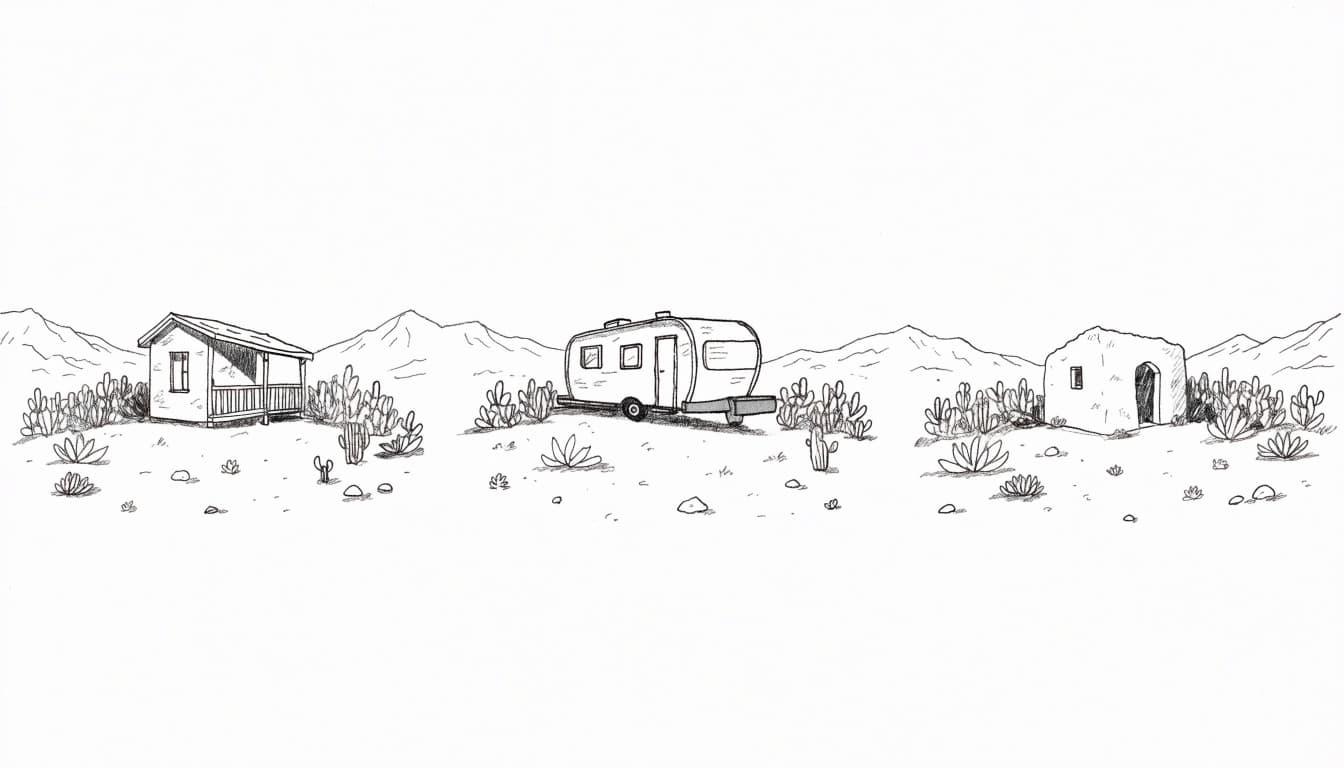
These categories can overlap in rental listings. For example, Arizona State Parks describes some of its small accommodations as camping cabins, with furnishings and amenities that vary by park. Its Arizona cabin rental details offer a useful reminder: a cabin may have beds, electricity, and heating or cooling, but it won’t necessarily have a private kitchen or bathroom.
Look beyond the listing title. Check whether the unit is fixed or on wheels, whether it shares a lot with another home, and how far it sits from parking or shared facilities. Photos can show the layout, while stated square footage helps you judge how much room you’ll have for bags and everyday movement.
Small spaces, useful comforts, and trade-offs
Many tiny homes include a kitchenette, a compact bathroom, and a sleeping loft. Air conditioning can make a major difference during warm weather, while a porch or outdoor seating area gives you extra space to relax. Still, amenities vary by property, so confirm what the listing actually provides.
The layout matters as much as the feature list. A loft may require a steep ladder or narrow stairs, and low ceilings can make some areas uncomfortable for taller guests. You might also find limited storage, basic cooking equipment, or a bathroom shared with other guests. Ask the host about anything that could affect your stay, including whether the kitchen has the cookware you need or the bathroom is inside the unit.
Who will enjoy a tiny home stay most?
For a solo traveler or couple, a compact rental can feel comfortable when the sleeping area, bathroom, and storage fit your needs. However, a family may need separate beds, more room to move, or a layout that keeps children away from loft ladders and tight stairs. Read the sleeping details closely instead of assuming the advertised capacity will feel spacious.
Longer visits also call for a closer look at laundry access, food storage, and places to unpack. If you’re bringing a pet, confirm the property’s rules and whether the outdoor area is enclosed. Guests with mobility needs should ask about steps, doorway width, bathroom access, and the route from parking; the ADA accessibility standards explain design requirements, but a listing’s own details will clarify the specific property.
A tiny stay works best when its limits match your plans. If you expect to spend most of the day exploring, a simple unit may be enough. If you’ll cook often, carry bulky luggage, or need more privacy, a larger casita or conventional rental may suit you better.
Where to Find Tiny Home Rentals Across Arizona
The best place to look for tiny homes for rent in Arizona depends on what you want beyond the front door. Phoenix and Tucson offer easier access to city amenities, while northern Arizona brings higher elevations and dramatic scenery. Rural properties can provide more quiet, but may require extra planning for transportation and basic services.
Phoenix, Scottsdale, and the central desert
A stay near Phoenix or Scottsdale puts restaurants, museums, shopping, and events within reach. It can also make a useful base for day trips to places such as the Superstition Mountains or the Salt River area. However, summer heat can affect how long you want to spend outdoors, and rush-hour traffic may add time to cross the metro area.
Search beyond downtown, too. Listings may sit in outer suburbs or nearby communities rather than near the city center, so check the address area and available transportation before booking. A rental that looks close on a map may still require a car for meals, errands, or trail access.
Sedona, Flagstaff, and northern Arizona
Sedona draws visitors with red-rock views and access to hiking, scenic drives, and outdoor activities. Flagstaff offers a different setting, with pine forests, mountain air, and a walkable historic downtown. Both can work well for travelers who want their rental to feel connected to the outdoors. Arizona’s official travel guide highlights the range of activities available across the state, including hiking and skiing in Flagstaff.
Elevation changes the conditions compared with the low desert. Sedona and Flagstaff can feel cooler, and seasonal weather may affect roads and trail plans. Before booking, check the route to the property, current weather, and distance to the specific places you want to visit. A listing described as being near Sedona may still involve a drive to trailheads or town.
Tucson and southern Arizona escapes
Tucson combines city access with mountain views and desert scenery. Search in and around Oro Valley, Marana, and the communities near Saguaro National Park for stays that may place you closer to different parts of the region. Farther out, places such as Sonoita or Bisbee offer a quieter feel, but you’ll trade some convenience for that setting.
Distances can be deceptive in Southern Arizona. Attractions may sit on opposite sides of the metro area, and rural roads can stretch the drive beyond what a quick map glance suggests. The Arizona State Parks Southern Arizona road trip guide can help you identify stops to group together. Check how remote a rental is and estimate drive times to the places on your itinerary.
Rural stays, campgrounds, and off-grid settings
Some tiny homes sit on private land or within campgrounds, where guests may find more outdoor space and fewer nearby neighbors. These stays can suit travelers who want a slower pace, but grocery stores, restaurants, and cell coverage may be limited. Read the listing closely, then confirm which facilities belong to your unit and which are shared.
Before reserving, ask about cell service, drinking water, power, and road conditions. Find out whether the final stretch is paved, whether a high-clearance vehicle is recommended, and how the property handles outages. A little advance checking helps you choose a stay that fits both your comfort needs and your plans.
How Much Do Arizona Tiny Home Rentals Cost, and How Do You Book?
The cost of a tiny home stay in Arizona depends on its location, dates, size, and amenities. A small unit near Sedona or central Phoenix may price differently from a rural stay, and a low nightly rate can rise once fees and taxes appear at checkout. Compare the full trip cost, then confirm the property details before you reserve.
Nightly rates, extra fees, and seasonal demand
Nightly prices shift with the property and the calendar. A larger home or one with air conditioning, a full kitchen, or a private outdoor area may cost more than a basic unit. Rates can also rise around holidays, popular local events, and pleasant-weather periods, when more travelers want time outdoors.
During Arizona’s hottest months, some rentals may be less expensive, but intense heat can limit daytime plans. Check whether the unit has reliable air conditioning and shaded outdoor space before booking summer dates.
The nightly rate is only one part of the bill. Cleaning fees, platform service fees, lodging taxes, and other charges can change the total. For example, Airbnb’s service fee details explain that guest fees are added to the booking subtotal. Some hosts also require a refundable deposit or set a minimum stay, which can affect the amount due or the dates you can book.
Before choosing, enter the same dates and guest count on each listing. Compare the final checkout total, not just the nightly price, and check whether a deposit is charged now or handled separately. A longer stay may spread fixed fees across more nights, but only if the minimum-stay rule and your plans align.
Where to search and what listing details matter
Airbnb, Vrbo, and Hipcamp are familiar places to search for tiny homes, cabins, and small guest units. Availability and listing types vary by platform and location, so try more than one channel when your dates are flexible. Search by the town or area you want to explore, then confirm the property’s actual location rather than relying on broad labels such as “near Sedona.”
Read recent guest feedback for practical details about cleanliness, noise, temperature control, and how the host handles questions. Review the cancellation policy before paying, since refund terms can differ by listing and date. Check the host profile and determine whether the rental is a standalone home, a backyard casita, or a unit within a larger property. That distinction can affect privacy, parking, and access to outdoor areas.
Also compare the listing’s photos with its written description. Confirm sleeping arrangements, bathroom setup, kitchen equipment, and the distance to the attractions you plan to visit. If an amenity is central to your trip, such as air conditioning or an indoor bathroom, look for it in the details rather than assuming it comes with the rental.
Questions to ask before you reserve
A listing may leave out details that matter once you arrive. Contact the host through the booking platform before paying if anything is unclear. Ask how check-in works, where to park, and whether the access road is suitable for your vehicle.
Confirm pet rules, accessibility, internet availability, and how the home stays cool during hot weather. For remote properties, ask about water supply and whether any facilities are shared. Find out which outdoor spaces belong to your unit and whether other guests or the property owner use them.
Keep the reservation, payment, and messages within the platform. That gives you a clear record of the stated terms, the host’s answers, and any changes to your booking. Before confirming, check that the total, cancellation rules, and arrival instructions match what you agreed to.
How to Choose the Right Tiny Home Stay for Your Arizona Trip
The right rental fits the trip you want to take, not just the photos you like. Start with your main destinations, then weigh drive time, climate, comfort, and the space your group needs. A little planning helps you enjoy the character of a tiny home without letting its location or layout complicate your days.
Match the location to your itinerary
Plot the rental alongside your planned hikes, attractions, grocery stops, and any work commitments. If you’re heading out early for a trail, staying nearby may matter more than having restaurants around the corner. Meanwhile, a city-edge home can put shops and services within easier reach, though it may offer less solitude than a remote desert property.
Arizona distances can make a rental look closer to an attraction than it feels on the road. Check actual drive times for the dates and times you expect to travel, and consider whether you’ll repeat the same route each day. For a regional planning example, Visit Arizona’s road trip itinerary shows how mileage and time between stops shape a route. If you’re working remotely, also confirm internet access and whether the property has a quiet place for calls.
Check climate control, water, and access
In the low desert, reliable air conditioning can make the difference between resting comfortably and struggling through hot afternoons indoors. Ask whether the unit has central air, a window unit, or another cooling system, and whether guests control the thermostat. In higher-elevation areas such as Flagstaff, nights can feel cold, especially outside the warmest months, so check for heating and adequate bedding.
Remote listings need a closer look at basic utilities. Confirm whether water is supplied by a well, a tank, or another system, and ask what happens if power goes out. Then check the approach to the property: a dirt or gravel road, limited parking, or a steep driveway may affect what vehicle you bring. Clear arrival instructions matter when a rental sits beyond town or cell service is spotty.
Make sure the layout fits your group
Look beyond the guest capacity and examine how people will actually sleep and move through the home. Check the bed sizes and locations, whether a loft requires a ladder or steep stairs, and whether the bathroom offers enough privacy. Photos can make a compact interior feel spacious, so pay attention to floor space and where luggage can go.
Children may need a safer sleeping arrangement than a high loft. Older guests or anyone with mobility limits may find narrow stairs, raised entries, or tight bathrooms difficult to use. Pets can also change what feels comfortable, particularly if the rental has little indoor room or no suitable outdoor area. If a detail could affect your stay, ask the host before booking rather than assuming the layout will work.
Balance tiny-home charm with your needs
A small home can make a memorable base, especially when you want quiet mornings or easy access to the outdoors. Still, the trade-offs may include limited storage, fewer kitchen tools, or a longer drive to groceries and restaurants. Consider how much time you’ll spend at the rental. A simple kitchenette may be fine for quick breakfasts, but less practical if you plan to cook most meals.
Before comparing attractive extras, choose a few must-haves tied to your trip. You might prioritize air conditioning, an indoor bathroom, easy parking, or a bed that doesn’t require climbing a ladder. Treat a hot tub, scenic porch, or designer interior as a bonus if it doesn’t solve a core need. That approach keeps the search focused on a stay that suits your plans, not just one that photographs well.
Frequently Asked Questions
A few details can make a big difference once you arrive at a tiny home in Arizona. These answers cover booking flexibility, group needs, and the practical questions to settle before your trip.
Are tiny home rentals in Arizona available year-round?
Availability depends on the property and your travel dates. Popular destinations and peak periods can book up quickly, so search early and compare nearby dates if your schedule allows. A weekday stay or a less busy season may give you more options.
Can I rent a tiny home in Arizona for a month or longer?
Some hosts allow monthlong stays, while others set minimum or maximum booking lengths. Before reserving, ask about monthly pricing, utility charges, cleaning fees, and any rules that apply to extended visits. Also confirm whether the listed rate changes for longer bookings.
Are tiny homes in Arizona suitable for families?
Some rentals work well for families, but the layout and sleeping arrangements vary. Check the occupancy limit, bed locations, and available floor space, and review whether children would need to use a loft ladder or steep stairs. Photos and a floor plan can help you judge whether the setup fits your group.
Can I bring a dog to a tiny home rental?
Each host sets their own pet policy, which may include extra fees, limits on the number or size of pets, or rules for outdoor areas. Get approval before booking rather than assuming a listing welcomes dogs. Ask whether the property has a suitable place for your dog to go outside.
What should I pack for a tiny home stay in Arizona?
Pack for the season and elevation, with sun protection and a refillable water bottle for warm-weather outings. The National Park Service recommends drinking water before you feel thirsty, especially during strenuous activity; see its heat illness prevention guidance. Bring a light layer for cool evenings, keep luggage compact, and check which kitchen and bathroom supplies the host provides.
Are Arizona tiny homes usually off-grid?
Some connect to standard utilities, while others rely on solar power, water tanks, or other off-grid systems. Ask the host how the property gets power and water, what limits guests should expect, and whether there are steps to follow during your stay. These details matter most at remote rentals, where backup services may be limited.
Conclusion
Waking up near Arizona’s desert, red rocks, or pine forests can make a small rental feel like part of the trip itself. The best tiny home in Arizona is the one whose setting and layout suit your plans, whether you’re heading out for a day on the trails or spending time in town.
Before booking, confirm the comforts that matter to you, check the drive and access details, and compare the full cost after fees and taxes. A little care up front helps you enjoy the scenery without unwelcome surprises.
Compare a few tiny homes for rent in Arizona, then choose the stay that fits the way you want to explore.
Explore more tiny home living, design, downsizing, building, and lifestyle resources.