Tiny House Indoor Garden Tips

Picture your tiny house indoor garden bursting to life. Cramped walls fade away as lush green vines climb shelves, fresh basil sways on your counter, and air-purifying pothos dangles near the window. Suddenly, your compact space feels like a serene retreat, full of life and color.
In 2026, more folks chase wellness and self-sufficiency. Tiny living pairs perfectly with indoor plants that clean your air and grow your own food. You save money on groceries while breathing easier, even in a 200-square-foot home.
Fresh herbs at your fingertips beat store-bought every time. Snip mint for tea or rosemary for dinner, all from pots that fit tight corners. Plus, plants like peace lilies scrub toxins, so your air stays fresh without fancy filters.
Science backs the perks. NASA studies prove indoor greenery cuts harmful chemicals like benzene and formaldehyde, boosting oxygen and cutting dust. For stress relief, they lower anxiety and sharpen focus, turning your tiny house into a calm haven.
Homegrown eats add up too. Dwarf tomatoes or peppers thrive in small pots, giving you salads year-round. You gain healthier meals, lower bills, and that proud feeling of self-reliance.
This post covers it all. First, key benefits to get you motivated. Then, top plant picks for beginners. Next, smart lighting tricks since windows stay small. After that, easy watering routines that save time. We explore vertical ideas to max every inch. Finally, common challenges and fixes so you succeed.
Ready to green your tiny home? Let’s turn that blank wall into your personal jungle. You’ll wonder why you waited.
Why Add an Indoor Garden to Your Tiny House Life
You live in a tiny house indoor garden setup because it fits your compact world perfectly. Plants squeeze into corners and shelves without stealing space. They freshen your air, lift your spirits, and even provide fresh bites. Best of all, these greens turn limited square footage into a thriving spot. Start small, and watch your home transform.
Boost Your Air Quality and Mood Instantly
Snake plants and pothos work wonders in tight spaces. These tough greens pull in toxins like benzene and formaldehyde. They release oxygen in return, so you breathe cleaner air. Tiny houses often lack big windows or strong vents. Plants step in to help right away.
Science shows real gains. NASA’s clean air study tested plants in sealed chambers. Snake plants cut several pollutants, while pothos grabs others fast. Recent tests confirm they boost humidity too. That cuts dust and eases dry air issues.
Stress drops fast around greenery. Studies link plants to lower anxiety and better focus. Your mood lifts as you care for them. In a cozy tiny home, this combo shines. Place a pothos near your bed. It cleans overnight and calms you to sleep. No fancy gear needed. Just add water weekly, and enjoy the perks.
Grow Your Own Food Without Extra Square Footage
Basil, mint, and lettuce grow easy in small pots. Stack them on counters or hang in corners. No yard required. These edibles fit your tiny house indoor garden like they belong there. Harvest leaves as you cook, and they keep producing.
Savings add up quick. Store herbs cost extra each week. Grow your own, and skip those trips. A few pots yield enough for meals. Plus, flavors taste brighter fresh. Mint perks up tea; basil lifts pasta sauces.
Self-sufficiency feels great in tiny living. You control your food source. Start with seedlings in 4-inch pots. They mature fast under window light. Snip tops often for bushy growth. In addition, lettuce heads form in weeks. Enjoy salads without waste.
Vertical setups save even more room. Use wall pockets or tiered stands. Water from the top, and drip feeds lower plants. Fun comes from that first harvest. Pull a leaf, taste it fresh. Your tiny home now feeds you year-round.
Pick the Best Low-Maintenance Plants for Tight Spaces
Your tiny house indoor garden shines with plants that demand little room or effort. These picks hug walls, shelves, or counters. They grow fast in dim corners and reward you with fresh air or food.
Because tiny homes limit floor space, focus on trailers, uprights, and stackables. Start with cuttings or cheap starters from local shops. Water less, prune often, and watch them fill your home. In addition, they handle busy schedules well. Pick these to keep care simple and green abundant.
Trailing Vines and Herbs That Climb Your Walls
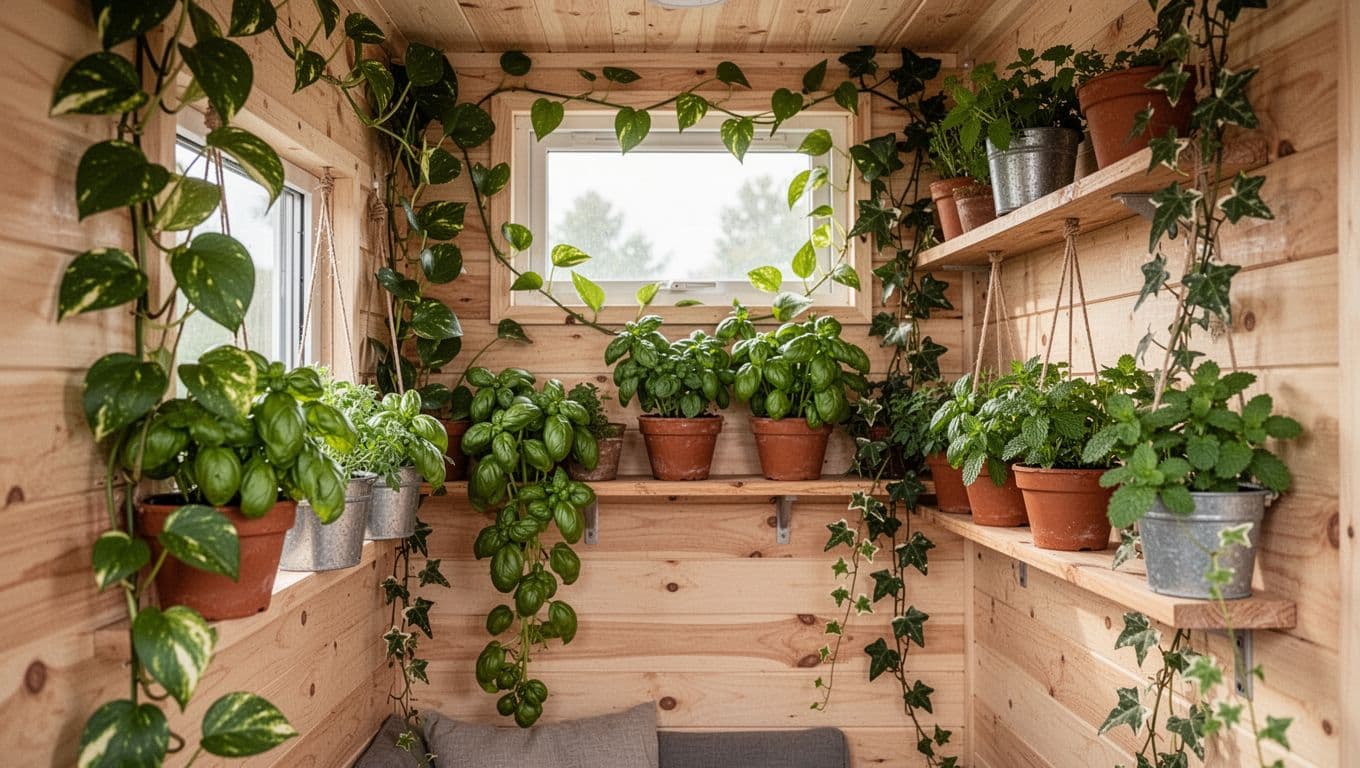
Pothos and ivy drape beautifully over shelves or walls in your tiny house. Their long vines trail down without crowding floors. Snip a stem, pop it in water, and roots form in weeks. Cheap propagation means free plants from one starter. Basil and mint join the fun too. Hang pots from hooks; they climb trellises made from twigs.
Edible perks make them stars. Fresh basil flavors pasta right off the vine. Mint brews tea or tops desserts. Both regrow after cuts, so harvests last months. Keep soil moist but not soggy. Place near a window for best growth, though they tolerate shade.
Train vines up strings for vertical reach. Dust leaves monthly to boost health. These four handle dry air from tiny home heaters. As a result, your walls turn green without daily fuss.
Tough Low-Light Champions Like Snake Plants and Ferns
Snake plants stand tall in dim tiny homes. Their upright leaves need no wide base. Boston ferns add soft fronds nearby. Both thrive where light stays low, like under lofts or away from windows. Roots stay compact, so pots fit tight spots.
Care stays easy. Water snakes every two weeks; let soil dry fully. Ferns like moist soil but forgive skips. Wipe dust off leaves quarterly. Layer them on tiered shelves for max use of corners. Snakes go low; ferns hang above.
Group them for humidity boost. They scrub air too, cutting toxins fast. Although ferns drop bits, sweep weekly. Snake plants rarely flower but stay green year-round. Stack in bathrooms for steamy perks.
Fun Edibles for Year-Round Harvests
Lettuce, strawberries, and microgreens deliver quick food wins. Grow them hydroponically in vertical tubes or trays. No soil mess fits tiny kitchens perfectly. Roots sip nutrient water; LED lights speed growth.
Setup takes minutes. Fill net pots with starters, add solution, and plug in lights. Lettuce heads form in four weeks. Strawberries fruit after two months. Microgreens ready in days for salads. Snip tops; they regrow fast.
Harvest often for steady supply. Costs drop as one tray feeds weeks. Place on counters or walls. Adjust pH weekly for best yields. These beat store buys in taste and freshness. Busy? Automate pumps for hands-off care.
Set Up Lighting That Mimics the Sun Without Bulky Gear
Tiny houses often lack big windows, so your tiny house indoor garden needs smart lights to thrive. Full-spectrum LEDs act like the sun. They deliver blue for growth and red for blooms without heat or bulk. You get strong plants in small spots. Best of all, slim panels fit shelves or walls easily. Therefore, pick setups that save space and run cheap.
Choose the Right LED Grow Lights for Your Setup
Full-spectrum LEDs top the list for your tiny house indoor garden. They cover all wavelengths plants crave, from seedlings to harvest. Unlike old bulbs, these stay cool and sip power. For example, bar-style lights like Barrina spread even glow without hot spots.
Placement matters most. Hang slim panels 12 to 18 inches above plants. Adjust as they grow taller. In tight corners, clip-on models hug shelves. Timers keep things simple. Set for 14 to 16 hours daily to mimic day cycles. Plants rest at night and avoid stress.
Consider these picks for small spaces:
- Spider Farmer SF1000: Covers a 2×2 foot area perfectly. Dim it for herbs like basil.
- Vivosun VSX1600: Offers modes for veggies in 2×2 setups.
Full-spectrum perks shine through. Plants grow bushy and colorful because they get balanced light. Check tested picks for best grow lights to match your needs. As a result, your pothos or lettuce pushes out without weak stems.
Create Cozy Glows in Dark Corners
Dark nooks challenge most plants, but uplighting fixes that fast. Slim LED strips at the base push light up gently. They create a soft halo around low-light champs like snake plants and ferns. No bulky fixtures needed. Just peel and stick along walls or floors.
Pair with tough combos for best results. Snake plants stand upright and grab any glow. Ferns add fronds that catch the rise. Both handle shade well, so your corner turns lush. Water sparingly because low light slows growth.
Here’s how to set it up:
- Clean the base surface first.
- Stick strips along the edge.
- Plug into a timer for 12 hours on.
This method boosts humidity too. Leaves stay perky as mist rises with light. Although ferns need more moisture, snakes forgive dry spells. In addition, the warm tone calms your space like a lantern. Your tiny house indoor garden feels alive everywhere now.
Simplify Watering with Smart Systems That Fit Small Homes
Watering your tiny house indoor garden gets tough in cramped spots. Spills soak floors, and dry soil kills plants fast. Smart systems fix that. They deliver water on autopilot, so you focus on harvesting instead of fussing. These setups fit shelves or counters perfectly. In addition, they cut waste and keep roots happy. Pick ones that match your routine, and watch greens thrive without daily checks.
Hydroponic Towers for Mess-Free Edibles
Hydroponic towers stack plants in slim PVC pipes or ready kits. Water and nutrients pump up from a base reservoir. Roots dangle in the flow, so no soil means zero mess. Setup takes an afternoon. Drill holes in pipes, add net pots, and connect a small pump. Fill the tank with pH-balanced solution, then plug in a timer for cycles.
Lettuce, basil, and strawberries love this system. They grow fast because roots sip what they need. Kale and spinach join in too. Harvest leaves weekly without pulling plants. Space savings shine here. One 5-foot tower holds 20 heads of lettuce in a 2-foot floor print. It hugs walls or corners effortlessly.
For example, start seeds in rockwool cubes. Transplant after roots show. Adjust lights nearby for full growth. Clean the tower monthly to prevent clogs. Check this complete hydroponics beginner’s guide for tweaks. As a result, your tiny house indoor garden yields fresh eats year-round. No muddy pots or drowned roots.

Hydroponic tower grows lettuce, basil, and strawberries in a tiny house kitchen corner with vertical pipes and pump, created with AI.
Easy Self-Watering Pots and Wicks
Build self-watering pots from recycled bottles for pennies. Cut a 2-liter bottle in half. Invert the top as a funnel into the bottom reservoir. Add a cotton wick through the neck to sip water up to roots. Fill the base weekly, and plants draw exactly what they need. No more guesswork.
Herbs like mint and parsley thrive here. They stay moist without soggy soil. Add perlite for better drainage. For bigger pots, buy terracotta with built-in reservoirs. They cost under $10 each. Stack them on shelves to multiply output.
Maintenance stays simple. Check water levels every five days. Top off with room-temp tap water. Wipe wicks if algae forms; replace yearly. Snip dead leaves to boost flow. Although pumps add cost, wicks run free. Busy days? These handle vacations fine. Your tiny house indoor garden drinks steady, so greens push out strong.
DIY a multi-pot rack from scrap wood. Hang it near lights. Roots stay happy; you save hours. Test soil moisture first to dial it in. Then sit back as flavors fill your meals.

DIY self-watering bottle pots with wicks grow mint and parsley on a tiny house shelf, created with AI.
Maximize Every Inch with Vertical Gardening Hacks
Walls in your tiny house indoor garden offer huge potential. Grow up instead of out. These hacks use every vertical surface to pack in plants. You create privacy, fresh air, and beauty without stealing floor space. Recent trends favor modular pockets and layered setups that fit tight spots perfectly. Start simple, and your home feels bigger and greener right away.
Build Stunning Living Wall Art
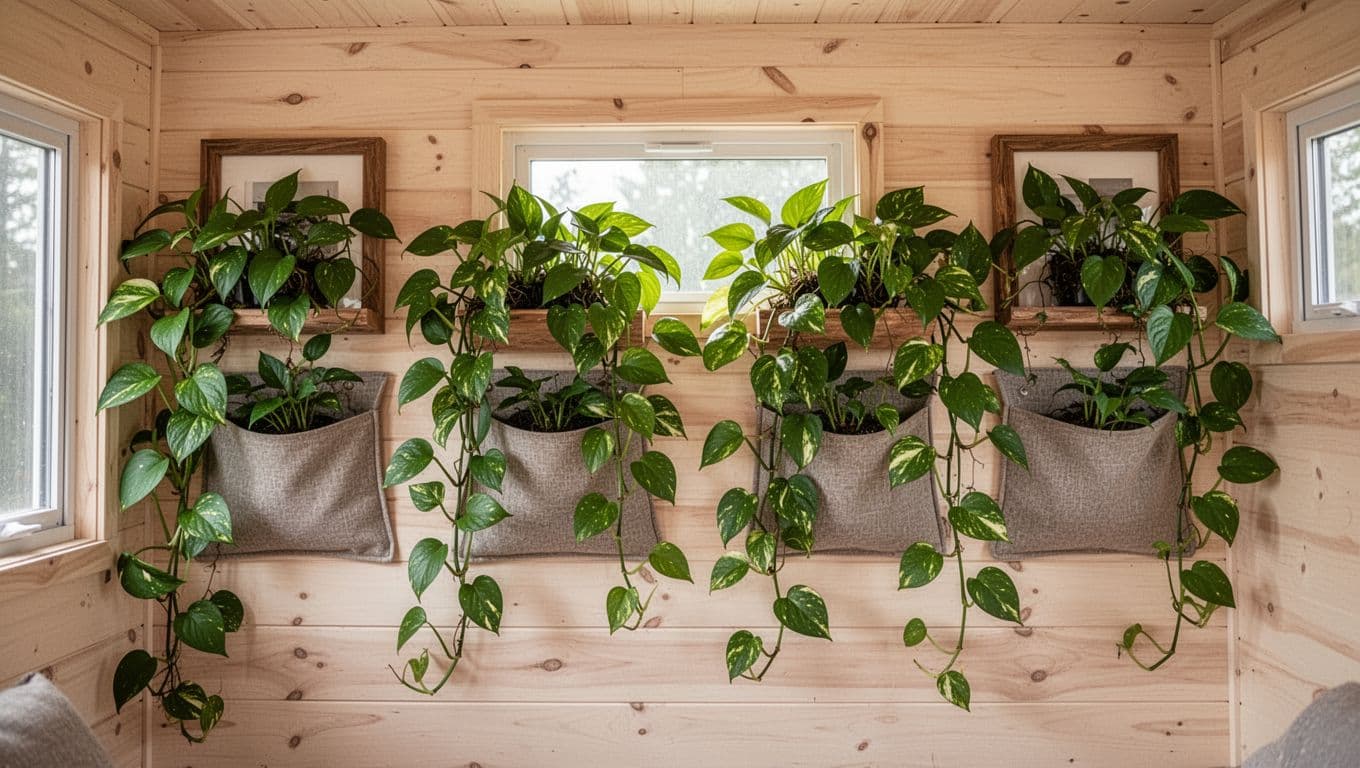
Turn blank walls into eye-catching displays with pothos in frames or pocket planters. Pothos vines trail beautifully and clean air too. Shallow wooden shadow boxes hold soil and cuttings. Fabric pockets tuck herbs or succulents neatly.
Gather these tools first: drill, screws, level, potting soil, sphagnum moss, pothos cuttings, fabric pockets (like felt shoe organizers), and wire for hanging. Mount frames side by side at eye level. Line bottoms with moss to retain water. Plant pothos stems deep, then water lightly. Pockets work great for basil or ferns; fill halfway with soil, add plants, and hang from hooks.
Secure everything sturdy because tiny homes shift. Mist weekly for humidity. Vines fill gaps in months. This setup boosts oxygen and hides ugly spots. For step-by-step ideas on indoor walls, see how to start a vertical garden indoors. Your wall becomes art that lives and grows.
Layered Shelves for a Mini Forest Effect
Tiered shelves mimic a forest canopy in your tiny house indoor garden. Tall plants go high, bushy ones middle, trailers low. This layers greens densely without chaos. Ferns top shelves for height. Pothos and herbs fill next. Snake plants and ivy drape bottoms.
Space shelves 12 inches apart. Anchor into studs for safety. Use floating brackets to save depth. Plant tall ferns first; they catch light best. Add medium pothos pots nearby. Trailers hide shelf edges. Water from top so drips feed lower levels.
Rotate pots monthly for even growth. Prune tops to keep balance. Although light fades lower, tough plants handle it. This effect makes walls pop and air fresher. Group similar needs together, like low-water succulents on one shelf.
Clever Dividers and Furniture Planters
Need privacy? Plant dividers split spaces without full walls. Slim wooden screens hold pockets for pothos or basil. They soften views and add calm. Benches with built-in planters double as seats and gardens. Mint thrives in side boxes.
Build dividers from lattice panels. Screw on planters every foot. Hang or freestanding in open lofts. Integrate benches by attaching pots to arms. Drill drainage holes; line with gravel. Fill with soil, plant edibles. Water reservoirs below catch drips.
These setups zone your tiny home smartly. Greens filter light gently. Check vertical garden hacks for tiny apartments for more tweaks. Herbs stay handy for meals. Privacy comes free with growth.
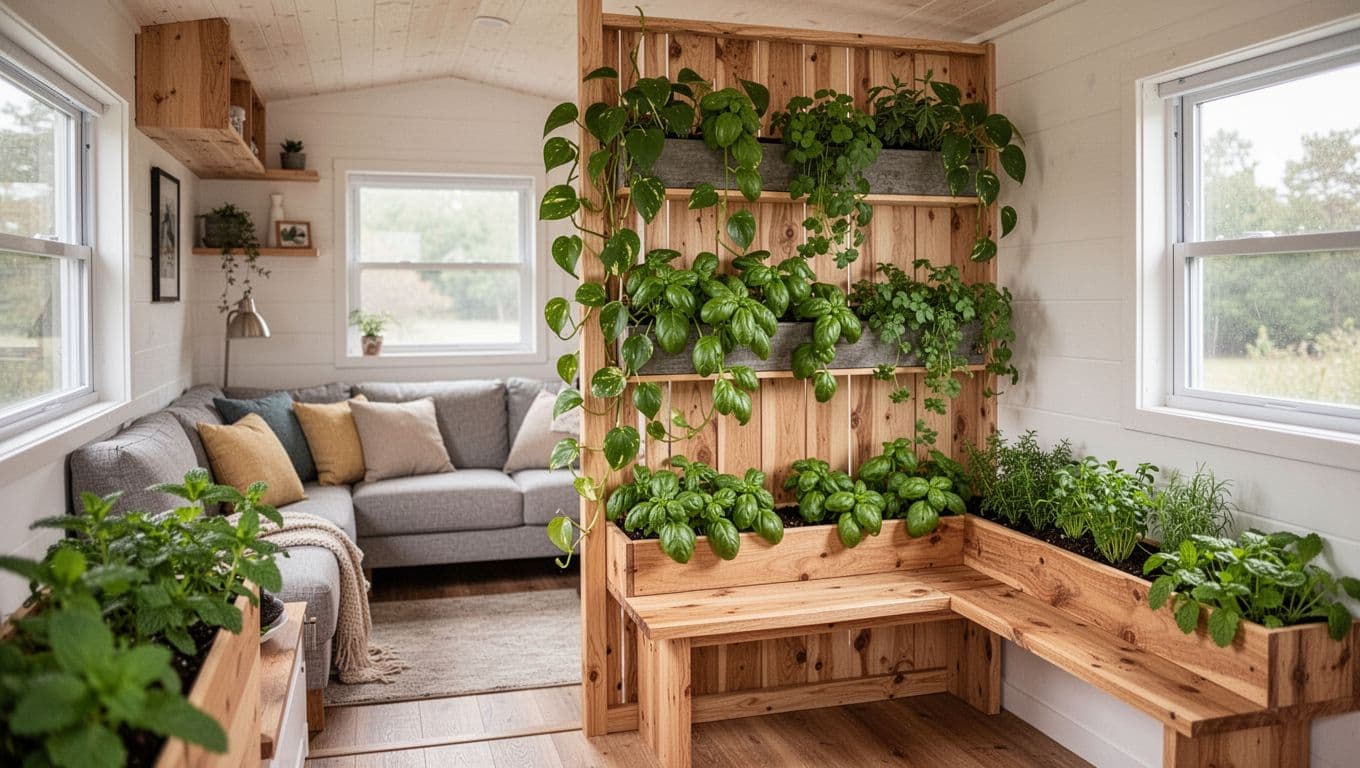 tiny house living area, paired with a wooden bench featuring integrated side planters for mint and greens, bathed in soft natural light."/>
Overcome Top Challenges in Your Tiny House Garden
Your tiny house indoor garden brings joy and fresh air, but hurdles pop up fast. Limited room fills with pots. Dim spots starve plants of sun. Watering turns messy in tight quarters. Plus, daily care eats time you don’t have. Don’t worry. These fixes tackle the big ones head-on. You keep greens thriving without stress. Let’s break it down.
Fix Limited Space and Clutter
Cramped floors kill your garden dreams quick. Pots crowd counters and paths. Go vertical to reclaim every inch. Stack shelves on walls for layers of plants. Pothos vines trail down without floor mess. Herbs fit in felt pockets hung from hooks.
Recap these space-savers from earlier. Living walls turn blank spots into art. Layered shelves mimic forests: tall ferns up top, trailers below. Dividers with planters zone rooms smartly. No clutter, just lush growth.
Start small. Mount one shelf near your kitchen. Add three pots: snake plant base, basil middle, ivy low. Dust stays low because nothing touches floors. Air flows better too. In addition, rotate plants monthly for even light. Your tiny house indoor garden expands upward, so floors stay open.
Handle Light and Water Woes Easily
Poor light stretches plants leggy. Overwatering drowns roots in small pots. Quick tweaks fix both. Clip full-spectrum LEDs above shelves. They mimic sun for bushy growth. Hang 12 inches over herbs like basil. Timers run 14 hours daily, so no burn.
Water woes end with self-watering pots. Reservoirs below feed roots steady. Fill weekly; wicks pull just enough. Mint and snake plants love this setup. No spills on wood floors. Group by needs: moist lovers left, dry ones right.
For example, pair LEDs with wick pots on counters. Basil perks up green. Check indoor gardening challenges and solutions for more tweaks. Although tiny homes shift, secure lights tight. Plants push strong now.
Keep It Low-Effort Long-Term
Busy life demands easy care. Pick tough plants like pothos, succulents, and snake plants. They forgive skips. Water every 10 days; let soil dry fully. Prune dead bits monthly for shape.
Routine stays simple. Check lights weekly. Wipe leaves quarterly to catch dust. Group by water needs to batch tasks. Rotate spots for balance. As a result, your tiny house indoor garden runs smooth.
Conclusion
You now hold all the tools to build your tiny house indoor garden. Start simple. Pick one blank wall. Add easy plants like pothos, snake plants, or basil. They forgive mistakes and fill spaces fast.
Next, grab full-spectrum LEDs for those dim corners. Hang them low over shelves. Plants grow bushy and strong as a result. Pair with self-watering pots or hydro towers. Roots stay happy without daily fuss.
Vertical hacks make it all work. Layer shelves for a mini forest. Hang pockets for herbs. Living walls turn drab spots into art. These steps beat clutter and light woes every time.
Back to Sustainable Tiny House Design
Explore more tiny home living, design, downsizing, building, and lifestyle resources.
- Small Septic System for Tiny House: Types, Costs, Rules
- Tiny Home Grey Water System: Reuse Water Legally
- Composting Toilets for Tiny Homes: Best Picks Compared
- How to Install a Septic System for a Tiny House
- Septic Tank for Tiny House: What Size You Really Need
- Tiny House Septic System Cost: What You’ll Really Pay