Tiny House Lighting Tips

Picture this: You step into your tiny house at dusk. It’s cozy, sure, but shadows make the space feel cramped and cave-like. Then you flip on the right lights. Suddenly, walls recede, the room breathes, and it all feels open and inviting.
Good tiny house lighting changes everything. It lifts your mood with warm glows, keeps you safe by highlighting paths and corners, and saves energy in your tight square footage. That’s especially true off-grid, where every watt counts. Tiny homes use just 90-120 kWh per month total, so smart choices here pay off big.
In 2026, trends lean toward efficient LEDs and smart tech. These cut energy use by 75-90% compared to old bulbs. For example, layered LED strips and AI lights auto-adjust for the day or night. Plus, off-grid options like rechargeable sconces mean no cords cluttering your floors.
The perks stack up fast. You’ll make rooms feel bigger with vertical lights that draw eyes upward. Bills drop too; expect around $225 a year in savings from upgrades. And setups stay flexible for your mobile lifestyle.
So, why struggle with dim, wasteful lights? In this post, we’ll cover picking the best bulbs and fixtures for tiny spaces. You’ll get tips on layering lights for depth and safety. Then, we explore smart controls and off-grid hacks. Finally, real examples show how to cut costs without sacrificing style.
Key Reasons Tiny House Lighting Needs Special Attention
Tiny houses pack big challenges into small spaces. Low ceilings around seven feet squeeze the air, while multi-use rooms juggle cooking, lounging, and sleeping. Off-grid setups limit you to 70-100 kWh per month total, so every bulb matters. Poor tiny house lighting traps shadows that shrink rooms further and spark that closed-in feeling. Great setups bounce light off walls instead. They fool the eye into seeing more space.
Think about it. Without enough glow, you fumble knives at the counter or strain to read in bed. Solid lighting boosts safety and flow. It sharpens aesthetics too, with warm layers that invite guests. Resale value climbs when buyers spot smart, efficient designs. First, assess your spot.
Measure ceiling heights. Note outlet spots and window sizes. Low natural light demands more from your fixtures. Trends push layered ambient, task, and accent lights. These handle off-grid limits while opening up your home.
How Low Power Demands Shape Your Choices
Off-grid life keeps your tiny house at 70-100 kWh monthly. Lights eat a chunk if you pick wrong. Incandescents guzzle 60 watts each and burn out fast. LEDs drop to 6 watts. They use 90% less power. Run one four hours daily. That’s just 24 watt-hours versus 240 for old bulbs.
Savings add up quick. You free watts for fans or fridges. Bills stay low, around $10 monthly for lights alone. LEDs last 25 times longer too. Swap once a decade, not yearly. No ladder climbs in tight spots.
Batteries thank you. Solar pairs best with low-draw options. Your system runs smoother. No blackouts mid-meal. Prioritize these from day one. Power rules every pick.
Balancing Multi-Use Rooms with Flexible Glow
One room does it all in your tiny house. Kitchen counters need bright task spots for chopping veggies safely. Sofas call for soft ambient light to unwind after dinner. Shadows confuse the shift. Flexible tiny house lighting switches modes easy.
Bounce accent strips off walls. They stretch the space without glare. Low ceilings amplify this trick. Light climbs upward, so rooms feel taller. You avoid that cave vibe.
Examples fit daily life. Spotlights over sinks prevent slips. Dimmers let you read in bed without blinding the whole area. Functionality soars. You cook clear-eyed, relax cozy. Aesthetics follow. Warm tones hug wood grains and fabrics. Guests linger longer. Your setup shines for years.
Top Energy-Efficient Fixtures That Fit Tiny Spaces Perfectly
You want tiny house lighting that saves power and keeps things tidy. Energy Star LEDs shine here. They use 75-90% less energy than old bulbs. For example, a 60W equivalent LED pulls just 9W. Run it three hours daily at $0.15 per kWh. Costs drop to $1-2 yearly per bulb. Old incandescents hit $10 or more. Swap these in and watch your power bill shrink. Plus, they last 25,000 hours. In tight spots, recessed and channel options deliver sleek results without bulk.
Recessed and Channel LEDs for Clean Looks
Low ceilings in tiny houses demand smart picks. Recessed LEDs fit flush into those seven-foot heights. They vanish into the surface. No dangling fixtures crowd your headspace. Energy Star models rate 4.6-4.7 stars. Dimmable ones glow at 2700K for warmth.
Channel LEDs take it further. Mount aluminum channels on walls or ceilings. Slip in 10-12 foot strips like the Lena series. These handle 22-45W selectable output. Cove setups hide them above cabinets. Light bounces soft and indirect. Rooms gain a height illusion. Shadows fade fast.
Benefits stack up. No clutter means easy cleaning in multi-use areas. Installation stays simple. Cut channels to size. Glue or screw in place. Power draw stays low at 75-90% savings. Annual costs per fixture hit $1-5. Old recessed cans guzzled far more. These keep your off-grid batteries happy. Sleek lines match wood tones perfectly. Guests notice the open vibe right away.
Dimmable Strips and Pucks for Everyday Tasks
Kitchens and desks need focused glow. Under-cabinet strips deliver. Linkable LED tapes hug edges tight. Dimmable versions adjust from bright task to cozy mood. Energy Star ratings promise 90% quick light-up. Warm 2700K tones avoid harsh glare.
Puck lights add punch. These compact rounds spot counters or desks. Recessed or surface-mount styles fit tiny spots. 4.64-star models use 75% less power. Shine super bright yet dim soft for evenings. Place three to five under cabinets. Prep veggies safe and clear.
Why dimmable? Mornings call for full blast on knives. Nights shift to relax mode. Strips like holiday-linkables chain easy. Pucks stay shatter-proof and cool-running. Install in minutes with adhesive backs. Compare to halogens. Those heated up fast and wasted watts. LEDs save $225 yearly across setups. Your multi-use room flows better. Cook sharp. Unwind easy. Tiny house lighting just got practical.
Smart Lighting Tech That Makes Tiny Living Easier
Smart lights turn your tiny house lighting routine into a breeze. They adapt to your day without extra effort. In tight spaces, hands-free controls keep counters clear and energy low. You save watts while rooms feel bigger and brighter. Plus, off-grid options cut cords entirely. These picks fit low ceilings and multi-use spots perfectly.
Voice and App Controls for Hands-Free Convenience
Voice commands shine in cramped kitchens. Say “Alexa, kitchen lights on” while you chop veggies. No fumbling switches. Apps like Bond pair with fans such as the Craftmade Alexis. This 18-24 inch model packs dimmable LEDs at 24W. It offers three speeds and timers via remote or phone.
Schedules add magic. Set sunrise simulations to wake you gently. Lights fade up at 6 a.m., mimicking dawn. In small homes, this saves space too. No wall plates crowd your walls. The Alexis runs quiet at 107-545 RPM. Guests love the breeze and glow. Wi-Fi links to Google or Alexa for easy voice tweaks.
You gain flexibility fast. Dimmers shift from task bright to cozy dim. Run it four hours daily. Power stays under 75W total. Batteries last longer off-grid. Control lights with your voice while cooking. Your tiny house feels modern and open.
Solar Options That Ditch the Grid
Solar setups free you from outlets. Rechargeable lamps like MPOWERD Luci Base Light charge via USB or sun. They pump 45 lumens for hours. Place one on a side table. No cords snake across floors. Goal Zero Lighthouse adds 200 lumens plus USB ports. Crank it if clouds roll in.
Skylights boost it all. VELUX solar models vent and light without wires. The VCS 2246 fits 2×4 feet roofs. VCS 4646 covers 4×4. Remote shades block heat. Auto-close seals rain tight. Natural glow cuts electric needs by half.
String lights from Luci work great too. Hang solar LEDs along walls. They run 10-20 hours post-charge. Off-grid freedom means smooth nights. Your tiny house lighting stays bright. Energy wins big with zero bills. Rooms expand under diffused sun. Install once, enjoy forever.
Layered Lighting Designs to Make Rooms Feel Bigger
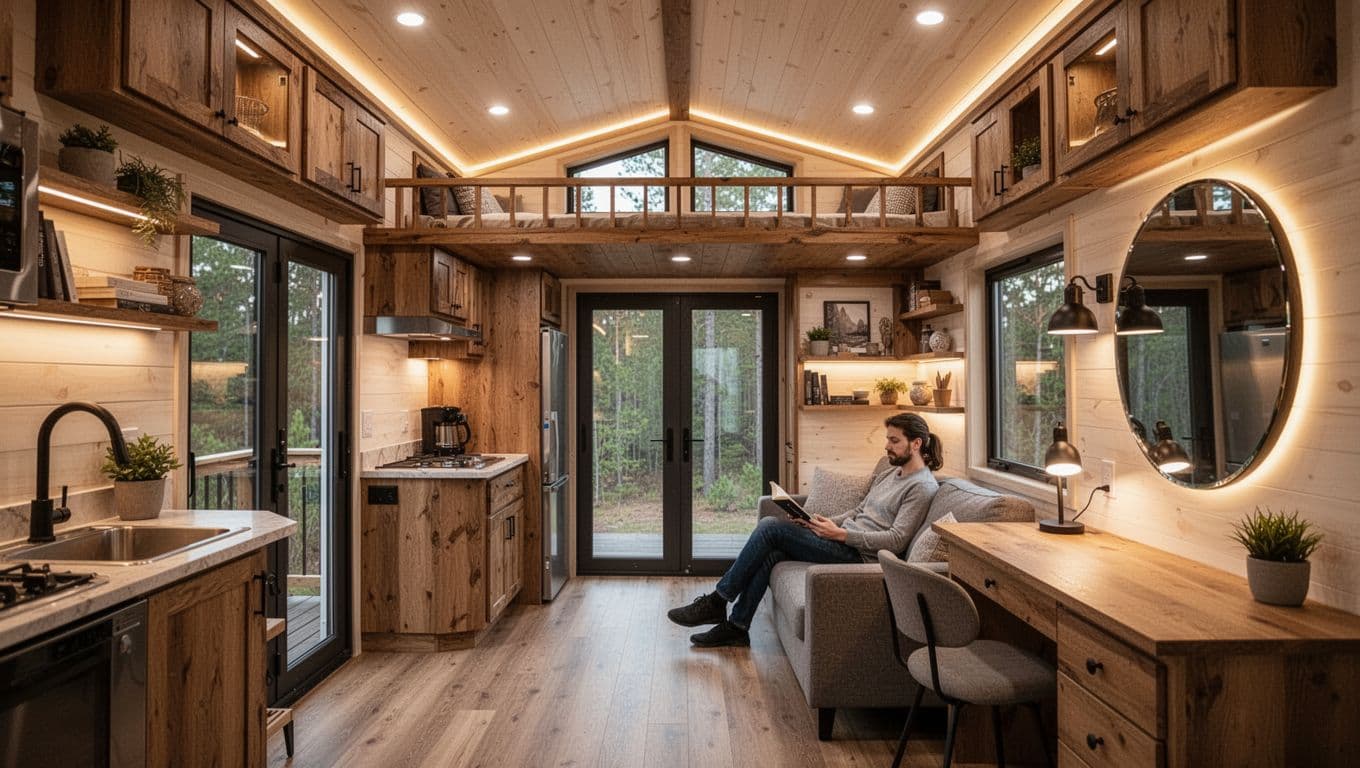
Layered tiny house lighting transforms cramped spots into airy havens. You stack ambient, task, and accent layers at varied heights. This draws eyes upward, bounces glow off walls, and hides shadows. In 2026, these setups top trends for small spaces. They turn 200 square feet into open zones without extra square footage. Low ceilings benefit most because upward light adds height illusions. Plus, LEDs keep power low for off-grid life. Start with windows and glass doors open wide. They pull in natural light first. Then layer electrics smartly. Your living area, kitchen, or loft gains depth fast.
Ambient Glows That Fill Without Overwhelming
Overhead recessed LEDs or fans set the base layer. They flood rooms soft and even. In your tiny house, pick slim recessed cans for seven-foot ceilings. These vanish flush, so heads stay clear. Fans like the Craftmade Alexis add spin and dimmable glow at 24 watts.
Set them at 2700K warm tones. Light bounces wide without glare. Cove LEDs hug ceiling edges too. They wash walls upward, so spaces feel taller. Run four hours daily. Power stays under 30 watts total. Shadows vanish in multi-use spots. Your kitchen-living area opens up. Guests sense room to breathe. Dimmers shift moods easy, from bright days to cozy nights.
Task Lights Where You Need Them Most
Focus task layers on action zones. Counters get under-cabinet pucks or strips. Desks and reading nooks take clip-on LEDs. These hug edges tight for sharp work light.
Clip-ons shine because you move them. Pin one over a loft bed for books. Another spots the kitchen sink for safe chops. Use 400-500 lumens bright. Yet dim to 20% for evenings. Power draws just 5-10 watts each. In tight homes, they save wall space. No fixed mounts crowd you. Prep meals clear-eyed. Read without strain. Your multi-use room handles shifts smooth.
Accent Tricks to Add Depth and Drama
Accent lights spotlight details for drama. Line shelves with LED strips. Place them near mirrors to bounce glow wide. Cove setups fire upward from baseboards or cabinets.
Track lights or sconces pair with shelves too. They skim walls, so furniture floats. Mirrors amplify this; light reflects double. Maximize glass doors nearby for day blends. In living areas, accent a wood beam. Kitchens highlight cabinets. Lofts get shelf glows that lift eyes high. Each pulls 3-6 watts. Depth builds fast. Your tiny house gains zones and style. Drama fits off-grid budgets perfect.
Boosting Natural Light in Your Tiny House Setup
Natural light acts as your first layer in tiny house lighting. It slashes daytime bulb use, so your off-grid batteries last longer. Big windows and glass doors pull in sun from all sides. Skylights add overhead glow. Mirrors bounce it further. As a result, rooms feel twice as big. You save energy and lift your mood with vitamin D boosts. Health perks follow too, like better sleep from daylight cycles. Let’s see how to max this out.
Skylights and Windows That Flood in Sunlight
Start with oversized windows and sliding glass doors. They frame views and flood multi-use rooms. Place them low on walls for easy access. Then add mirrors opposite. Light doubles instantly, so shadows stay gone.
Skylights seal the deal. VELUX offers small fits like the FCM 2222 at 22.5 x 22.5 inches. Or try 22 x 22 fixed models for tight roofs. Newer ones include the VCS 3434 at 38 x 38 inches for venting air. Benefits pile up. They deliver free light, cut electric needs by half, and ventilate without fans. NEAT coatings keep glass clean longer. Solar versions auto-close in rain.
DIY install stays simple. Pick curb-mount styles. Seal edges with butyl tape. Screw into rafters. No power tools needed if you pre-drill. For windows, frame openings first. Caulk frames tight. In addition, pair with light shelves. These bounce sun deeper inside.
Your tiny house lighting relies less on LEDs daytime. Bills drop. Rooms expand. You wake refreshed under real sun. Guests envy the bright flow.
Overcoming Common Tiny House Lighting Hurdles
Tiny house lighting trips up many owners with dim crannies, scarce outlets, tricky installs, and rigid setups for multi-use rooms. Low ceilings worsen it all. Yet you can beat these fast. Recessed LEDs slip into tight spots. Dimmable tracks shift for cooking or chilling. Solar lamps dodge power woes. Layers plus skylights erase shadows. No more dark corners. Here’s a quick guide to common fixes.
| Hurdle | Quick Solution Example | Power Savings |
|---|---|---|
| Cramped, dim feel | Layered LEDs + skylights | Up to 60% |
| Few outlets | Solar/rechargeable lamps | 100% off-grid |
| Tight installs | Recessed downlights | 75% less draw |
| Multi-use flexibility | Dimmable track lights | 20-50% via timers |
These picks fit 2026 trends. They use LEDs that sip 75% less power. Rooms open up right away.
Fixing the Cramped, Dim Vibe
Shadows shrink your tiny house fast. So mix natural light with layers. Skylights like VELUX FCM pull in sun first. They cut bulb time by half. Then add ambient recessed LEDs overhead. Task pucks hit counters. Accent strips skim walls.
Light bounces high off ceilings. Rooms feel taller. For example, pair 2700K strips with mirrors. Glow doubles. You avoid that cave trap. Guests notice the airy shift. Install layers in zones. Kitchen gets bright tasks. Living softens with accents. As a result, 200 square feet expands. Your mood lifts too. No fumbling in gloom.
Power and Outlet Shortages Solved
Outlets stay scarce off-grid. Solar lamps fix that quick. MPOWERD Luci Base charges in sun or USB. It pumps 45 lumens for hours. Place on tables. No cords trip you. Goal Zero Lighthouse cranks extra if needed. 200 lumens plus ports.
Rechargeables like these run 10-20 hours. They pair with your 70-100 kWh setup. Smart timers dim unused ones. Daylight sensors blend sun and LEDs. Use drops 20-60%. Meanwhile, batteries last longer. You cook or read worry-free. Bills hit zero for lights. Freedom rules in tight spaces.
Recommended Products and Where to Shop
You need reliable tiny house lighting gear that fits tight budgets and spaces. These hot picks cover skylights, fans, LED channels, and cordless lamps. They save power and boost light in your off-grid setup. Prices stay reasonable, especially at big retailers. Check current stock because deals change fast. For example, grab basics from Home Depot or Amazon for quick shipping.
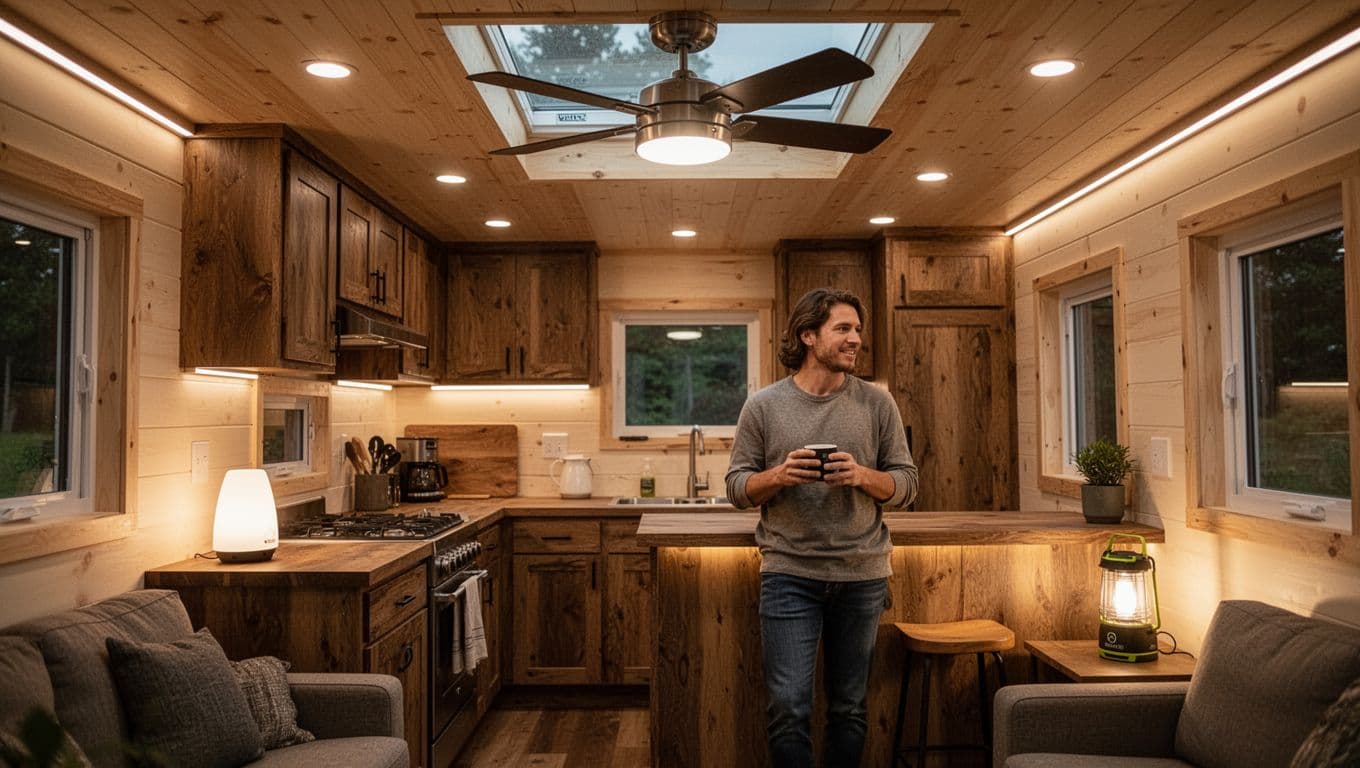
Here are standout options with prices and spots to buy. These match low ceilings and multi-use rooms perfectly.
| Product | Price Range | Best Places to Shop | Why It Fits Tiny Houses |
|---|---|---|---|
| VELUX FCM Skylights | $219–$1,146 | Home Depot, Roofing Direct, SolarSkylights.com | Floods sun without wires; curb-mount for small roofs |
| VELUX VCS Venting | $1,660–$2,136 | SolarSkylights.com, Home Depot | Solar-powered; vents heat too |
| Craftmade Alexis Fan | Check Home Depot/Amazon | Home Depot, Amazon | Dimmable LEDs; compact 18-24 inches |
| Aluminum LED Channels (Lena) | Varies; check sites | Amazon, lighting specialists | Sleek wall/cabinet mounts; low-watt strips |
| MPOWERD Luci Base Light | Check Amazon/REI | Amazon, REI | Solar USB charge; 45 lumens off-grid |
| Goal Zero Lighthouse | Check Amazon/Home Depot | Amazon, Home Depot, Goal Zero site | Crank/solar; 200 lumens + ports |
Budget tips help you save. Start with FCM skylights under $300 for big light gains. Pair LEDs with solar lamps to skip outlets. Amazon Prime ships free often. Tiny house shops like ShopForSkylights offer bundles. Prices rose slightly in 2025, so compare now.
Most installs stay DIY simple. However, for skylights or fans, hire a pro. They seal roofs tight and wire safe. Expect $200-500 per job. Your setup lasts longer that way.
Conclusion
You started with a dim, cramped tiny house at dusk. Now picture it alive with smart layers that stretch every inch. Tiny house lighting delivers real wins. LEDs slash energy use by 75-90%, so your off-grid batteries last longer and bills drop to pennies. Layered setups with recessed cans, task pucks, and accent strips bounce glow upward. Rooms feel twice as big, even under seven-foot ceilings. Smart voice controls and solar lamps add ease without cords or clutter.
These choices fix multi-use headaches fast. Dimmable fans like the Craftmade Alexis shift from kitchen bright to cozy unwind. Skylights flood natural sun, cutting electric needs in half. You cook safe, read clear, and relax deep. Savings hit $225 yearly, plus resale boosts from sleek designs.
Assess your space today. Measure ceilings and outlets. Swap one incandescent for an LED strip or puck. Test a solar lamp on your counter. Small steps spark big changes. In 2026, warm 2700K tones and auto-adjusting smart tech keep you ahead. Trends favor layered warmth that matches your rhythm.
Back to Tiny House Interior Design
Explore more tiny home living, design, downsizing, building, and lifestyle resources.