Tiny House vs Mobile Home: The Complete 2026 Buyer’s Guide

Most advice on a tiny house vs mobile home decision gets the first question wrong. It asks which one is cheaper, then stops there. That's lazy thinking. If you care about real ownership, the better question is which option gives you a safer financing path, a cleaner insurance quote, and a resale market that won't trap your money.
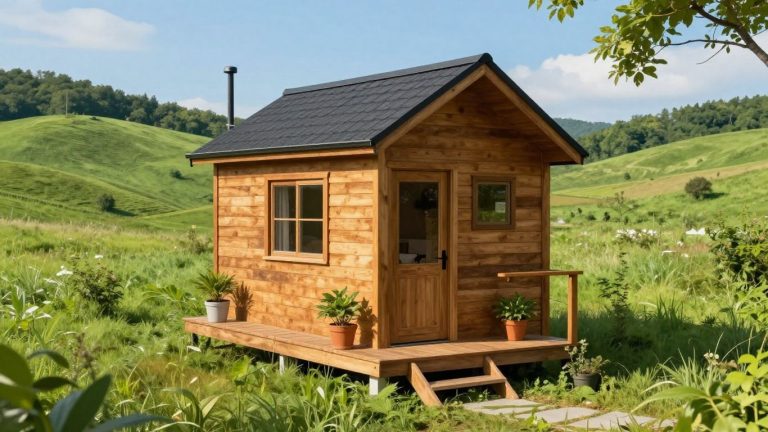
A tiny house can look affordable because the sticker price is lower. But the economics change fast once you look at cost per square foot, code pathway, and where the home can legally sit. A manufactured home follows a clearer federal standard, while a tiny house often sits in a messier zone of RV rules, park-model limits, and local zoning fights. That difference shapes everything from loan eligibility to long-term exit value.
| Feature | Tiny House on Wheels | Single-Wide Mobile Home | Double-Wide Mobile Home |
|---|---|---|---|
| Typical code path | Often NFPA 1192 or ANSI A119.5 | HUD Code | HUD Code |
| Typical size | 100 to 400 sq ft | 480 to 1,440 sq ft | Larger family layouts, often beyond single-section sizing |
| Main use case | Mobility, minimal footprint | Budget-friendly permanent housing | More space for families and full-size appliances |
| Placement friction | Higher, because local rules vary | Lower, if zoning allows manufactured housing | Lower, if zoning allows manufactured housing |
| Financing risk | Higher | Lower | Lower |
Practical rule: if you need a home that behaves like a housing asset, not a lifestyle object, start with manufactured housing. If you need mobility first and can tolerate regulatory friction, tiny living may still make sense.
Why the Sticker Price Tells Only Half the Story
The biggest mistake buyers make is treating a lower purchase price as proof that a tiny house is the smarter deal. That shortcut ignores the parts of ownership that decide whether you feel financially comfortable two years later or stuck with a hard-to-resell asset. A tiny house can cost about $45,000, with a typical range of $30,000 to $60,000, while the average mobile home costs about $128,000 according to USA Today's cited reporting on the market comparison USA Today's tiny home and mobile home cost comparison. But that headline misses the fact that the tiny house is dramatically smaller.
The better lens is total cost of ownership. Land prep, utility hookups, transport, insurance, and financing structure all matter more than a brochure price. If a buyer saves on upfront purchase price but pays more friction in financing, zoning, and resale, the deal is not cheaper. It is just cheaper at the register.
The per-square-foot trap
Tiny homes usually sit at about 100 to 400 square feet, while single mobile homes typically run 480 to 1,440 square feet. That size gap changes the meaning of every dollar you spend. The same USA Today reporting places tiny homes at about $300 per square foot, compared with about $90 per square foot for single-wide mobile homes and about $61 per square foot for double-wides.
That means the tiny house can cost 3.3 to 5 times more per square foot even when the total purchase price is lower. That is not a minor detail. It is the core financial trade-off.
If you want a practical starting point for build costs, use this tiny house build cost breakdown to separate shell cost from the full finished-home budget.
Where the actual expenses surface
A tiny house buyer often pays in different places than a manufactured-home buyer does. The home itself may be cheaper, but the legal and logistical setup can absorb the savings fast. A mobile home buyer usually deals with a more standardized housing category, while a tiny house buyer has to solve for placement, classification, and finance all at once.
That is why I tell clients not to ask, “Which one costs less?” Ask, “Which one is easier to own, insure, finance, and resell in my county?” That question cuts through the marketing and gets to the actual financial picture.
Construction Standards and Size Differences Explained
The built environment is the first real divider in the tiny house vs mobile home debate. A manufactured home is built to the federal HUD Code, which gives lenders, insurers, and local governments a known compliance path. Tiny houses are less uniform. On wheels, they're commonly built under NFPA 1192 like an RV-like unit, or under ANSI A119.5 as a park model, which changes how they're classified and where they can legally be placed code pathway comparison.
That distinction is not academic. It decides whether your home is treated like housing, recreation, or something in between. It also determines whether transportability is a feature or a liability.
What each structure is built to do
Manufactured homes are designed for full-time residential use, and the federal code gives them a more established compliance framework. Tiny houses on wheels are often designed for mobility, not permanence. That's why buyers who want a legal primary residence often run into more pushback with tiny homes than with manufactured housing.
A park model is capped at 399 square feet, and an NFPA 1192 tiny home is limited to 320 square feet and 8.5 feet wide code pathway comparison. Those caps tell you something important. The design path is already narrower before zoning even enters the picture.
Good zoning never rescues a bad code choice. If the structure is classified in a way your county doesn't support for full-time occupancy, the purchase becomes a compliance problem, not a housing solution.
How size affects daily use
Tiny homes typically land around 100 to 400 square feet, rarely above 500 square feet. Mobile homes commonly range from about 480 to 1,440 square feet for single-section units, and can go to 2,560+ square feet for double-wide and triple-wide configurations size guidance. That difference changes how people live.
A tiny house can be brilliant for a solo occupant or a couple who wants a highly edited lifestyle. A manufactured home is better when you need actual rooms, a larger kitchen, and the ability to live without constant spatial negotiation.
Tiny House vs Mobile Home at a Glance
| Feature | Tiny House on Wheels | Single-Wide Mobile Home | Double-Wide Mobile Home |
|---|---|---|---|
| Federal standard | Often RV-like or park-model rules | HUD Code | HUD Code |
| Common size range | 100 to 400 sq ft | 480 to 1,440 sq ft | Often much larger, family-oriented layouts |
| Mobility | High | Low once placed | Low once placed |
| Occupancy intent | Lifestyle or mobile use | Permanent residential use | Permanent residential use |
| Space flexibility | Tight, highly customized | Moderate | Highest among the three |
| Best fit | Minimalists, movers, singles | Buyers needing practical affordability | Families and long-term owners |
If you're choosing between them, don't lead with aesthetics. Lead with the standard the home is built to, because that standard decides what the home can become.
Real Cost Breakdown and Financing Realities
A cheap sticker price can hide an expensive ownership path. Tiny houses often push buyers toward personal loans or RV-style lending, while manufactured homes usually have clearer lending routes tied to HUD Code standards. That difference affects appraisal, insurance, and how easily you can sell later, which is the part many comparisons skip financing and resale risk.
The primary concern isn't the shell's cost. It's whether financing, insurance, and the resale market can support the home after closing.

Cost categories that matter
Buyers need to break the total into parts, because the purchase price is only one piece of the bill. Land preparation, utility hookups, insurance, and the loan structure decide whether the project stays manageable or turns into a constant cash drain.
| Cost Category | Tiny House on Wheels | Single-Wide Mobile Home |
|---|---|---|
| Purchase price | About $30,000 to $60,000 on average | About $128,000 on average |
| Cost per square foot | About $300 | About $90 for single-wides |
| Financing path | Often personal or RV-style lending financing a tiny house on wheels | More established lending channels |
| Insurance | Often specialty coverage | More standard coverage options |
| Resale liquidity | More uncertain | More established |
The tiny house can still cost less upfront. That does not make it the better financial product. It only means the entry ticket is smaller, while the long-term path can be harder to manage.
Financing is the hinge
Tiny house buyers are often financing a niche asset, not a conventional dwelling. Lenders treat that difference seriously, and underwriting reflects it. Manufactured homes built to the HUD Code sit in a more familiar lending lane, which makes the path from purchase to closing less awkward and usually less fragile.
That gap is why a buyer should study the loan structure before getting attached to the floor plan. A home that looks affordable on paper can become expensive if the lender limits terms, raises the rate, or classifies the property in a way that blocks normal home-style financing.
Insurance changes the math
Insurance follows classification. A tiny house on wheels may need specialty RV or builder-risk coverage depending on how it is built and where it sits. A manufactured home is generally easier to place into a standard residential insurance conversation. That matters because policy choice affects both monthly cost and how much risk you carry if the structure is damaged or moved.
Ask the insurer one direct question. What category is this structure treated as, and what would force a policy change later? That answer tells you far more than a sales brochure does.
For buyers who want a practical starting point, the financing a tiny house on wheels guide is worth reading before any paperwork gets signed.
Zoning Rules and Where You Can Legally Park
Tiny house buyers usually discover zoning after they've fallen in love with the floor plan. That's backward. The county planning office should be in the conversation before you buy the trailer, because a home you can't place is not a home, it's a storage problem.
Tiny houses on wheels are often treated like RVs or park-model units, which can limit full-time occupancy. Manufactured homes built to the HUD Code generally face a different placement conversation, but they still need land zoned for manufactured housing or a licensed community that accepts them. The rules are local, specific, and often frustrating.

Start with the local code, not the dream
The first move is simple. Ask the zoning office whether a tiny house on wheels is treated as a dwelling, an RV, or something else. Then ask whether the parcel allows long-term occupancy. A lot of buyers skip that second question and end up with a structure they can't legally live in.
The same is true for mobile homes, though the issue is usually different. The structure may be acceptable, but the parcel may not be zoned for it. That's why the land question and the home question must be answered together.
Use a three-part check before you buy
- Review ordinances first: Ask for the written minimum square footage rules, dwelling classifications, and any restrictions on attached wheels or temporary foundations.
- Confirm park rules separately: If you're thinking about a manufactured home community or RV park, get the park's occupancy rules in writing. Private park policies can be stricter than city code.
- Check HOA restrictions last: Some properties look fine on zoning and still fail because the HOA limits small-footprint or factory-built homes.
For state-specific tiny-home law research, Tiny Home State keeps a zoning guide that can help you identify what your county is likely to ask for: tiny house zoning laws guide.
Don't confuse legal movement with legal living
A tiny house can be towable and still not be welcome as a full-time residence. A manufactured home can be less mobile and still be easier to site legally. That trade-off is the heart of the matter. If your lifestyle demands frequent travel, tiny living may fit. If you need a stable place to park and stay, manufactured housing is usually the cleaner route.
I've seen buyers spend months shopping for a tiny home only to learn their target county won't allow it as a primary dwelling. That kind of failure is predictable. It's also avoidable if you verify the rules before you send a deposit.
Daily Livability and Design Trade-Offs
A home isn't a spreadsheet. The way it feels at 7 a.m. on a Tuesday matters just as much as the financing terms. Tiny houses can be beautifully designed, but daily life inside them asks for discipline. Manufactured homes are less theatrical, yet they often work better for actual routines.
A solo remote worker can thrive in a tiny house if the layout is smart and the storage is disciplined. A couple who downsized for retirement may enjoy the simplicity, but they'll still need to live with tight circulation, smaller kitchens, and fewer places to spread out. A family of four will usually feel every compromise twice as hard.
Three lived-in scenarios
The remote worker usually cares about one thing first, a workable desk and decent natural light. In a tiny house, that often means sacrificing a traditional dining area or using a foldaway surface. In a mobile home, the worker has more room to carve out a true office without turning the bedroom into a work zone.
The retired couple often wants low maintenance and less clutter, not constant puzzle-solving. A tiny house can support that if they're ruthless about possessions. A mobile home gives them more breathing room, a full-size kitchen, and less need to convert every piece of furniture into a storage device.
A family of four is where the gap turns obvious. Tiny homes demand lofts, tight sleeping plans, and a lot of shared-space negotiation. Manufactured homes handle bedrooms, bathrooms, and kitchen storage in a way that feels like everyday housing instead of an ongoing workaround.
Design details that actually matter
- Natural light placement: Big windows help tiny homes feel less compressed, but they also affect privacy and temperature control.
- Furniture that pulls double duty: Built-in benches, storage staircases, and convertible tables matter far more in tiny houses than in mobile homes.
- Ceiling and room proportions: Standard-feeling rooms in manufactured homes reduce the sense of constant compression.
- Climate response: Insulation quality matters in both, but the smaller volume of a tiny house can make temperature swings feel sharper.
If you enjoy maintaining systems and editing your possessions, tiny living can feel liberating. If you want your house to disappear into the background of life, manufactured housing usually does that better.
Personal taste should be honest, not aspirational. A tiny house asks you to live deliberately. A mobile home lets you live more normally.
Resale Value and Long-Term Financial Risk
Most buyers underestimate how much the exit matters. The home you can resell easily is safer than the home you love but can't unload. That's why financing, insurance, and classification deserve as much attention as finishes and floor plans.
Tiny houses on wheels often behave more like recreational assets than conventional housing, which complicates resale and liquidity. Manufactured homes tied to land have a more established market and clearer path for buyers who want residential use. That doesn't guarantee appreciation, but it does make the asset easier to understand and sell.

Why the financing type matters
If you buy with a personal loan or RV-style financing, you may build less traditional home equity. That changes how much value you keep if you sell early. A more established lending structure on a manufactured home makes it easier for future buyers to finance the purchase too, which supports liquidity.
The Terner Center material on tiny houses calls out a key blind spot in most comparison content, financing and resale risk are often overlooked until it's too late Berkeley tiny house study. That's exactly the problem. Buyers look at the purchase price and ignore the future market.
Location changes the story
A manufactured home on owned land has a very different financial profile from one sitting in a leased-lot park. Likewise, a tiny house placed in a community with stable lot ownership will usually have a more defensible exit than one parked in a temporary, ad hoc arrangement. The land under the home matters almost as much as the home itself.
That's why I don't treat tiny house ownership as a default wealth move. Sometimes it's a lifestyle purchase, and that's fine. But if your goal is to protect capital, the manufactured-home path is usually less fragile.
Bottom line: don't confuse “lower buy-in” with “lower financial risk.” Those are not the same thing, and in housing they rarely land in the same place.
Your Decision Checklist and Next Steps
The right choice becomes clearer once you stop asking what's trendy and start answering a few blunt questions. The list below is the one I use with buyers who are torn between mobility and stability. It's simple, but it forces honesty.
Decision checklist
- All-in budget: Can you cover the home, site work, hookups, insurance, and transportation without relying on wishful thinking?
- Household size: Are you living alone, with a partner, or with children who need real rooms?
- Land control: Do you already own land, or will you need a community, park, or rented lot?
- Financing status: Have you already checked what loan type the structure can qualify for?
- Zoning clearance: Has the county or city confirmed that the structure can be placed and occupied the way you intend?
- Exit plan: If you need to sell in a few years, do you know who the buyer will be?
When a tiny house makes sense
Choose a tiny house when mobility is part of the point, not just a feature. It works best for a single person or a couple that wants a smaller footprint, a custom interior, and the flexibility to move. If you're comfortable with tighter storage, unusual financing, and more zoning legwork, it can be a good fit.
When a mobile home makes more sense
Choose a manufactured home when you want fewer surprises. It's the stronger option for families, buyers who want more room, and anyone who needs a cleaner financing and insurance path. It also fits better if your goal is long-term residential stability rather than a niche lifestyle.
Concrete next steps
- Visit both product types in person. Spend time inside a tiny home community and a manufactured home park. Your body will tell you faster than a brochure whether the space works.
- Get quotes before you fall in love. Ask insurers and lenders how they classify each structure. Classification changes the conversation.
- Confirm the land rules. If you're buying land, call the local zoning office before you sign anything.
- Run a five-year ownership projection. Use the purchase price, site costs, and financing terms you've already collected.
- Talk to a land-use attorney if the site is complex. One short consultation can save you from a very expensive mistake.
If you want a practical starting point for your own homework, use Tiny Home State's zoning and financing resources, then compare them against the lender and county rules where you want to live. That combination will tell you more than any social media tour ever will.
If you're serious about buying in 2026, stop comparing tiny houses and mobile homes by image alone. Pull quotes, verify zoning, and ask lenders how each structure is classified before you commit a dollar. If you want the safer long-term bet for family life, financing, and resale, lean manufactured housing. If you want mobility and can absorb the regulatory friction, a tiny house can still work, but only after the paperwork checks out.
Explore more tiny home living, design, downsizing, building, and lifestyle resources.