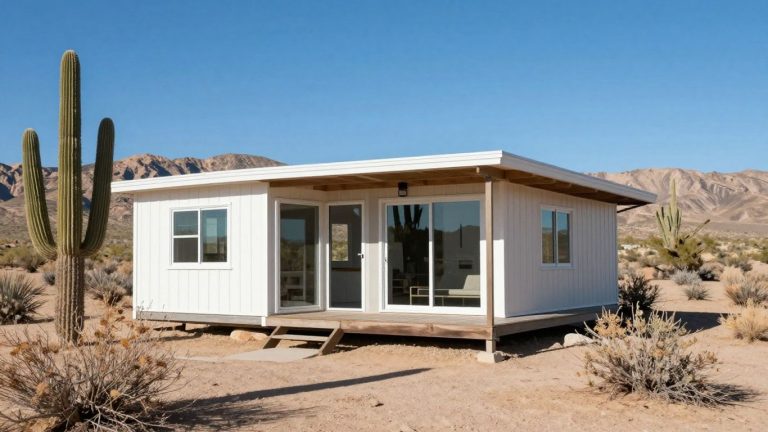
Portable Tiny House Tips

Back to Tiny House Questions
Imagine waking up to mountain views one week, then parking by the beach the next. A portable tiny house offers that freedom, plus lower utility bills, simpler daily routines, and a tiny environmental footprint. It’s perfect if you’re tired of big-house hassles.
So, what exactly is a portable tiny house? Most sit on wheels for easy towing behind a truck, while others use skids for semi-mobile setups. They typically range from 100 to 400 square feet, packing in kitchens, baths, and sleeping lofts.
Yet, costs and rules often catch people off guard. You might expect cheap builds, but prices start at $10,000 and climb to $180,000 for luxury models. Local zoning treats them like RVs in many spots, so parking options vary widely.
That’s why this post breaks it down. You’ll get real costs (including ongoing expenses like insurance and lot fees), legal parking rules by location, popular types on wheels or skids, and layout tips that fit your life. Whether you’re solo, a couple, remote worker, or weekend escaper, find out if this mobile dream works for you.
What counts as a portable tiny house, and which style fits your life
A portable tiny house means a compact home you can move without major hassle. These range from 100 to 500 square feet and come in styles like wheels, skids, or prefab units. Pick based on your plans. Frequent travelers love wheels for easy trips. Those wanting a settled feel choose skids. Quick setups suit prefab fans. Climate matters too. Cold areas need strong insulation. Hot spots call for good airflow. Portability affects financing, insurance rates, and legal spots to park. Banks see them as RVs, so loans differ. Insurance costs more for mobile units. Always check local rules first.
Tiny house on wheels (THOW): best for frequent moves, but has towing limits
THOW builds right on a trailer. You tow it with a truck rated for 10,000 to 15,000 pounds GVWR. Loaded weights hit 5,000 to 20,000 pounds, so match your vehicle. Road rules cap width at 8.5 feet, height at 13.5 feet, and length at 40 to 53 feet without permits. States treat them like RVs, so add lights and brakes.
Plan routes ahead. Bridges and low trees limit tall units. Weight, width, and height force smart choices. For safer towing, follow this checklist:
- Use a quality trailer with electric brakes.
- Balance weight over axles, front heavy by 10 to 15 percent.
- Secure tie-downs and check hitch daily.
- Test brakes on flat ground first.
You gain freedom for beach or mountain spots. However, constant moves wear tires fast.
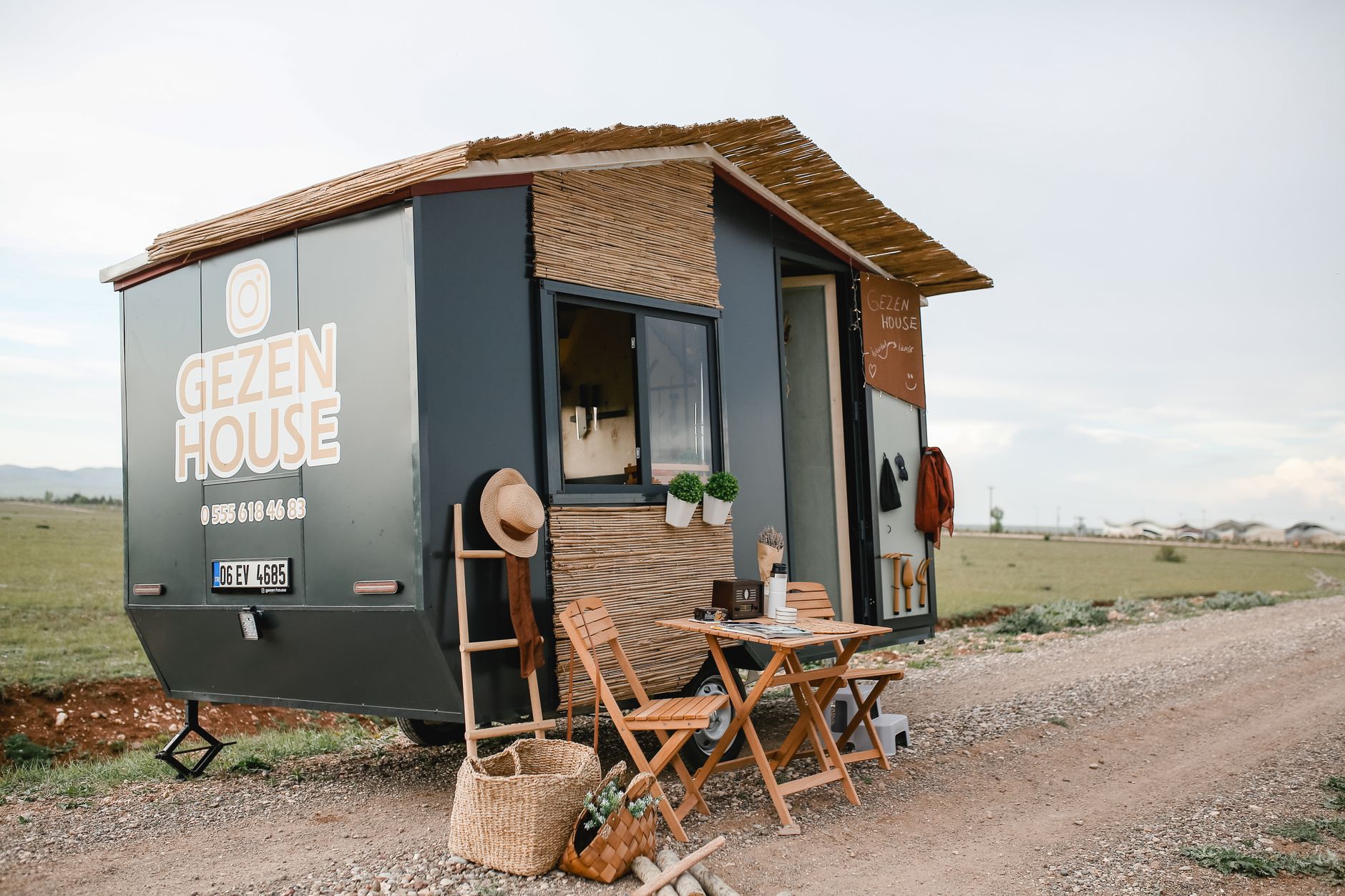
Photo by Melike B
Tiny house on skids: still movable, often feels more “set down” when parked
Skids use strong beams or rails under the floor. You load them with a crane or forklift for moves. This setup works for semi-permanent spots. It feels stable on uneven ground. No wheels hide the RV look, so it blends like a cabin.
Pros include lower build costs without trailers. Insulation goes easier. You add a full foundation later if needed. Stability beats wheels in wind or snow. Cons hit mobility. Moves need heavy gear and permits. Zoning sees them as permanent sometimes, so rules tighten.
Choose skids if you park six months or more. They suit mild climates. Your home stays put yet ready to shift.
Expandable and prefab micro homes: fast setup, but read the fine print
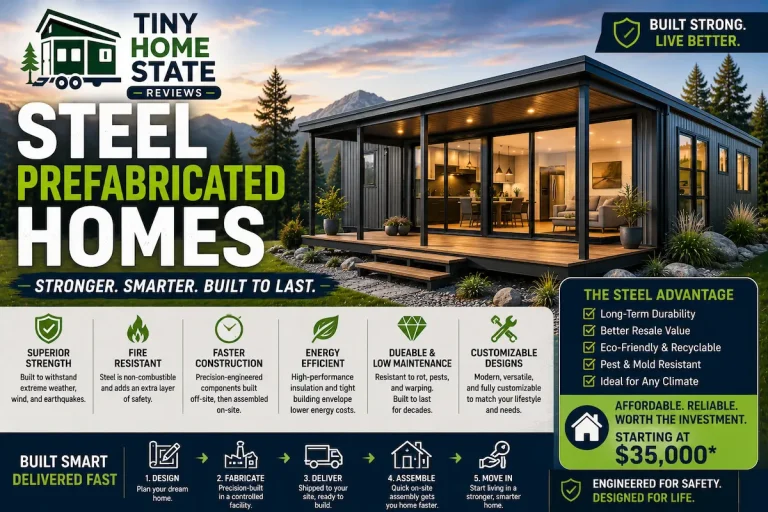
Prefab and expandable portable tiny houses boom in 2026. Factories build them under 200 square feet, then ship ready to unfold. Pop-outs add 100 square feet for parked space. Nomads and resorts snap them up for speed.
Verify key specs before buying. Insulation needs R-20 walls and R-40 roofs for cold snaps. Wind ratings hit 120 mph, snow loads 50 psf. Get engineered stamps. Wiring follows RVIA standards with 200-amp panels. Plumbing uses PEX pipes to avoid leaks. Check delivery access too.
Ads show low prices for shells or kits, not finished homes. Solar batteries often extra. Inspect everything. Third-party checks save headaches. These fit quick moves in any weather.
Portable, but still livable: the features that matter most day to day
Livability makes or breaks daily life in a portable tiny house. Real bathrooms with showers beat compost toilets. Kitchens need smart workflows, like pull-out pantries. Sleeping lofts want standing height and stairs. Noise control uses thick walls. Storage hides in benches and stairs.
2026 trends shine here. Open layouts mix kitchen, living, and dining in one great room. Big windows and bifold doors blend indoor-outdoor spaces. Ground-floor bedrooms ease access. Nooks turn into home offices with desks.
Smart tech adds lights, climate control, and security via apps. Keep it simple for reliability. Off-grid solar powers most. Plants and dark wood add cozy vibes. You live full-time without feeling cramped.
The real cost of a portable tiny house, from purchase to monthly living
You dream of that portable tiny house life, but sticker shock hits fast. Prices go beyond the base model. Factor in one-time buys like trailers and hookups, plus monthly hits from lot rent to utilities. In 2026, expect a solid budget of $50,000 to $120,000 upfront for most setups, then $500 to $2,000 monthly ongoing. Builders quote wide ranges because choices stack up quick. Let’s break it down so you build a smart plan.
Typical price ranges in 2026, and why quotes vary so much
Many portable tiny houses cost $30,000 to $70,000 in 2026. Prefab finished homes run $25,000 to $80,000, ready to tow. Custom builds climb to $50,000 to $140,000 for your exact specs. Larger or luxury ones top $100,000 easy.
Cost per square foot tells more. Prefab hits $150 to $300 per foot because factories churn them out fast. Custom jumps to $300 to $450 per foot. A 200-square-foot prefab might land at $40,000, so $200 a foot. Your 300-foot custom? Closer to $105,000, or $350 a foot.
Prices swing wild for good reasons. Material costs fluctuate; steel frames hold steady, but fancy wood or metal roofs add thousands. Labor eats big chunks in custom jobs, since pros spend months on site. Better insulation, like spray foam for cold winters, boosts quotes 10 to 20 percent. Large energy-efficient windows let in light but hike bills. Kitchen upgrades with quartz counters or full-size fridges push past basic. Same for bathrooms; a composting toilet saves, while a flush setup doubles plumbing costs.
Shop three quotes. Compare apples to apples on size and features. Then add 20 percent buffer for surprises.
Hidden costs people forget, trailer, delivery, hookups, and site prep
Base prices lure you in, yet add-ons pile on 20 to 50 percent more. Trailers cost $4,500 to $11,000 if not included; heavy-duty ones with brakes run higher. Delivery adds $200 to $1,500 for 250 miles, then $2 to $5 per mile beyond. Long hauls top $10,000.
Site prep sneaks up too. Permits run $200 to $2,000 by county. Level the spot with gravel pads at $1,000 to $5,000. Add steps or decks for $500 to $3,000, skirting to hide the underbelly for $1,000, and anchors for wind at $500. Leveling blocks or jacks cost $200, winterizing kits another $300.
Utilities hook next. Power pedestals hit $1,000 to $3,000. Water lines or tanks add $500 to $2,000. Sewer or septic connections reach $2,000 to $10,000. Propane setups for heat run $500, internet boosters $200. Off-grid solar skips some, but batteries cost $5,000 plus.
Build in a 15 to 25 percent buffer. List every extra before signing.
What it costs to park it, lot rent, utilities, and storage when you travel
Parking eats your monthly budget most. Lot rent spans $250 to $1,500, based on spot and perks. City edges charge $400 to $800. Beach or mountain sites top $1,000 to $1,500. Some bundle water and sewer; others tack on $100 to $400 extra.
Check what’s included. Power might add $50 to $150 monthly. Propane for cooking or heat runs $20 to $100. Internet or trash fees pile $30 to $80 more. Seasonal rates drop 20 to 30 percent off-peak.
Travel often? Storage costs $100 to $300 monthly at RV yards. Storms or rule shifts force quick moves, so budget $500 yearly for that. Shop parks with month-to-month deals. Total monthly? Plan $600 to $1,800 to stay safe.
Financing and insurance basics (personal loans, RV loans, and what changes the deal)
Cash works if you save up; 10 to 15 percent of buyers do. Loans fit most. RV loans suit wheel-based portable tiny houses, with 10 to 20 percent down on a $50,000 unit. Terms stretch 10 to 15 years at 6 to 10 percent rates. Personal loans cover non-RV certified ones, but expect higher rates and shorter runs.
Classification shifts everything. RV status means RV parks open up, yet home loans vanish. Banks check trailer axles and certifications like RVIA. Manufactured home loans apply rare for skids.
Insurance runs $500 to $2,000 yearly average. Cover structure, contents, and towing liability. Mobile units cost more because theft or wreck risks rise. Location bumps premiums; flood zones double them.
Call insurers first. Ask about your build and plans. Get quotes side by side. That saves thousands long-term.
Where can you legally park a portable tiny house in the US
You want that portable tiny house parked without surprise fines or eviction notices. Rules change by city, county, HOA, or even neighborhood, so no national law covers it all. However, most spots treat these homes like RVs, which limits options. Still, smart choices exist. Follow proven paths to stay legal and stress-free.
Why the rules feel confusing, zoning, building codes, and RV-style limits
Local zoning creates the biggest puzzle. No single US rule applies everywhere. Many areas follow versions of the International Residential Code (IRC). Yet, Appendix Q, which eases tiny home rules under 400 square feet, sits in just a few states.
Minimum size requirements block many plans. Counties often demand 800 to 1,700 square feet for homes. Portable tiny houses fall short, so they get denied as primary residences.
RV classification hits hardest. Tiny houses on wheels count as recreational vehicles in most places. That means full-time living stays okay only in RV parks or campgrounds. Outside those, you face bans on permanent occupancy. Eight states, like Alaska and Iowa, outright prohibit tiny homes. Others allow them with strict checks. Always verify your spot first.
The easiest places to stay long term, tiny house communities, RV parks, and rural land
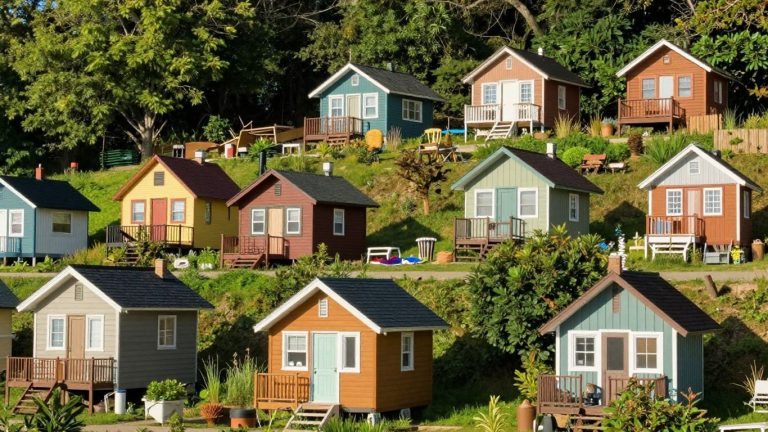
Start with tiny house communities. Builders set these up with zoning approval, utilities, and shared septic. They offer long-term spots, often $400 to $1,000 monthly. Examples pop up in Colorado and Oregon.
RV parks work next. Most permit full-time stays in portable tiny houses. Check policies, though. Some cap at six months; others allow yearly leases. Rates run $300 to $1,200, including power and water.
Rural land shines for fewer limits. Counties outside cities often skip strict sizes. Private owners rent lots cheap, around $200 to $600 monthly. Verify zoning allows residences.
In all cases, confirm basics. Ask about water access, septic hookups, trash pickup, mail delivery, and winter road plows. These keep daily life smooth.
A simple step-by-step checklist to avoid fines or a forced move
Follow this sequence to park legally. It saves headaches every time.
- Call your local zoning or planning office. Search “[your city/county] zoning department” online.
- Ask how they classify portable tiny houses on wheels. Do they count as RVs or homes?
- Confirm if full-time living works there. Can you stay year-round?
- Check permit needs. Ask about temporary occupancy, skirting, or critter-proofing rules.
- Inquire on utilities and inspections. Some require hookups or yearly checks.
- Get answers in writing, like via email. Rules shift, so document everything.
Skirting hides wheels in some areas. Critter barriers prevent pests. Inspections might happen annually. This checklist works nationwide.
Short stays vs full-time living, what “allowed” often really means
Short stays differ from full-time setups. Weekends or vacations fit most RV parks without issue. Seasonal stays, like summer only, work in campgrounds too.
Full-time living tightens rules. “Allowed” often means RV parks or communities as primary residence. Backyard parking? Rare. Many ban wheels as accessory dwelling units (ADUs). Foundations only qualify in spots like California suburbs.
Picture this. In an RV park, live full-time easy. On a rural lot, seasonal works if zoned right. Backyard ADU? Skids on foundation might pass, but wheels get towed. Know your goal, then match the spot.
How to choose a design that stays comfortable after the honeymoon phase
That first thrill of a portable tiny house fades fast if the layout cramps your style. You need a design that fits real life, not just pretty pictures. Start by picturing your daily routine. Do you cook big meals? Work from home? Share space with a partner? Smart choices now prevent regrets later. Focus on livability first, so comfort lasts years.
Start with your non-negotiables: sleep, bathroom, cooking, and work space
Pin down must-haves before sketches begin. Sleep tops the list. A fixed ground-floor bed beats lofts for easy access, especially if knees ache after 50. Couples often pick queen-size platforms with storage below. Tall folks over 6 feet check loft headroom; aim for 4 feet standing height, plus wide stairs over steep ladders to avoid midnight falls.
Bathrooms demand real showers, not tiny wet rooms. A 30×30-inch stall feels roomy; cassette toilets save water but need emptying. For cooking, secure 4 feet of counter space next to the sink and stove. Pull-out boards add prep room without clutter.
Work space seals it. Skip fold-down desks if you grind eight hours daily. Build in a fixed nook with outlets and legroom. Ask yourself: Can I zoom without knocking elbows? These picks shape everything else, so list them now.
Small-space design that works in 2026: open layouts, big windows, and storage that disappears
Open layouts transform 300 square feet in portable tiny houses. They blend kitchen, living, and dining into one flow, so you never feel boxed in. Natural light pours through big windows and skylights, making walls recede. Clerestory glass high on walls adds views without blocking counters.
Storage hides smartly too. Stairs to lofts pull out as drawers for clothes. Foldaway tables tuck by the door; convertible benches become extra beds. Hydraulic platforms lift for daytime floor space. Wall organizers hold spices; hidden compartments swallow the vacuum under stairs.
Shoes live in entry cubbies. Coats hang on hooks behind doors. These tricks keep paths clear. In 2026 builds, owners rave about one-level flows and multi-use spots that stay tidy.
Off-grid or hookups, decide early so you do not pay twice
Pick your power path upfront, because retrofits cost double. Off-grid setups shine for remote spots. Solar panels pair with lithium batteries for steady juice. Water tanks hold 50 gallons; greywater systems divert sink runoff. Composting toilets cut blackwater needs. Yet, match capacity to habits. Long showers drain fast in cold climates; induction stoves sip power but laundry guzzles it.
Full hookups suit parks with shore power, city water, and sewer. They simplify life but tie you down. Many 2026 portable tiny houses come off-grid ready, with 200-amp panels and PEX plumbing. Test your style first. Do you chase sun or stick to lots? Climate tips the scale; snowy winters demand big batteries.
Weather, road vibration, and maintenance, what owners say is different from a normal home
Owners love the cozy vibe in portable tiny houses, yet tight quarters test patience after months. One person thrives; couples bicker over socks on the floor. Weather bites too. Snow loads demand sturdy roofs at 50 psf. Heat waves call for heat-pump AC; rain seals prevent leaks.
Road vibration loosens screws over time, so park on cinder blocks for stability. Re-check seals yearly; durable cladding like ribbed metal shrugs off storms. Insulation hits R-20 walls minimum. Critter-proof skirts block mice when parked. Reviews stress simple fixes keep upkeep low, unlike stick-built homes that hide flaws. Choose resilient materials, and daily life stays smooth.
Conclusion
Portable tiny houses deliver that mobile life you crave, but success starts with smart picks. Choose wheels for frequent trips because they tow easy behind a truck. Pick skids if you settle longer; they feel stable and cost less upfront. Prefab or expandable models suit quick setups, so you skip long builds.
Budget covers everything to avoid shocks. Plan $30,000 to $70,000 for purchase, then add $2,000 to $5,000 for moves and site prep. Monthly parking hits $500 to $1,500, including utilities. In short, tally one-time and ongoing costs now.
Legal spots seal the deal, so confirm before you buy. RV parks work most places. Rural land offers flexibility. However, zoning varies; some counties ban full-time stays.
Back to Tiny House Space Saving Tips
Explore more tiny home living, design, downsizing, building, and lifestyle resources.
- Tiny Homes for Rent in Wyoming: Wild West Getaways to Book
- Tiny Homes for Rent in Washington: Forest Escapes & Cozy Stays
- Tiny Homes for Rent in Utah: Red Rock Retreats to Book
- Tiny Homes for Rent in Oregon: Forest Retreats You’ll Love
- Tiny Homes for Rent in New Mexico: Desert Gems & Starry Skies
- Tiny Homes for Rent in Nevada: Desert Hideaways Worth Booking