Shipping Container Pool Ideas: Complete Inspiration Guide

Converted shipping containers are becoming a popular pool option for homeowners who want a modern pool with a smaller footprint. If you are looking for a backyard upgrade that stands out, shipping container pool ideas offer a creative path toward a functional backyard oasis without the months of messy concrete excavation.
However, you should set realistic expectations right from the start because a container pool isn’t simply a steel box filled with water. It needs professional cutting, structural reinforcement, waterproofing, specialized plumbing, electrical work, and careful site preparation before you can take your first swim.
To help you navigate the process, this guide covers everything you need to know about different pool styles, design upgrades, realistic costs, local permits, installation hurdles, safety considerations, and ongoing maintenance. Because the best design depends heavily on your yard size, budget, local climate, and intended use, exploring various layouts helps you find the right setup for your property.
What Is a Shipping Container Pool and How Does It Work?
A shipping container pool is a heavy-duty steel cargo box modified to hold water safely and function just like a traditional in-ground or above-ground swimming pool. Instead of pouring concrete or digging massive holes, manufacturers take a Corten steel shipping container, cut and weld the structure, and install all the necessary mechanical systems inside the metal shell. Because these boxes are built to endure harsh ocean environments, their corrugated steel walls provide a sturdy frame that withstands heavy water pressure and shifting soils.
Standard Container Sizes and Pool Dimensions
Most container pools come in two standard lengths, which directly affect how you can use your backyard space. A 20-foot container works well as a compact plunge pool, while a 40-foot container offers more room for swimming laps, lounging, or hosting guests in divided zones.
However, interior dimensions are smaller than the listed exterior size because of the steel walls, insulation, plumbing, and finish layers. For example, a standard 8-foot-wide container leaves you with a narrower swimming lane once you factor in interior coatings and ledges. You should always confirm the final usable depth and width with the manufacturer before ordering so your pool matches your daily swimming habits.
Factory-Built Pools Versus Converted Shipping Containers
Choosing between a factory-built unit and a custom conversion changes your installation timeline, budget, and design flexibility. Factory-built units offer rigorous quality control, preinstalled plumbing and electrical systems, reliable warranty support, and much faster site work because they arrive ready to drop into place.
On the other hand, a custom local conversion gives you more control over window placements, stairs, integrated decking, exterior colors, and specialized equipment configurations. Custom builds require more on-site coordination and often carry greater structural risks if the fabricator lacks experience with marine-grade steel and water pressure calculations.
Cutting large openings for glass viewing panels or side windows weakens the structural integrity of the steel box unless certified engineers add proper steel reinforcement frames. Before deciding on a build method, check current local building rules and permit requirements in your municipality, because code officials often treat container pools differently than standard vinyl or fiberglass models.
Shipping Container Pool Ideas for Small and Modern Backyards
Transforming a steel cargo box into a backyard swimming oasis requires matching the layout to your specific property layout and lifestyle goals. Because outdoor spaces vary wildly in size and terrain, exploring different configurations helps you visualize how a metal pool fits your daily routine. Whether you own a tight urban townhouse plot or a sprawling suburban lot, you can adapt these durable structures into functional retreats.
A Compact Plunge Pool for a Small Yard
A 20-foot container serves as an efficient cooling plunge pool for patios, townhomes, narrow yards, or smaller homes where standard pools take up too much turf. Because of the limited footprint, this setup focuses on relaxation and quick relief from summer heat rather than long-distance swimming laps. You can maximize interior comfort by adding built-in bench seating along the back wall and wide entry steps for easy lounging.

A Long Lap Pool for Exercise and Training
Property owners who value daily fitness can use a 40-foot container to create a narrow lap-style pool designed specifically for training. Because these containers are inherently narrow, serious swimmers often add a swim current system to generate resistance for continuous swimming in place.
Non-slip entry steps ensure safe access at one end, while flush-mounted underwater lights keep nighttime training sessions safe and clear. Swim current systems do not make the pool physically wider, so you should test the water flow before purchasing to make sure the resistance matches your stroke style. Always factor in the electrical load of these mechanical pumps, because running a heavy-duty current generator requires dedicated circuit capacity.
A Raised Pool With a Wraparound Deck
A raised container pool acts as the striking architectural centerpiece of a modern outdoor room when you surround it with custom carpentry. Wrapping the metal structure in composite decking, horizontal wood cladding, or stone veneer hides the industrial corrugated walls completely.
Integrate built-in seating, safety railings, matching stairs, and hidden access panels for pumps and filters to maintain a clean aesthetic. Raised installations require a strong concrete foundation to support the immense weight of thousands of pounds of water. Plan your drainage paths carefully so splashing water flows away from the decking substructure and prevents premature wood rot or soil erosion.
A Partially Buried or Sunken Container Pool
Burying part of the container helps the pool blend naturally into sloping yards while lowering the overall visual height of the structure. This approach mimics the look of a traditional in-ground pool without requiring deep excavation across the entire footprint.
Specialized waterproofing layers, exterior corrosion protection, and sturdy retaining supports are mandatory to protect the steel walls from direct soil contact. Underground water pressure and shifting earth create serious engineering challenges, so this configuration requires professional installation rather than a simple weekend project. Ensure your contractor provides easy access hatches for servicing the pump and filter systems once the surrounding ground is finished.
A Resort-Style Pool With Glass, Lighting, and Spa Features
Upgrading your setup with luxury finishes turns a standard steel box into a custom backyard resort. Popular premium additions include side viewing windows, multi-color underwater LED lights, integrated heating units, and a built-in spa ledge for relaxing.
Large glass cutouts and acrylic viewing panels elevate the visual appeal, but they require precise structural engineering, high-grade rubber seals, and routine inspections to prevent leaks. Balance your ambitions by choosing only the features that fit your local climate, budget, and weekly maintenance schedule. Selecting the right combination of upgrades ensures your backyard remains a low-stress oasis for years to come.
Design Details That Make a Container Pool Feel Finished
Finishing a steel structure requires careful attention to materials and layout to make the final installation look intentional and comfortable. The surrounding design choices turn an industrial box into a backyard retreat that feels completely integrated with your home.
Interior Finishes, Liners, and Waterline Details
Your pool interior determines both daily comfort and long-term maintenance. Reinforced pool liners offer a soft touch and easy cleaning, while spray-applied coatings provide a seamless, high-end look similar to traditional concrete pools.
Fiberglass-style finishes give you a smooth surface that resists algae growth, but they demand precise installation so the rigid material doesn’t crack against shifting steel walls. Every finish option changes how your pool holds heat, how easy it is to repair, and how often you need to balance the chemistry.
Because container pools are narrower than standard inground models, small interior details matter even more. Rounded corners prevent scraping against metal seams, while protected top edges shield swimmers from sharp trim.
A clean, distinct waterline tile band makes cleaning easier by hiding the residue line where oils and sunscreens collect. Selecting light-colored interior finishes also helps reflect sunlight, which keeps the water feeling refreshing during peak summer months.
Steps, Ladders, Benches, and Safe Entry Points
Entry design demands extra planning because a narrow footprint leaves very little room for bulky obstacles. Corner steps or built-in swim benches maximize open swimming space by keeping the middle lane completely clear. If you prefer a full-width tanning ledge at shallow end, make sure it doesn’t crowd the rest of the pool, especially in compact twenty-foot models.
Every entry point needs a slip-resistant surface to prevent slips and falls on wet metal or tile. Sturdy handrails provide stability for children and older guests as they step down into the water. Positioning ladders or recessed stairs near the filtration equipment keeps traffic moving smoothly without blocking your primary swimming lane.
Decking, Privacy, Shade, and Landscaping
Surrounding surfaces tie the entire backyard project together while improving daily usability. Composite decking, treated wood, pavers, and poured concrete all work well if they feature proper drainage slopes and non-slip textures. Dark decking materials absorb intense solar heat, so choose lighter tones if you plan to walk barefoot around the pool edge.
Privacy screens, pergolas, and tall planting beds turn an exposed metal box into a private oasis. Keep mulch, soil, and aggressive plant roots far away from service panels and mechanical bays so technicians can easily reach pumps and filters for future repairs. Plan your equipment placement carefully to isolate pump noise from seating areas, and verify that delivery trucks have clear access to your yard before installing permanent decking or fences.
How Much Does a Shipping Container Pool Cost?
Building a backyard retreat with a shipping container pool requires a realistic budget framework because prices vary widely based on your choices. A container pool is not a one-size-fits-all purchase, so your final investment depends on whether you buy a new or used metal box, its dimensions, and the level of factory completion.
Delivery distance, foundation requirements, excavation depth, and local labor rates also shift the bottom line. Therefore, broad current-market ranges serve only as estimates rather than fixed quotes.
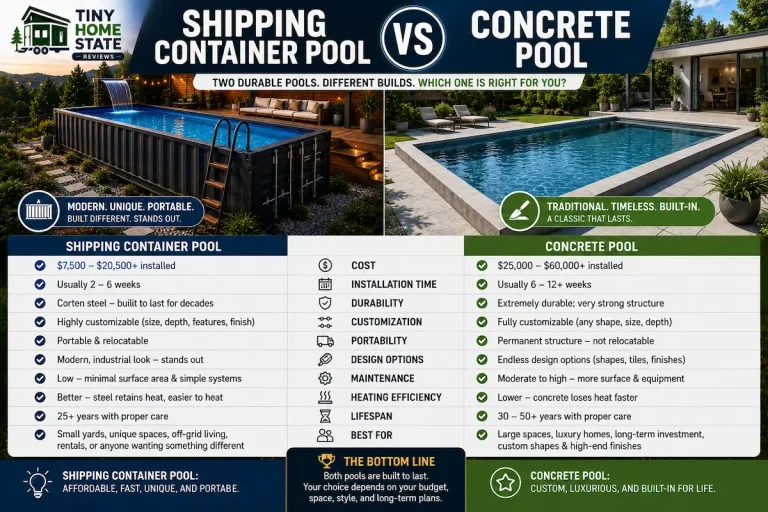
Basic conversions often start around twenty-five thousand dollars, while fully customized luxury builds with extensive decking and premium features can exceed sixty thousand dollars. Separating the pool package price from site work and ongoing ownership costs helps you avoid surprise expenses during construction.
The Main Upfront Costs to Include in a Budget
A thorough budget must account for every phase of the project rather than just the initial price of the steel shell. You should request an itemized quote that clearly lists allowances and exclusions so you know what is covered before signing any contracts.
Unusually cheap quotes often leave out vital essentials such as delivery freight, crane service, electrical hookups, soil drainage, structural reinforcement, or warranty coverage.
Here are the main cost categories to include in your financial plan:
- Container or pool shell: The base Corten steel box, whether modified locally or built in a factory.
- Structural work and reinforcement: Adding steel supports, especially if you cut large windows into the walls.
- Waterproofing and interior finish: Spray-applied coatings, liners, or fiberglass layers that protect the metal and provide a smooth surface.
- Pumps, filtration, and plumbing: The mechanical heart of the pool, including skimmers, return jets, and piping.
- Heating systems: Heat pumps or gas heaters required to keep the water comfortable in cooler climates.
- Delivery and crane placement: Freight charges and heavy machinery rental needed to drop the heavy metal box into your yard.
- Foundation and excavation: Concrete pads, piers, or retaining walls required to support thousands of pounds of water securely.
- Electrical connection: Running dedicated circuits from your main panel to power pumps, lights, and heaters.
- Fencing and decking: Perimeter safety barriers, custom wood cladding, or composite decks built around the raised structure.
- Permits, landscaping, and sales tax: Local municipal fees, plan reviews, site restoration, and applicable taxes.
Ongoing Energy, Water, and Maintenance Expenses
Owning a backyard pool brings recurring monthly and seasonal expenses that you must factor into your long-term budget. Electricity costs depend on how long you run the pump filter and whether you heat the water. Water treatment chemicals, replacement filters, and routine water testing kits add up over the swimming season. In addition, you need to budget for seasonal winterization, covers, and occasional mechanical repairs as pumps age.
A smaller water volume can sometimes reduce chemical and heating costs compared to massive concrete pools. However, a long exposed steel shell loses heat quickly unless you install proper insulation and a quality thermal cover. Local energy prices, regional weather patterns, desired pool temperature, and your personal use frequency dictate your real total operating expenses each year. Regular upkeep protects your investment and keeps the water clean and safe for swimming.
Container Pools Compared With In-Ground and Above-Ground Pools
Choosing the right pool style depends on your installation timeline, yard layout, and long-term property goals. A container pool is usually faster and more predictable to install than a fully custom in-ground concrete pool. However, metal containers remain narrow by design and may not suit every narrow or irregularly shaped backyard.
Above-ground pools cost less upfront, but they lack the modern architectural appeal and durability of a heavy-duty steel cargo box. Traditional in-ground pools offer limitless shape and size choices, yet they require weeks of messy backyard excavation and intensive site work. Container pools strike a unique balance between above-ground affordability and in-ground durability when your property layout supports a rectangular footprint.
Planning, Installation, Permits, and Safety Before Delivery
Ordering a steel shell requires careful preparation before any truck arrives at your property. Professional installers evaluate soil strength, slope, drainage, overhead wires, narrow gates, and turning space to make sure heavy equipment can reach the drop site safely.
You need a clear path from the street to the final backyard location, meaning you should measure gate widths, check for low-hanging tree branches, and confirm crane reach ahead of time. Foundation types vary based on your local soil conditions and property layout, ranging from simple concrete slabs and steel supports to engineered piers.
Understand Permits, Inspections, and Local Pool Rules
Building a backyard retreat involves navigating local bureaucracy before you spend any money. A shipping container pool is still a swimming pool in the eyes of the law, and municipal offices often treat it as a permanent structure or modified cargo container.
You need to contact your local building department to ask about setbacks, structural plans, electrical permits, plumbing permits, stormwater control, and homeowners association rules. Get written answers from these offices before paying a deposit to avoid costly fines or project delays later. Qualified installers often help handle these approvals, but you should always confirm who takes responsibility for pulling the required permits.
Build in Layers of Protection for Children and Pets
Water safety demands multiple layers of defense to protect children and pets from accidental drowning. You should install four-sided fencing equipped with self-closing and self-latching gates to restrict unsupervised access.
Complement your physical barriers with pool covers, door alarms, water sensors, and non-slip decking around the perimeter. Good visibility and clear sightlines from your house help maintain active adult supervision, though no alarm or cover ever replaces a watchful parent. Keep rescue equipment nearby, and make sure adults in the household know basic CPR and local emergency numbers.
Plan for Filtration, Heating, Drainage, and Service Access
Mechanical placement affects daily noise levels, energy use, repair times, and your backyard aesthetic. You want a dry and well-ventilated service area that leaves enough room for technicians to remove filters and reach valves easily.
Plan how you will handle backwash and wastewater disposal, especially if your municipality has strict drainage codes. Cold climates require proper winterizing steps and protection against freezing pipes, while low-lying yards need drainage solutions to prevent flooding around the equipment bay. Ask your installer exactly how the system is drained and serviced before you finalize the installation plan.
How to Choose the Right Container Pool Company
Finding the right builder takes patience because modular pool fabrication requires specific engineering skills that traditional pool contractors might lack. Instead of settling for the first quote you find, compare at least three detailed proposals from established modular pool brands and regional builders.
Check whether the company designs, builds, delivers, and installs the full system or simply outsources critical steps to subcontractors. Verify current licenses, active insurance policies, real customer reviews, and physical service areas before you hand over any money.
Questions to Ask Before Signing a Pool Contract
Before you commit to a builder, ask direct questions about structural reinforcement, corrosion protection, and waterproofing methods. Find out how the company handles liner or coating repairs, water testing protocols, and heavy equipment access for your specific yard.
Ask about their winterization process, and clarify who pays for delivery damage or installation delays. You should also request local permit responsibilities in writing and ask who performs warranty work if a mechanical part fails later. Ask for photos of completed projects and contact details for recent customers who had similar sites.
Warning Signs of a Risky Quote or Weak Installation Plan
Red flags often appear during the quoting phase, so look closely at the paperwork before you sign. A price with no itemized scope, intense pressure to pay in full upfront, or vague responsibility for municipal permits means you should walk away.
Reliable builders provide a clear engineering review, a solid drainage plan, specific equipment model numbers, and comprehensive warranty language. Be cautious if a salesperson promises that a heavy metal container can be installed on any surface without proper ground preparation. Taking time to evaluate these details protects your investment and ensures your backyard project goes smoothly from the first excavation day to your first swim.
Common Mistakes to Avoid With a Shipping Container Pool
Building a backyard oasis from a steel box sounds straightforward until unexpected hurdles drain your wallet and patience. Avoiding common pitfalls keeps your project on track and ensures your new investment lasts for decades.
Ordering Before Checking Local Permits
Skipping a trip to your local municipal office is a fast way to halt construction before it even begins. Building departments often classify shipping container pools differently than standard models, requiring specific engineering sign-offs and property setbacks. Always secure your permits in writing before you pay a deposit or buy any materials.
Ignoring Delivery Logistics and Access
A 40-foot steel box is massive, heavy, and difficult to maneuver through narrow suburban streets. If you ignore overhead power lines, tight corner turns, and soft ground, your delivery truck might get stuck halfway to your backyard. Measure your gate width and check crane reach well in advance to prevent costly delivery delays.
Choosing Size by Exterior Measurements
Exterior dimensions lie to you because interior space shrinks significantly once you add steel reinforcement, insulation, and protective coatings. A standard box leaves you with a much narrower swimming lane than the spec sheet suggests. Always confirm usable interior dimensions with your manufacturer so you don’t end up with a cramped swimming area.
Cutting Corners on Waterproofing and Structural Cuts
Cutting large holes for viewing windows or side panels removes vital structural integrity from the corrugated metal walls. If your builder fails to add engineered steel reinforcement frames or skimps on marine-grade waterproofing, leaks and rust will follow quickly. Professional welding and multi-layer coatings protect the steel from constant water exposure and shifting soil pressure.
Forgetting Equipment Access and Service Space
Tucking your pump, filter, and heater into a hidden corner might look tidy, but technicians need room to work. If service hatches are blocked by decking or landscaping, routine repairs turn into expensive demolition projects. Design your equipment bay with plenty of open space for easy filter cleaning and valve maintenance.
Underestimating Heating Costs and Skipping a Cover
Exposed steel walls lose heat rapidly when ambient temperatures drop, driving up your monthly utility bills. Running a heater without a thermal cover wastes energy and leaves the water freezing cold during cooler months. Invest in a quality insulated cover and consider a dedicated heat pump to keep your swimming season comfortable.
Placing the Pool Too Close to Structures
Installing your pool directly against your house or property line creates massive drainage and foundation risks. Splashing water and backwash need plenty of room to drain away from your home foundation and neighboring properties. Maintain safe clearance distances to protect existing structures and satisfy local building codes.
Treating a Custom Conversion as a Simple DIY Project
Modifying a cargo box requires specialized welding, precise plumbing knowledge, and heavy machinery operations that go beyond weekend DIY skills. Treating the build like a casual backyard project often leads to structural failure, plumbing leaks, and code violations. Leave the heavy fabrication to experienced professionals who understand marine-grade steel mechanics.
Before you finalize your backyard plans, run through this quick decision checklist to evaluate your project from every angle:
- Budget: Are you accounting for permits, crane delivery, and electrical hookups alongside the shell price?
- Yard: Does your property have clear heavy equipment access and proper drainage slopes?
- Use: Does your chosen container size match your daily swimming and relaxation habits?
- Safety: Do you have a plan for four-sided fencing, self-latching gates, and safety covers?
- Climate: Can your heating and winterization plan handle local seasonal temperature drops?
- Maintenance: Are you prepared for weekly chemical testing, filtration upkeep, and surface care?
- Resale: Will a custom container pool add long-term value to your specific neighborhood?
Conclusion
Building a custom backyard retreat using shipping container pool ideas offers a modern appearance, a compact footprint, faster installation potential, and flexible customization. However, you still need to account for narrow interior dimensions, specific engineering needs, local permits, delivery challenges, corrosion protection, and ongoing maintenance.
Before ordering a metal shell, measure your property carefully and contact your local building department to check permit rules. Next, identify your intended use so you choose the right size and layout. Finally, request itemized quotes from qualified installers to avoid surprise costs.
The best container pool isn’t the one with the most expensive features. Instead, it’s the one that fits your site, budget, safety needs, and daily lifestyle.
Explore more tiny home living, design, downsizing, building, and lifestyle resources.
- Tiny Homes for Rent in Wyoming: Wild West Getaways to Book
- Tiny Homes for Rent in Washington: Forest Escapes & Cozy Stays
- Tiny Homes for Rent in Utah: Red Rock Retreats to Book
- Tiny Homes for Rent in Oregon: Forest Retreats You’ll Love
- Tiny Homes for Rent in New Mexico: Desert Gems & Starry Skies
- Tiny Homes for Rent in Nevada: Desert Hideaways Worth Booking