Shipping Container Pool Installation: Complete Planning Guide
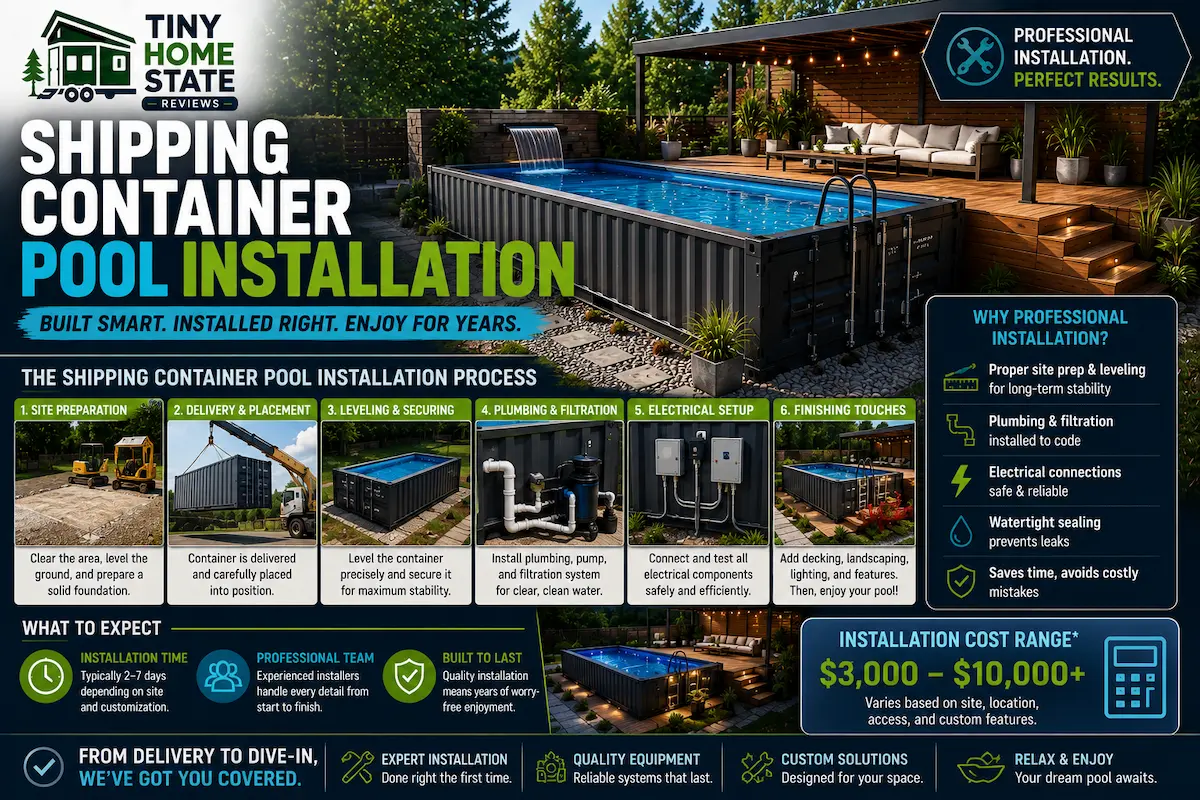
Picture a sleek steel shipping container pool resting inside a compact backyard, turning a patch of dry grass into a cool, modern oasis. This industrial setup appeals to homeowners who want a faster, smaller, and more flexible alternative to a traditional in-ground pool. Shipping container pool installation offers a durable option that fits tight spaces and drops into place with fewer complications than poured concrete.
Still, you shouldn’t mistake this project for a simple weekend DIY task. The work remains a true construction project, requiring careful site preparation rather than just placing a metal box on the ground and filling it with water.
You need to navigate several moving parts before taking the plunge. This guide covers essential site planning, permit requirements, container preparation, installation steps, ongoing costs, safety measures, maintenance routines, and the exact moments when you need to call a professional.
Shipping Container Pool Installation: What Homeowners Should Know First
A shipping container pool is a robust swimming vessel built from a decommissioned or newly manufactured industrial steel intermodal container. Transforming this raw metal box requires rigorous cleaning, structural reinforcement, waterproof lining, and integrated plumbing so it can safely hold thousands of gallons of water without buckling or leaking.
How a Steel Container Becomes a Watertight Pool
The journey from a rusty cargo box to a backyard oasis starts with structural modifications. Builders cut precise openings for skimmers, return jets, and optional glass viewing panels, then weld heavy steel reinforcements around those cutouts to restore the box’s natural load-bearing strength. Without these welded supports, the outward pressure of the water will bulge the corrugated walls.
Corrosion protection comes next because standing water and pool chemicals wage a constant war against raw steel. Workers apply industrial epoxy primers, anti-corrosive coatings, and polyurethane sealants to every square inch of exposed metal.
After rustproofing, the interior receives a waterproof membrane or a custom-fit vinyl liner, similar to traditional inground pools. High-density spray foam insulation is applied to the exterior walls to regulate water temperature and prevent heat loss. Finally, technicians hook up the vital organs:
- Variable-speed pumps that circulate the water
- Sand or cartridge filters that trap debris
- Saltwater chlorinators or chemical feeders that keep the water sanitary
- LED lighting arrays and digital control panels for easy operation
Popular Container Pool Layouts and Features
You can configure these steel vessels in three main ways depending on your yard layout and budget. Above-ground models sit directly on a reinforced concrete slab, offering a quick setup with minimal excavation. Partially buried designs blend seamlessly into sloping yards or raised decks, while fully inground installations mimic traditional concrete pools at a fraction of the build time.
Compact twenty-foot models work well for tight urban lots and splash zones, while forty-foot models provide ample room for actual lap swimming. Keep in mind that internal dimensions shrink slightly after framing, insulation, and interior finishes are installed.
Popular upgrades include built-in bench seating, interior stairs, swim jets for resistance training, and automated pool covers for safety and heat retention. Factory-built units arrive fully assembled on a flatbed truck, while custom on-site conversions allow for unique shapes and custom deck surrounds. Your local soil conditions, property access for heavy cranes, and municipal building codes will ultimately dictate which layout and features make sense for your home.
Is a Container Pool a Good Fit for Your Yard?
Deciding whether a shipping container pool installation fits your property requires a careful look at your yard, budget, and lifestyle goals. These steel structures offer a striking modern aesthetic and a faster route to backyard relaxation than traditional concrete builds. However, they also present unique spatial constraints and engineering realities. Weighing the pros and cons helps you determine if this industrial approach matches your daily routine.
The Benefits That Make Container Pools Stand Out
Homeowners often choose this format when they need a durable plunge pool for a rental property, a compact family oasis for a small urban lot, or a sharp architectural feature for a modern landscape.
A twenty-foot model serves as a deep, refreshing splash zone for a narrow backyard, while a forty-foot version provides enough length for actual morning laps. Because these vessels arrive nearly complete, installation causes less disruption to your yard than weeks of heavy excavation and concrete pouring.
Furthermore, you gain structural flexibility. You can place the steel shell entirely above ground on a simple concrete pad, sink it partially into a slope, or bury it completely to mimic a traditional in-ground setup. Their rigid steel frames also make them easier to relocate if you decide to move, a major advantage over poured concrete or fiberglass shells.
The Tradeoffs to Consider Before You Buy
Despite their visual appeal, these metal pools come with distinct limitations. The interior width remains restricted by standard intermodal dimensions, meaning you get a narrow swimming lane rather than a wide recreational basin. Steel conducts temperature quickly, so high-density spray foam insulation is mandatory to prevent rapid heat loss during cooler months.
Corrosion is another ongoing concern. Standing water and chemical sanitizers require vigilant maintenance to protect the interior lining and exterior frame from rust. Equipment noise from pumps and filters can also echo off the metal walls, so careful placement away from patios or bedroom windows is necessary.
Finally, a container pool is not automatically cheaper than traditional options. Once you factor in crane delivery fees, site excavation, utility hookups, and custom decking, the total price often rivals standard inground installations. Your final experience depends heavily on working with an experienced builder who understands proper steel reinforcement and waterproofing.
Plan the Site, Permits, and Base Before the Container Arrives
Before a steel box transforms into a backyard oasis, you must lay the groundwork. Proper planning prevents costly delays and structural failures down the road. You cannot simply drop a heavy metal container onto loose topsoil and fill it with water. Therefore, every successful shipping container pool installation starts with careful preparation of your property, permits, and foundation.
Permits, Pool Barriers, and Electrical Approvals
Municipalities regulate pool depth, setbacks, barriers, gates, alarms, bonding, grounding, and electrical equipment. Because requirements vary by city and state, contact your local building department before purchasing a container.
Local officials will outline the exact property lines and easements you must respect. Furthermore, you will need licensed professionals to handle specialized systems. A licensed electrician ensures the pump and heater meet local electrical codes, while a plumber manages supply lines and drainage connections. Structural professionals also help evaluate whether your site can handle the massive weight of a filled vessel.
Choosing the Right Location and Foundation
Your yard needs a level, stable base, such as a reinforced concrete slab or an engineered foundation. Gravel alone is rarely enough for a permanent installation because shifting soil will cause the steel shell to settle unevenly and twist. When picking a spot, evaluate sun exposure, privacy, and nearby trees that drop debris into the water. Drainage is another critical factor.
Stormwater must flow away from the pool base rather than pooling around the steel walls. If you plan a buried installation, expect to build retaining walls, waterproofing systems, and perimeter drainage channels. Proper planning also requires easy access to water sources, power mains, and enough clearance for pump and filter maintenance.
Planning Delivery and Crane Access
A loaded delivery truck requires precise routing because a full container pool weighs many tons. Your supplier and delivery company must confirm road conditions, overhead clearance, turning radius, and the final placement method.
Measure all gates, narrow side yards, and overhead utility lines before scheduling transit. You should also get written confirmation detailing who handles local permits, traffic control, and crane fees. If heavy machinery cannot reach your backyard, you might face expensive alternate placement methods or project delays. A thorough site inspection ensures your dream project arrives and settles into place without incident.
How the Shipping Container Pool Installation Process Works
Transforming an industrial cargo vessel into a backyard oasis involves a precise sequence of heavy construction and specialized trades. Because every property is unique, the shipping container pool installation sequence adapts to whether your unit arrives pre-built on a flatbed or requires on-site fabrication. Still, a reliable framework guides every successful project from raw metal to crystal-clear water.
Inspecting and Preparing the Shipping Container
Before any modifications begin, professionals inspect the raw metal box for structural integrity. They check for deep dents, twisting frame rails, rust perforation, and chemical contamination from previous cargo use. Once the vessel passes inspection, workers remove any old wooden flooring and thoroughly clean the interior surfaces.
Surface preparation then requires sandblasting to strip away old paint and reveal bare steel, followed immediately by anti-corrosive epoxy primers and rust-inhibiting sealants. Next, fabricators cut precise openings for skimmers, return jets, and optional viewing windows. Because these cutouts weaken the original structure, welders add heavy steel reinforcement frames around every opening to restore load-bearing strength.
Installing the Foundation, Container, and Pool Shell
Site preparation starts on the ground with a reinforced concrete slab and a proper drainage layer to prevent shifting. Once the base cures, a heavy crane lifts and places the container onto the pad, where technicians level and anchor the structure securely.
For buried designs, backfilling must happen in careful stages. Crews pour concrete slurry or compacted gravel around the exterior walls while simultaneously filling the interior with water to equalize the immense pressure. If you are modifying load-bearing walls during this phase, you must follow engineered plans strictly to prevent buckling.
Adding Plumbing, Filtration, Heating, and Electrical Systems
Circulation forms the heartbeat of your pool, pulling water from skimmers and main drains through a closed loop. The water travels to the pump, passes through a sand or cartridge filter, moves through a heater, and runs past a sanitizer before returning through wall jets. Saltwater chlorine generators offer a popular alternative to traditional chemical tablets, though the salt still requires corrosion-resistant equipment and routine water testing.
Electrical work demands strict adherence to safety codes. Technicians install dedicated GFCI protection, bond the metal shell to a copper grounding grid, and set up equipment enclosures in well-ventilated areas away from standing water.
Waterproofing, Finishing, and Commissioning the Pool
Waterproofing methods vary based on your design preferences and budget. Installers might apply spray-applied polyurea coatings, drop in a custom-fit vinyl liner, or install a composite shell inside the metal frame. Once the waterproofing cures, technicians pressure-test every plumbing line, inspect all structural seams, and verify that water levels remain stable.
Balanced chemicals, verified pump circulation rates, and successful municipal safety inspections complete the project before final handover. A typical installation takes anywhere from two to six weeks once the container arrives, depending on custom decking features, site excavation challenges, and local inspection schedules.
How Much Does a Shipping Container Pool Cost?
Building a backyard container pool is an exciting endeavor, but nailing down a precise price tag requires looking past simple marketing numbers.
Because every yard has unique terrain and every homeowner has different style preferences, costs vary widely across the country. A basic above-ground plunge pool can cost far less than a fully buried, custom-finished structure equipped with heating and integrated decking. As you plan your project, treat any broad numbers as preliminary planning estimates that must be verified with local providers.
The Biggest Line Items in a Container Pool Budget
Your total investment depends on a long chain of specific choices. The container itself is just the starting point, and you must decide whether to buy a brand-new modified steel shell or a decommissioned cargo box.
After purchasing the vessel, structural modifications drive up the labor costs, especially if you add custom glass viewing windows, interior stairs, or built-in bench seating. Site preparation also demands serious funds because excavating earth, pouring a reinforced concrete foundation, and managing difficult delivery routes for a massive crane require specialized heavy machinery.
Additional features quickly expand your initial budget. You need to account for high-efficiency pumps, sand or cartridge filters, saltwater or chlorine sanitation systems, and dedicated pool heaters. Climate control and comfort features, such as automatic safety covers and spray foam insulation, add substantial value while increasing upfront expenses.
Finally, surrounding the vessel with extensive wooden decking, safety fencing, professional landscaping, and municipal permits rounds out the major financial commitments. A low base purchase price often doubles or triples once you add essential site work and code-compliant utility connections.
How to Compare Quotes From Pool Builders
Evaluating contractor proposals requires a careful eye for detail. You should request comprehensive, itemized quotes that break down every phase of the project so you can easily spot missing expenses or hidden fees.
- Shell dimensions, steel gauge, and structural reinforcement details
- Surface preparation standards and waterproofing warranty lengths
- Specific equipment brands and horsepower ratings for pumps and filters
- Exact electrical and plumbing scope, including trenching and panel upgrades
- Delivery methods, heavy machinery requirements, and crane fees
- Local permit acquisition, engineering stamps, and municipal inspection fees
- Project schedules, payment milestones, change-order rules, and site cleanup
Reputable builders will gladly provide professional references, photo galleries of completed projects, proof of liability insurance, and evidence of licensed trade partners.
Financing options and contingency funds are also vital components of your financial plan, as unexpected soil issues or electrical upgrades often trigger minor cost overruns. Beyond the initial construction, remember to budget for ongoing operational expenses such as electricity, water, chemical balancing, routine filter replacements, and seasonal heating. By gathering detailed quotes and preparing a realistic financial buffer, you set the stage for a smooth installation and years of worry-free swimming.
Safety, Maintenance, and Long-Term Care for a Container Pool
Keeping a backyard steel vessel in peak condition requires a reliable routine. A container pool handles water chemistry and daily wear just like traditional builds, yet the metal shell demands extra vigilance to prevent corrosion. Protecting your investment means balancing water chemistry, inspecting mechanical equipment, and maintaining strict safety barriers so the oasis stays pristine and secure for years.
A Simple Maintenance Schedule That Protects the Pool
Organizing your chores by frequency keeps the workload manageable and prevents small issues from turning into expensive repairs. Daily routines involve checking water levels and skimming surface debris before it sinks. Weekly tasks require testing pH, alkalinity, and sanitizer levels, alongside scrubbing the walls to stop algae before it grips the steel.
Monthly care includes inspecting pump baskets, backwashing or rinsing filters, and checking the skimmer weir. Seasonal maintenance covers lubricating equipment O-rings, inspecting the interior coating for wear, and winterizing plumbing lines if freezing temperatures arrive. Always prioritize manufacturer instructions for your specific pump, heater, and liner system because generic rules do not always match proprietary equipment specs.
Preventing Rust, Leaks, and Water Damage
Corrosion is the primary enemy of any steel structure, especially when standing water and chlorine meet raw metal. High-performance coatings, waterproof liners, and exterior spray foam insulation act as shields for the steel shell, while proper site drainage prevents groundwater from pooling against the exterior walls. Ventilation around the pump enclosure also stops moisture from trapping condensation against metal surfaces.
Water chemistry plays a direct role here because low pH eats away at protective barriers. Test the water frequently and keep chemicals balanced to stop aggressive corrosion. If rust spots appear, address them immediately. Minor surface blemishes require sanding and touch-up epoxy, but deep corrosion near welds or reinforced cutouts often demands draining the pool and bringing in a certified specialist to restore structural integrity.
Pool Safety Features Every Installation Should Include
Safety remains paramount once the water fills the vessel. Code-compliant barriers, such as secure fencing and lockable gates, prevent unauthorized access by neighborhood children and pets. Door alarms and floating pool motion sensors add an extra layer of awareness.
Below the surface, anti-entrapment drain covers protect swimmers from powerful suction forces. Electrical systems require dedicated GFCI protection and professional bonding to eliminate shock hazards. Non-slip steps, handrails, and safe underwater lighting prevent slips during evening swims.
Establish clear safety rules for guests, and always maintain active supervision when children are near the water. Local municipal codes ultimately control the exact requirements you must meet to pass final inspection.
How to Choose a Reliable Container Pool Installer
Finding the right contractor turns a stressful construction project into a smooth transition. Many companies sell modified shipping containers, but only a specialized installer manages the complete shipping container pool installation from start to finish.
You want a partner with proven experience in structural steel fabrication, specialized waterproofing, complex pool plumbing, electrical coordination, and engineering approvals. A full-service team takes responsibility for local building permits and final municipal inspections, saving you from playing general contractor between different trades.
Questions to Ask Before Signing a Contract
Protecting your investment starts by asking direct questions before you sign any paperwork. You need to know the exact grade of the steel shell and how the fabricators handle structural reinforcement around cutouts for skimmers and lights.
Ask about their specific waterproofing method, whether they use multi-layer epoxy or spray-applied polyurea, and how they manage surrounding drainage. Clarify which equipment brands they install for pumps and heaters, and make sure their delivery quote covers crane fees and tight-spot positioning.
Ask how they handle change orders, who manages local permit applications, and what warranties apply to both the structural shell and the plumbing lines. You should always get every single promise, warranty detail, and schedule milestone in writing before handing over your deposit.
Warning Signs of a Risky Container Pool Project
Red flags often appear during early conversations with unqualified builders. Walk away if a contractor cannot provide a detailed structural plan or acts dismissive about local permit requirements. Unlicensed electrical work or vague quotes that leave out foundation prep, crane delivery, or trenching will lead to dangerous safety hazards and massive repair bills later.
Be wary of companies using reused cargo containers with unknown histories or exposed, untreated steel that will rust quickly under standing water and chlorine. If a provider insists that every backyard can support a steel pool without engineering evaluations or refuses to clarify who is responsible for future leaks, find someone else. Shortcuts in steel fabrication and waterproofing cause catastrophic structural failures once thousands of gallons of water fill the vessel.
Your final decision rests on a few core realities. Confirm your site readiness, establish a firm total budget that accounts for unexpected electrical updates, and match your intended use with the right container size. Evaluate your personal commitment to routine maintenance, and make sure a licensed professional signs off on the final installation.
Conclusion
A modified shipping container transforms an industrial steel box into a striking backyard retreat, but project success relies entirely on engineering, a solid foundation, proper waterproofing, safe utilities, permits, and ongoing care. Homeowners must compare the full installed cost with traditional pool types instead of judging by the initial container purchase price alone.
Measure your site boundaries, contact your local building department, and request detailed quotes from experienced installers to get started.
Explore more tiny home living, design, downsizing, building, and lifestyle resources.
- Tiny Homes for Rent in Wyoming: Wild West Getaways to Book
- Tiny Homes for Rent in Washington: Forest Escapes & Cozy Stays
- Tiny Homes for Rent in Utah: Red Rock Retreats to Book
- Tiny Homes for Rent in Oregon: Forest Retreats You’ll Love
- Tiny Homes for Rent in New Mexico: Desert Gems & Starry Skies
- Tiny Homes for Rent in Nevada: Desert Hideaways Worth Booking