Tiny House Storage Stairs Tips

Picture this: You’ve downsized to a tiny house storage stairs setup, but now clothes pile up, tools scatter everywhere, and that loft feels miles away. Every square inch matters in these compact homes. That’s where tiny house storage stairs come in; they transform the dead space under your loft into smart storage while giving you safe, easy access upstairs.
These clever stairs pack in 20-50 cubic feet of extra room, perfect for stashing clothes, books, tools, or blankets. You slide open a drawer for socks, lift a step for blankets, or tuck tools into a hidden compartment. As a result, your small space feels bigger and stays organized without bulky furniture.
In 2026, trends lean toward eco-materials like reclaimed wood and recycled composites that hold up well. Multi-use features shine too; think stairs with pull-out pantry steps for kitchen gear or benches that flip up for shoes. Japanese-inspired modular designs let you customize every tread, so it fits your lifestyle perfectly.
You’ll find popular options like alternating tread stairs that save floor space or bookshelf combos for a stylish touch. Meanwhile, fold-away versions tuck neatly when not in use. These keep your home clutter-free and functional.
This post covers the best designs to try, simple DIY tips for building your own, and hot trends making waves now. Plus, we highlight common mistakes, like skimping on hardware or poor measurements, so you avoid them. In short, get ready to make your tiny house work harder with tiny house storage stairs that blend storage and style seamlessly.
First, we’ll explore top designs. Then, DIY steps keep costs low. Finally, pro tips ensure safety and longevity. Whether you’re a builder or buyer, these ideas help you maximize every step.
Why Tiny House Storage Stairs Solve Your Space Crunch
You face a space crunch in your tiny house. Clothes stack up. Tools scatter across floors. Lofts seem hard to reach. Tiny house storage stairs fix all that. They pack storage into every step. As a result, you gain room without adding square footage.
These stairs use vertical space smartly. Regular stairs or ladders waste area below them. Storage versions turn that into drawers or cubbies. You save 20-30% more floor space than traditional setups. For example, they fit into a 4×4 foot spot, unlike bulky ladders that block paths.
Maximize Vertical Space with Smart Design
Tiny house storage stairs grab unused height. Each tread holds drawers for clothes or books. Under-stair spots fit bulky items like water heaters. Owners add 10-30% more storage overall. Therefore, your 200-square-foot home feels twice as big.
Consider L-shaped models. They hug walls perfectly. In addition, pull-out pantries slide from steps for kitchen gear. You store towels, toys, or tools right where you need them.
Reduce Floor Clutter for a Cleaner Home
Floors stay clear because stairs hide your stuff. No more piles of shoes or blankets. Drawers in three to six steps equal a full closet. Meanwhile, side shelves keep books handy.
Tiffany from Tiny Home on Wheels loves her setup. Her stairs hold books and clothes in drawers. The hollow space fits a pet litter box and hot water heater. She calls it a “great solution.” Clutter vanishes fast.
Enjoy Safe, Easy Loft Access
Ladders slip and scare you. Stairs provide steady footing. Kids and pets climb without worry. Plus, they blend style with function. Wood finishes match your decor.
A TinyHome.io builder added three drawers, a broom closet, and cupboards. The stairs feel stable, not steep. Daily use beats ladders every time. Safety stays high, so you relax.
Multi-Purpose Wins for Everyday Life
These stairs do double duty. Steps flip up for shoes. Benches seat guests. You balance storage, access, and looks seamlessly. In short, they solve your crunch completely.
Drawer Stairs: The Easiest Way to Store Clothes and Books
Drawer-style tiny house storage stairs make storage simple. Each step pulls out like a drawer. You grab clothes or books fast. These work best for daily items such as linens and socks. In addition, they hold 20-40 cubic feet total. Quick access beats digging through closets.
However, they suit lighter loads only. Heavy tools go low to keep stairs stable. Soft-close hardware prevents slams. Use 10-inch deep treads for smooth pulls. As a result, your loft access stays safe and easy.
Here is a quick pros and cons breakdown:
| Pros | Cons |
|---|---|
| Fast grab-and-go for clothes, books | Lighter loads only (under 20 lbs per drawer) |
| Hides clutter neatly | Needs precise install for smooth glides |
| Adds 20-40 cu ft without extra floor space | Less room for bulky blankets |
Owners love the ease. Picture neat stacks inside each step. Bamboo or birch holds up well. Test pulls daily for best use.
Customizing Drawers for Your Lifestyle
Tailor drawers to your needs. Singles pick slim ones for socks and shirts. Families size up for kids’ toys or extra linens. For example, make bottom drawers 12 inches deep; top ones stay 8 inches.
Add dividers for socks versus undies. Labels on fronts speed finds. “Towels here” works great. Therefore, everyone stays organized.
Fit under lofts tight. Measure headroom first: stairs need 70-80 inches clear. Treads at 10 inches deep match most lofts. Side walls hug 36-42 inch widths. Heavy items stay low; light books go high.
In short, custom touches make these stairs yours.
Cabinet and Bookshelf Stairs for Bulkier Items and Display
Tiny house storage stairs with cabinets and bookshelves handle bulkier stuff better than drawers. Hinged doors swing open for pillows, tools, or blankets. You get 30-50 cubic feet of space, so access takes a second longer but holds more. Open shelves display books, plants, or decor neatly. Side cubbies add extra spots for quick grabs. As a result, your stairs double as furniture.
Blending Cabinets with Shelves for Max Versatility
Mix cabinets below shelves above for top flexibility. Lower hinged doors fit deep pantries or broom closets. Pull out spices or mops easily. Upper open shelves show off dishes or files. For example, Japanese Tansu styles stack boxes as steps with cabinets inside for cleaning gear.
Wardrobe stairs shine too. Add hanging rods behind doors for shirts and pants. One bamboo set packs a full closet into six steps. No extra dresser needed. However, drawers offer quicker pulls; cabinets give bigger loads.
Here’s a breakdown of storage options:
| Type | Capacity | Best For |
|---|---|---|
| Hinged Cabinets | 30-50 cu ft | Pillows, tools, pantry staples |
| Open Bookshelves | 20-40 cu ft | Books, plants, decor |
| Wardrobe with Rods | 25-45 cu ft | Clothes, linens |
| Side Cubbies | 10-20 cu ft | Supplies, small gear |
Builders mix these for kitchens or baths. Therefore, you store where it counts.
Spiral Stairs with Hidden Storage for Tight Corners
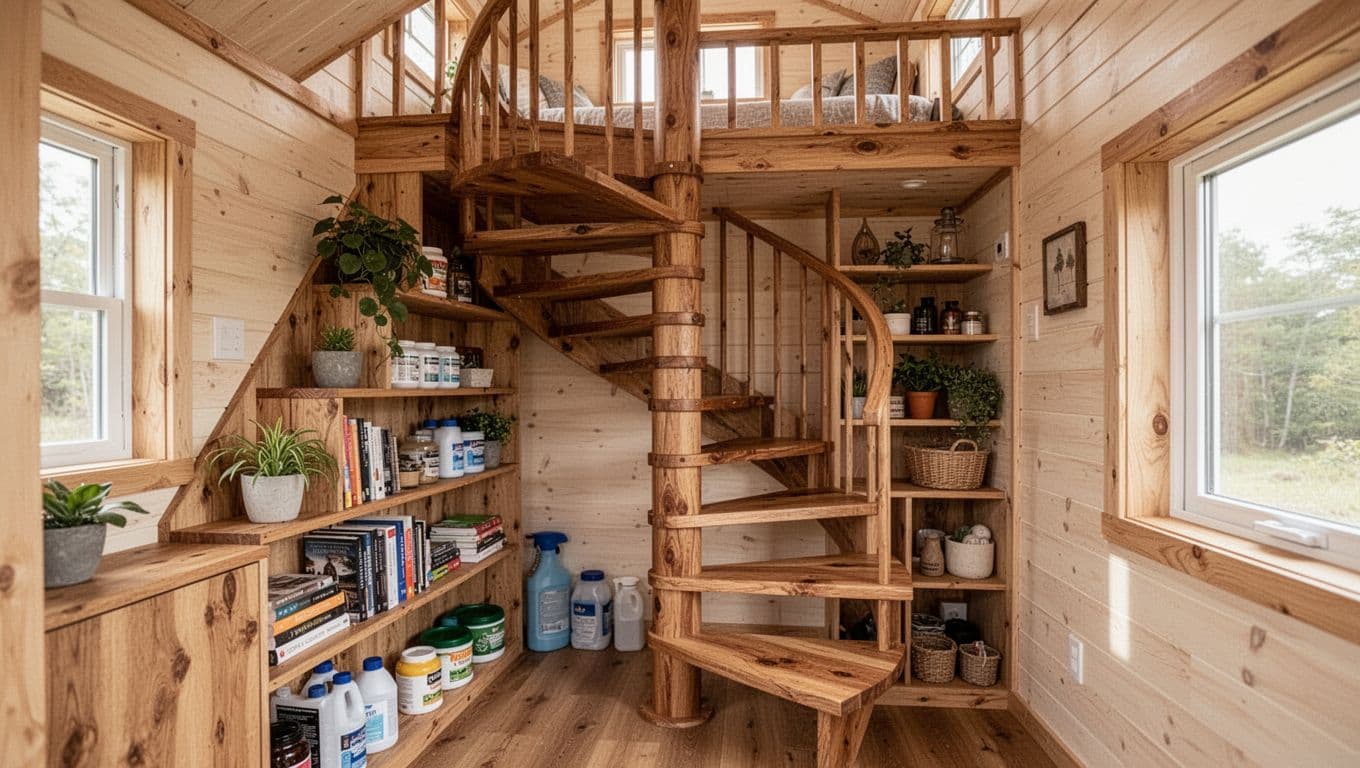
Spiral tiny house storage stairs cut 20-30% floor space versus straight ones. They fit snug corners perfectly. Add under-stair shelves for books or supplies. Decor stays visible; tools hide below.
Full treads keep safety high. Grip rails tight when climbing. Non-slip surfaces prevent slips, especially with loads. Meanwhile, alternating treads work in super-tight spots. You gain shelves without stealing room. In short, spirals boost style and function.
DIY Tips to Build Sturdy Tiny House Storage Stairs
You want sturdy tiny house storage stairs that last. DIY saves money and fits your space perfectly. Start with simple tools and 3/4-inch plywood for strong treads. Add heavy-duty brackets rated for 1,200 pounds each. These hold steps firm to walls or frames. In addition, kits for 6-7 steps make builds easy. Trends favor wall-mounted or loft-integrated designs. Handrails beat ladders for safety every time. Heavy items go low; light ones high. As a result, your stairs stay balanced and safe.
Build confidence comes from planning. You avoid wobbles or weak spots. Non-slip treads prevent slips too. Therefore, your loft access feels solid daily.
Planning Your Build Around Daily Needs
Declutter first. Sort clothes, tools, and pantry items. Toss what you don’t use. This clears space and shows real needs. For example, kitchen stairs suit pantries with pull-out steps for spices. Bedroom ones hold clothes in deep drawers.
Match storage to spots. Kitchen setups grab spices or pots from steps. Bedroom versions stack shirts and socks neatly. Therefore, you grab items fast without mess.
Sketch your layout next. Note broom heights or blanket bulk. Families need toy space; singles pick slim drawers. Test with cardboard mock-ups. They show fit before cutting wood.
Heavy stuff stays low for balance. Tools or water heaters go in bottom cabinets. Books or linens fit upper shelves. As a result, stairs won’t tip.
Here are numbered steps to build sturdy tiny house storage stairs:
- Measure everything. Check loft height, tread depth (7 inches), rise (10 inches), and width (22-36 inches). Add 70-80 inches headroom. Mark wall studs for brackets.
- Sketch storage. Draw drawers, cabinets, or Tansu-style boxes. Plan 6-7 steps for most lofts. Include handrails at 32-34 inches high.
- Gather materials. Buy 3/4-inch plywood, drawer slides, 1,200-pound L-brackets, screws, and non-slip tape. Kits speed things up for beginners.
- Cut and assemble frames. Build boxes or treads first. Attach slides inside steps. Bolt brackets to wall or loft frame securely.
- Install step by step. Anchor bottom bracket firm. Level each tread as you go. Add heavy items low; test weight before full use.
- Finish with safety. Screw handrails tight. Sand edges smooth. Apply non-slip grips. Load light, then add weight gradually.
- Test and tweak. Climb with loads. Adjust slides if sticky. In short, your stairs now maximize space safely.
These steps yield 20-40 cubic feet of storage. Wall-built versions hug tight corners. Loft-integrated ones blend seamless. You save on kits costing $500 to $2,000. Enjoy clutter-free climbs daily.
Top Materials and Fresh 2026 Trends
You build tiny house storage stairs that last and look great. Pick the right materials first. They boost strength, style, and eco-friendliness. In addition, 2026 trends push hidden storage and multi-use designs. Therefore, your stairs fit modern tiny homes perfectly.
Pick Materials That Mix Warmth, Strength, and Eco Vibes
Wood brings warmth to your stairs. Hardwoods like oak or walnut feel cozy underfoot. However, metal adds raw strength. Steel frames hold heavy loads without flex. Bamboo offers an eco boost because it grows fast and needs no chemicals. Birch plywood stacks easy for DIY boxes.
Mix them for best results. Hardwood treads on steel bases combine looks and power. Bamboo fronts pair with birch shelves for light, green storage. Reclaimed wood cuts waste too. As a result, you get stairs that match your decor and planet goals.
Consider this quick material match-up:
| Material | Key Benefit | Best Pairing |
|---|---|---|
| Hardwood | Warm feel | Steel frame |
| Bamboo | Eco-fast growth | Birch plywood |
| Metal (steel) | Heavy-duty hold | Wood treads |
| Birch plywood | Easy DIY stack | Bamboo fronts |
Owners swear by these combos. They last years with simple oil finishes.
2026 Trends: Hidden, Multi-Use, and Wall-Smart Storage
Fresh trends focus on vertical smarts. Wall-integrated stairs vanish into panels. Pull hidden drawers for clothes or tools. Multi-use treads flip to benches or pantries. Eco-materials lead because sustainability sells.
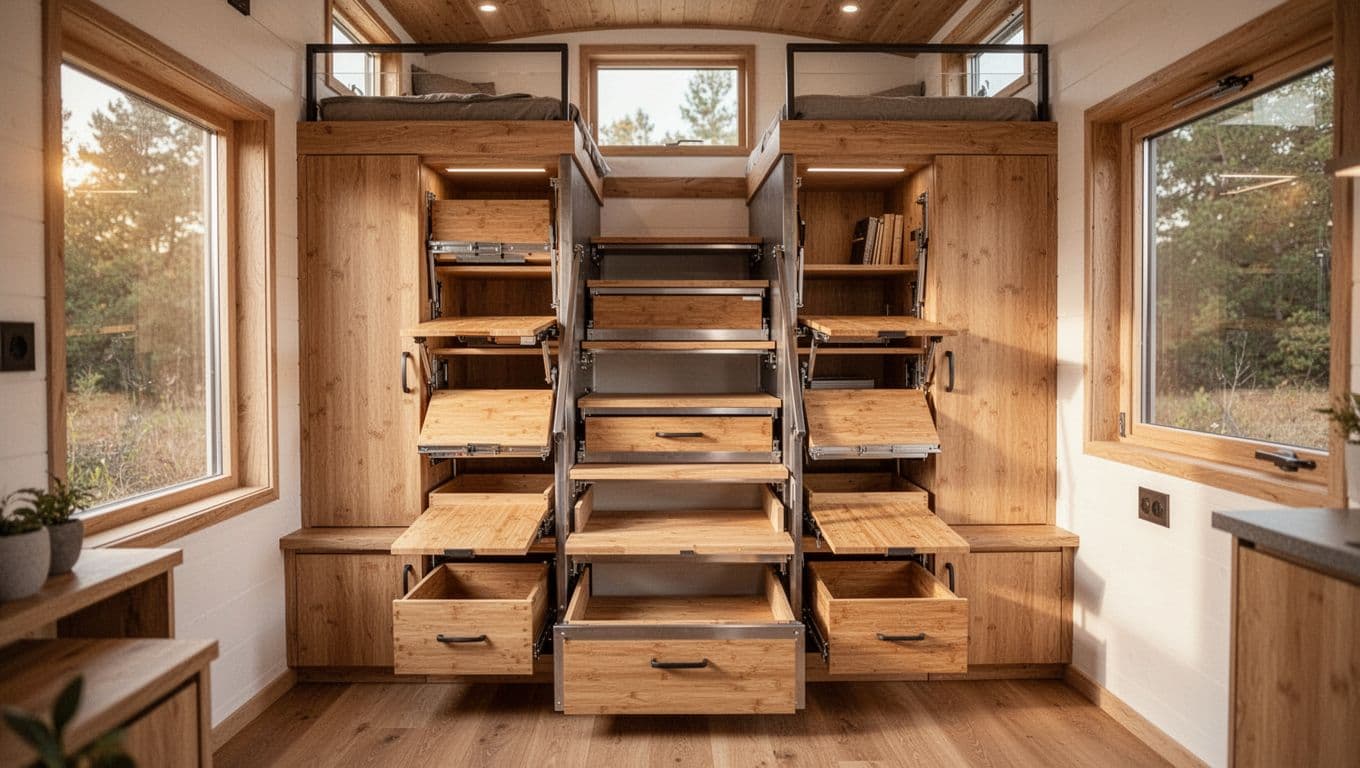
Tansu-style boxes stack as steps with secret spots. Spirals add under-shelf cubbies. Therefore, you pack 30-50 cubic feet without floor loss. Builders mix drawers low, shelves high. In short, these upgrades make climbs fun and functional.
Mistakes That Make Tiny House Storage Stairs Fail
Tiny house storage stairs boost your space, but bad choices ruin them fast. Builders often skip basics, so steps crack, rails fail, or whole units wobble. You end up with clutter traps instead of helpers.
However, spotting these errors early keeps your setup strong. For example, poor planning leads to trips or collapses under weight. In short, fix them now for safe climbs every day.
Top errors include poor weight balance, weak hardware, tiny treads, missing rails, overbuilding without declutter, and ignoring daily use. Each hurts function and safety. Here’s how to spot and fix them:
- Poor weight balance: Heavy tools up top make stairs tip. As a result, you risk falls. Fix it by loading bottom steps with dense items like water heaters; keep light clothes or books higher. Test balance before daily use.
- Weak secures: Cheap brackets or loose screws let steps shift. Therefore, they fail under people plus storage. Choose 1,200-pound-rated L-brackets and wall studs; tighten everything firm.
- Tiny treads: Steps under 10 inches deep cramp feet and cause slips. Meanwhile, narrow widths below 36 inches block safe passage. Build 22-36 inches wide with 10-inch treads for steady steps.
- No rails: Climbs without grippable handrails invite tumbles, especially for kids or pets. Add 32-34 inch rails on both sides; make them smooth yet sturdy.
- Overbuilding without declutter: You cram too much storage without tossing junk first. So, stairs overflow and feel cramped. Sort items ahead; match storage to real needs like socks or spices.
- Ignoring use cases: Kitchen stairs get pantry overload; bedroom ones pile clothes wrong. Therefore, they wear out fast. Plan for your spot: deep drawers for pots, slim ones for linens.
These fixes add years to your tiny house storage stairs. Most importantly, always test loads with real weights.
Safety Checks You Can’t Skip
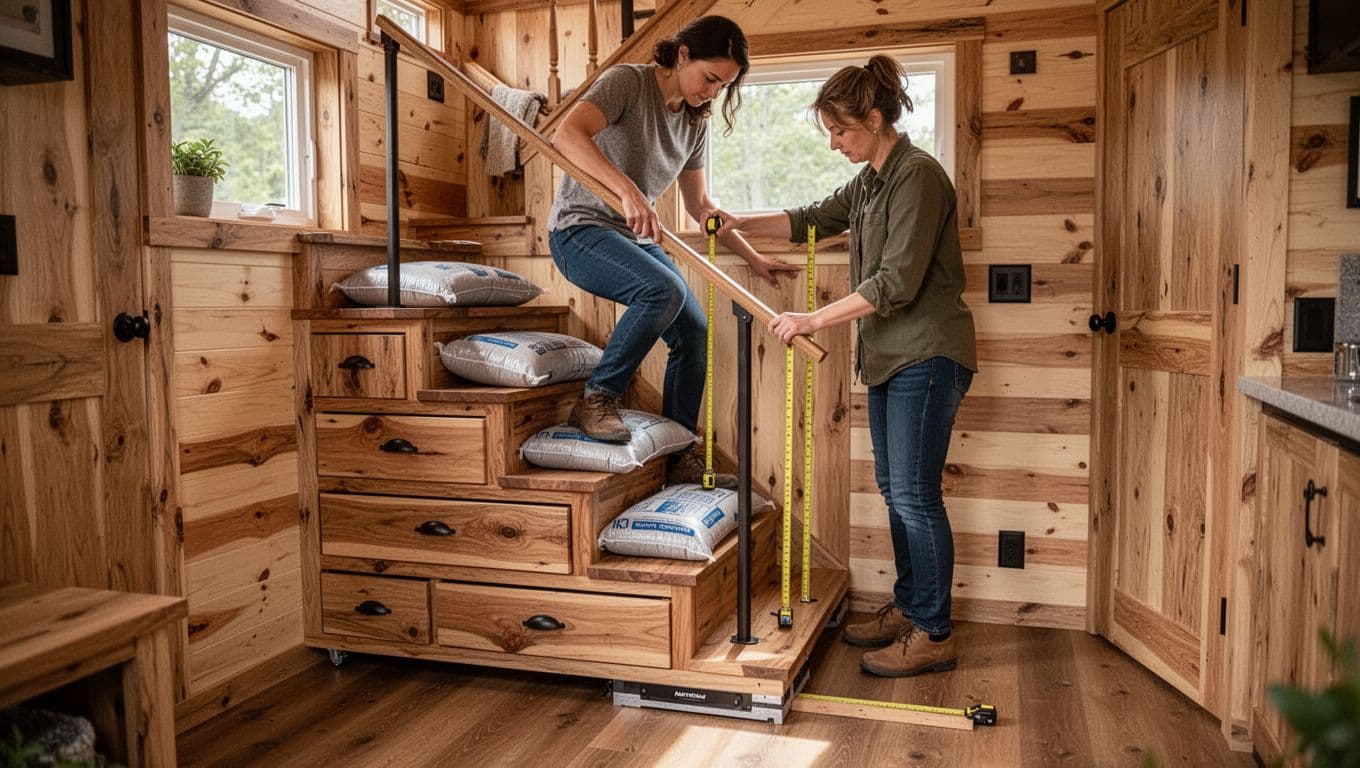
Safety sets your tiny house storage stairs apart from basic builds. Skip these checks, and you face cracks or slips. However, simple tests build confidence. Focus on load tests, rail height, and stable bases every time.
Start with load tests. Builders often ignore them, but stairs must hold people plus gear. Place 200 pounds per step using sandbags or weights. Climb while loaded; watch for wobbles or creaks. If anything flexes, reinforce brackets or plywood. Therefore, your setup handles daily traffic.
Next, check rail height. Rails under 32 inches fail codes and grip tests. Measure from tread noses to tops; aim for 32-34 inches. Test by grabbing tight during climbs. Too low? Extend posts or add extensions. As a result, everyone climbs secure.
Finally, ensure a stable base. Uneven floors shift stairs over time. Level the bottom with shims; anchor to studs or frames. Push hard side to side; no movement allowed. In addition, non-slip tape on treads prevents slides. These steps beat general fixes like wider stairs alone.
Do these checks post-build and yearly. You avoid disasters while maximizing space safely.
Conclusion
Tiny house storage stairs turn wasted space into smart solutions. You explored drawer designs for quick clothes grabs, cabinet and bookshelf setups for bulkier gear, and spirals for tight corners. DIY steps showed how to build sturdy versions with plywood, brackets, and non-slip treads. In addition, 2026 trends like hidden pantries and Tansu boxes add fresh style. Most importantly, you learned to dodge pitfalls such as poor balance or weak hardware.
These ideas boost your home by 20-50 cubic feet without extra floor space. Therefore, floors stay clear, lofts feel easy to reach, and daily life runs smooth. Families store toys low; singles tuck books high. As a result, organization becomes effortless.
Back to Tiny House Storage Ideas
Explore more tiny home living, design, downsizing, building, and lifestyle resources.
- Tiny Homes for Rent in Wyoming: Wild West Getaways to Book
- Tiny Homes for Rent in Washington: Forest Escapes & Cozy Stays
- Tiny Homes for Rent in Utah: Red Rock Retreats to Book
- Tiny Homes for Rent in Oregon: Forest Retreats You’ll Love
- Tiny Homes for Rent in New Mexico: Desert Gems & Starry Skies
- Tiny Homes for Rent in Nevada: Desert Hideaways Worth Booking