Tiny House Essentials

Have you been looking for more details regarding tiny house essentials? Meet Sarah. She sold her sprawling suburban home last year and traded it for a 300-square-foot tiny house on wheels. Now, she travels full-time, cooks gourmet meals in her compact kitchen, and sleeps under the stars without a single regret.
Sarah’s secret? She focused on tiny house essentials from day one. These smart picks let her pack light while keeping life cozy and fun. They save space, cut costs, and slash daily stress.
You can do the same. The right items turn a small footprint into a dream home. For example, they help you ditch clutter and embrace freedom.
In 2026, trends point to multi-functional furniture and off-grid solar setups. People love Murphy beds that fold away, storage ottomans that hide gear, and solar kits that power everything from lights to fridges. These choices make tiny living reliable and modern.
Plus, clever storage solutions use walls and lofts fully. Compact kitchen gear, like induction cooktops and mini fridges, handles real meals. Bathroom must-haves, such as composting toilets, save water and work off-grid.
You’ll also want climate control and safety basics. Mini-split AC units keep temps perfect. Smoke detectors and good insulation protect what matters.
This post breaks down the top categories. First, we cover furniture that pulls double duty. Then, power systems for independence. Next come storage hacks, kitchen setups, and bath essentials. Finally, extras like flooring and safety gear.
Stick around. You’ll get a full shopping list with budgets and tips. By the end, you’ll know exactly how to build your tiny house without waste. Ready to simplify? Let’s dive in.
Compact Kitchen Gear for Tasty Meals Without the Mess
You need a kitchen that packs a punch in your tiny house. Compact gear lets you whip up real meals without dominating space or creating chaos. These tiny house essentials focus on efficiency, so you cook like Sarah does, with fresh food and zero hassle. Best of all, they run low-wattage for off-grid setups and fit budgets from $2,000 to $5,000 total.
Fridges and Cooktops That Fit Anywhere
Start with an under-counter fridge for one or two people. These combos hold fridge and freezer space, often starting at $300. They slide right under counters or into corners, saving precious floor area.
For cooking, pick a two-burner propane or induction cooktop around $400 to $800. Propane heats fast and pairs well with your hot water system; it needs no power. Induction stays cool outside, so it’s safer in tight spots. Both options use just two burners most times, as folks rarely need more. Add space-savers like over-the-sink cutting boards or pull-out pantries nearby. Ventilation matters too; grab an exhaust fan for $100 to $200 to clear fumes quick.
Ovens and Everyday Utensils You Really Need
A multi-function toaster oven handles baking, air frying, and toasting for $200 to $400. It replaces bulky ovens and uses low power, perfect off-grid.
Keep utensils minimal. You only need three knives: a 5-7 inch Santoku, a small utility one, and a chef’s knife. Add one cast-iron skillet for everything from searing to baking, plus a cutting board, measuring tools, and basics like spatulas or a whisk. That’s your core set under $300 to $500.
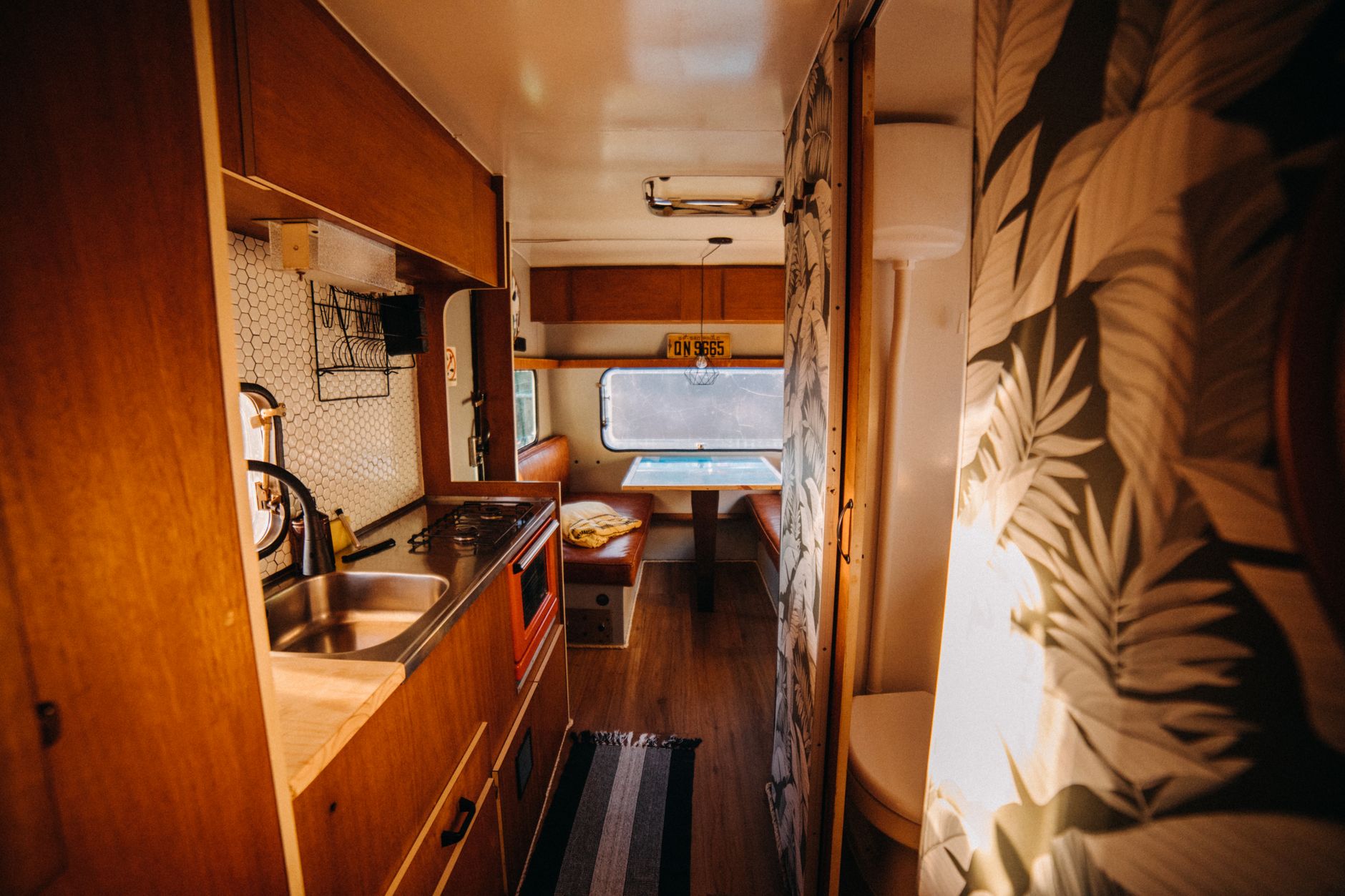
Photo by Matheus Bertelli
For hacks, use magnetic strips for knives and hanging racks for pots. A fold-down table expands prep space. This setup totals your budget, leaving room for extras like an electric kettle. Cook smart, eat well, stay clutter-free.
Bathroom Must-Haves That Keep Things Clean and Simple
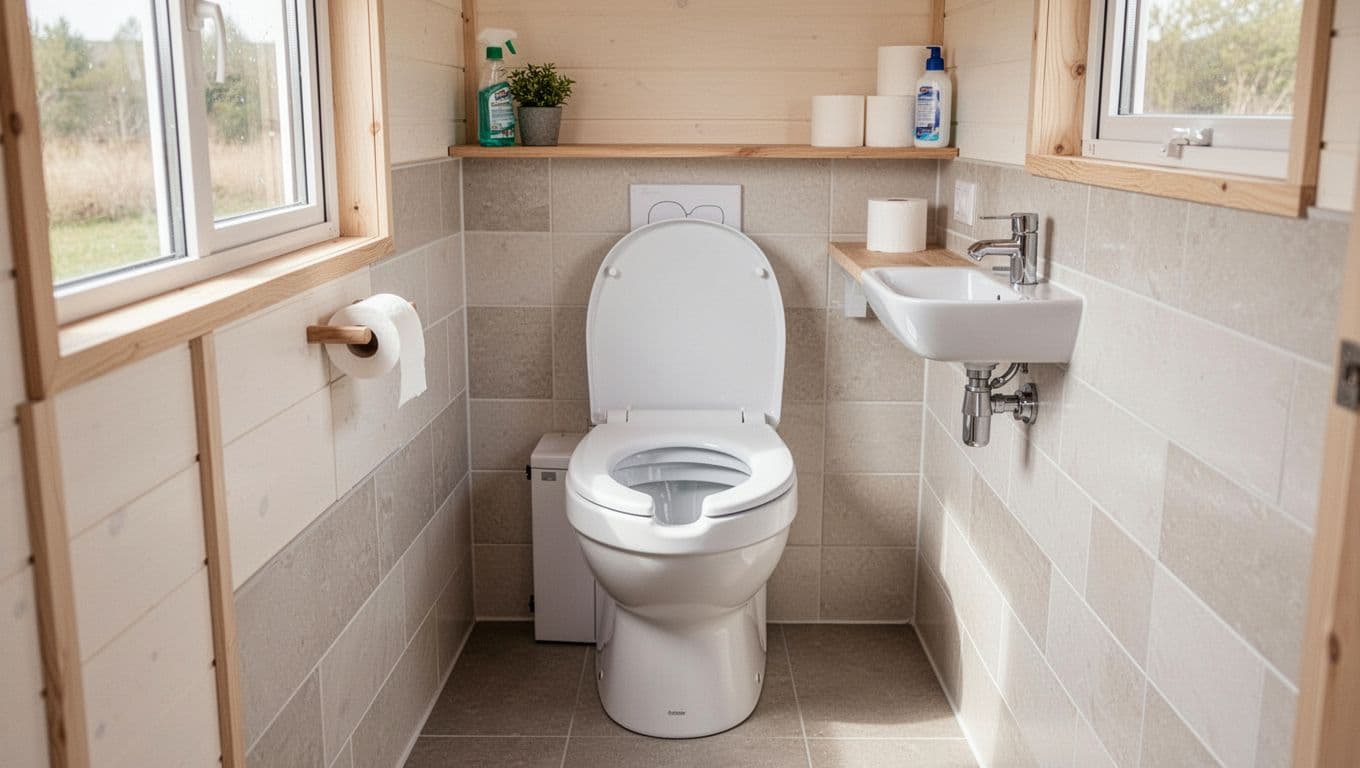
Tiny house bathrooms demand smart choices. You want gear that cleans easy, saves water, and fits off-grid setups. These tiny house essentials handle daily needs without fuss, so you focus on adventure instead of chores. Composting toilets and compact laundry options lead the pack in 2026. They cut water use and shrink space needs, perfect for remote spots.
Composting Toilets for Off-Grid Freedom
Composting toilets shine for tiny houses. They separate urine from solids right away. Solids go into a chamber where you crank to mix with peat or coco coir. A fan vents moisture outside, so no smells build up.
In 2026, Nature’s Head tops lists at $925 to $995. It weighs just 28 pounds and holds a month’s worth for two people. Separett Villa costs around $1,389 and suits one to three users with low upkeep. Both stay odor-free thanks to urine diversion and fans; they need no water or plumbing.
Installation stays simple. Bolt the unit to the floor. Run a vent hose through the roof or wall. Add a 12V fan for off-grid power. Empty solids every few weeks and urine bottle weekly. These save water in dry areas and let you park anywhere remote.
| Model | Price | Weight | Best For |
|---|---|---|---|
| Nature’s Head | $925–$995 | 28 lbs | 1–2 people, mobile |
| Separett Villa | $1,389 | 48 lbs | 1–3 people, sleek |
Laundry Solutions That Won’t Take Over
Laundry fits tiny spaces with combos or racks. All-in-one washer-dryers like the LG WM3555HWA wash and dry in one 24-inch unit for $1,500 to $2,000. They run on 120V, ventless, and use low water, ideal off-grid with solar.
Racks offer cheaper backups. Foldable ones tuck away and air-dry clothes fast near a fan. No power draw means big savings. Pick both for flexibility; combos handle weekly loads, racks finish the job.
Save cash with ENERGY STAR models and eco-cycles. Front-loaders sip 20 to 50 percent less water than top-loaders. Stack units to free floor space. In remote living, reuse graywater from rinses for plants.
Clever Storage Hacks to Banish Clutter Forever
Clutter sneaks into tiny houses fast. You fight it daily unless you grab tiny house essentials like hooks and shelves. These tools claim wasted spots on walls, ceilings, doors, and stairs. They hold pots, clothes, bags, books, and more without eating floor space. Start with cheap options under $20. You install them anywhere in minutes. Result? Every inch works for you, so life stays calm and open.
Hooks and Shelves That Use Wasted Space
Hooks top the list because they cost little and stick everywhere. Screw S-hooks or clips into walls, ceilings, or doors. Hang pots from kitchen ceilings so they swing easy. Drape towels or bags on bathroom walls. Clip clothes or hats in closets; they grab quick. Pegboards take it further. Mount one panel for $15 to $30. Add hooks for utensils, mugs, or tools. Pots dangle free, counters stay clear.
Next, floating shelves stack high for $20 to $40. Bolt wire or wood ones to walls above beds or lofts. Stack books, linens, or dishes. Kitchen spots hold spices; they look sharp too. For stairs, build pull-out shelves under treads with plywood and sliders under $100. Hide bulk food, clothes, or gear. Flip-up steps add secret spots. These hacks max vertical room first.
| Product | Why It Works | Cost | Best Spot |
|---|---|---|---|
| S-hooks & clips | No-drill hangs | $5–15 | Ceilings, doors |
| Pegboard panels | Custom setups | $15–30 | Walls, kitchens |
| Floating shelves | Holds heavy loads | $20–40 | Above lofts |
| Pull-out stair drawers | Hidden bulk | $50–90 DIY | Under stairs |
Mix them now. You banish clutter for good and love the free flow.
Power Systems, Safety Gear, and Sustainability Wins
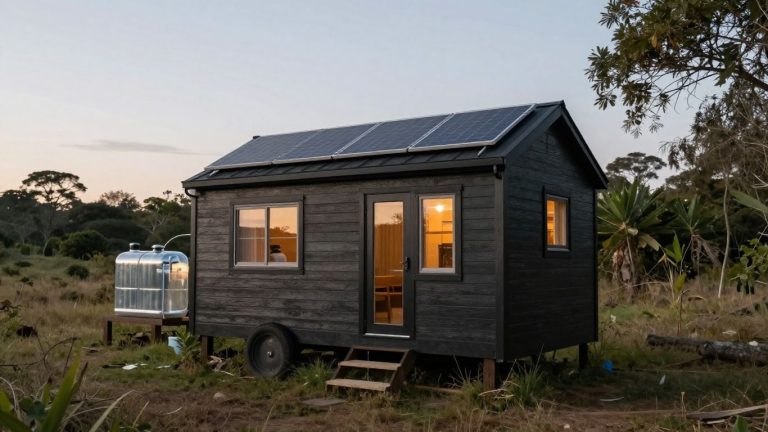
Power keeps your tiny house running smooth. Safety gear protects you in close quarters. Sustainability choices help you meet 2026 rules and cut waste. These tiny house essentials make off-grid life reliable. They handle daily needs like lights and fridges while staying green.

Photo by merwak. raw
Off-Grid Solar and Lighting Basics
Solar kits free you from the grid. They cost $3,000 to $8,000 for panels, batteries, inverters, and controllers. These setups power a small fridge, LED lights, fans, and chargers daily.
For example, the Sungold Power 5000W kit runs $3,145 on sale. It includes 1,200 watts of panels and a 5.12kWh battery. You get enough for a 100-watt fridge all day plus 10 LED bulbs at night. The EG4 Off-Grid Kit hits $7,127 and scales for bigger loads like pumps.
LED lights sip just 5-10 watts each. Add 10-20 bulbs for full coverage. Batteries store 2-5kWh, so you handle 2-3 cloudy days. First, list your watts times hours used. Then pick a kit that matches.
| Model | Price | Key Power |
|---|---|---|
| Sungold 5000W | $3,145 | Fridge + lights, 2-3 days backup |
| EG4 6000XP | $7,127 | Basics + small AC or pump |
Must-Have Safety and Climate Controls
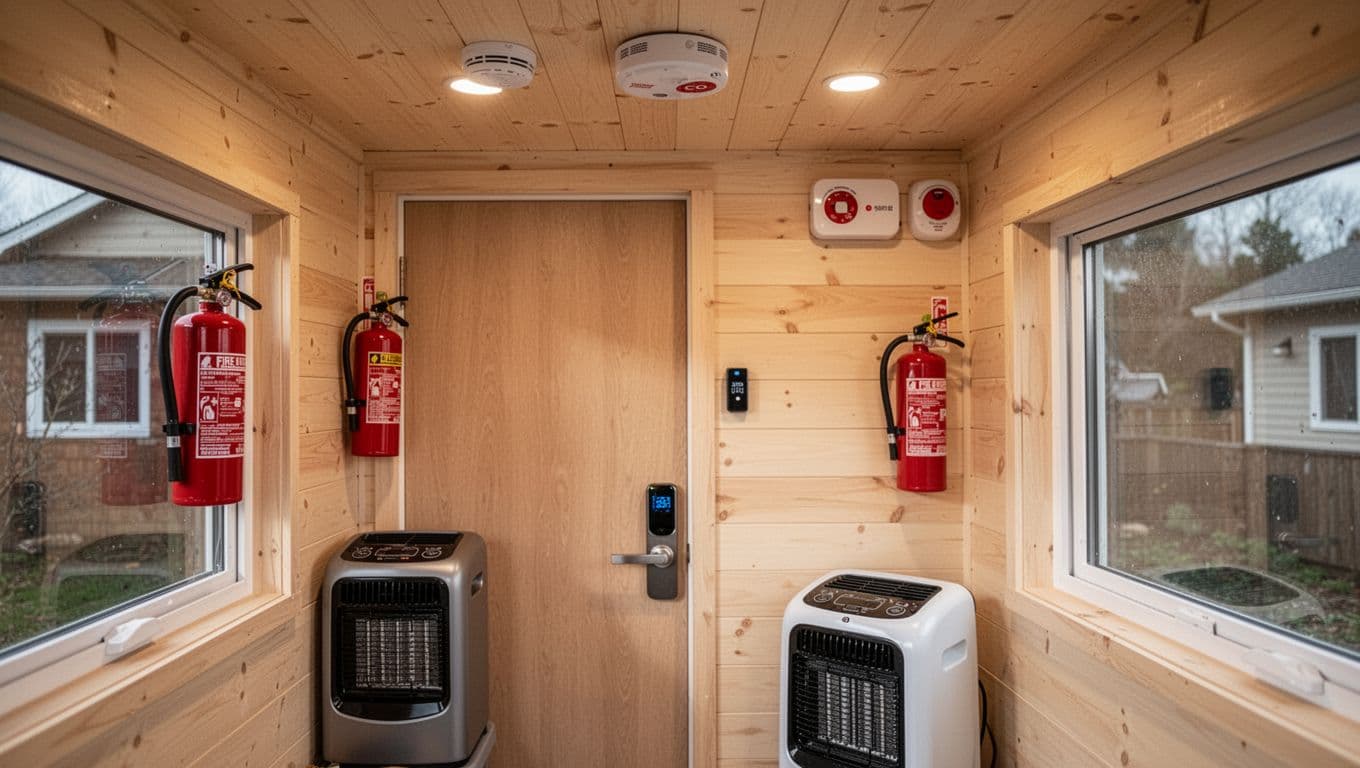
Safety comes first in tiny spaces. Grab smoke and CO detectors, a fire extinguisher, and strong locks for $200 to $500 total. The First Alert combo alarm costs $40-60 and wires in with battery backup. Mount an ABC extinguisher near the exit for $20-40. Add deadbolts on doors and windows.
Climate control fits 200-400 square feet easy. Portable AC like the Midea Duo 12,000 BTU cools for $400-500. Dyson Hot+Cool heats or cools 300 square feet at $500-600. Both vent through windows and run on solar.
Backup generators add security. The Honda EU2200i gives 2,200 watts quietly for $1,100-1,300 and runs 8 hours. Place it outside, 20 feet away, with CO sensors.
Staying Green with 2026 Regulations in Mind
Go low-waste to match 2026 zoning shifts. Solar panels and composting toilets cut your footprint. Many areas now allow ADUs up to 400 square feet in backyards, like Georgia’s HB 1166 bill.
Check local codes first, because rules vary. Rural spots often permit off-grid setups with composting for solids and urine diversion. Cities push green materials and solar for approvals.
Besides, swap liquid shampoos for bars to slash plastic. These small steps help you park anywhere compliant. In short, sustainability wins you freedom and fits new laws.
Conclusion
You now know the top tiny house essentials that make small spaces work big. Compact kitchen gear lets you cook real meals. Composting toilets and laundry combos handle baths clean. Storage hooks and shelves banish clutter. Solar kits, safety alarms, and climate controls keep you powered and protected.
These picks fit off-grid life in 2026. They save space and match green trends like recycled materials and low-waste setups. Start small because you don’t need everything at once. Focus on utilities first; they take 60 percent of your budget. A full setup runs $15,000 to $30,000 total. Buy used furniture or DIY shelves to cut costs further.
Back to Tiny House Guides
Explore more tiny home living, design, downsizing, building, and lifestyle resources.