Tiny House with Storage Benefits

Clutter hits hard in a tiny home. You’ve got limited square footage, so stuff piles up fast and makes the space feel chaotic. But it doesn’t have to be that way.
A tiny house with storage planned from the start stays calm and open. You avoid that crammed feeling by building smart systems into walls, furniture, and corners right away. Add storage later, and you’ll fight an uphill battle.
First, you’ll learn how to sort what to keep. Declutter with simple rules: hold onto daily essentials inside and stash extras off-site or in hidden spots. This clears room before you buy anything new.
Next, check out high-impact upgrades like vertical shelves, multi-functional benches, and lift-up beds. These use dead space under stairs or along walls for big wins. They fit 2026 trends in flexible, custom designs.
Then, get room-by-room ideas for kitchen pegboards, bedroom lofts, and living area cubbies. Don’t forget outdoor options such as porch racks for bikes or door benches for muddy gear.
Finally, sidestep common mistakes like ignoring vertical space or grabbing bulky furniture. Follow these tips, and your tiny house runs smooth and spacious.
Start with what you own, then design storage that fits your life
You own your stuff now. So base your tiny house with storage on it. Custom setups beat one-size-fits-all every time. They match your habits, like work from home or outdoor hobbies. Families need kid-proof spots. Pet owners want easy toy access.
First, declutter fast. Sort items into three piles: keep, donate, store elsewhere. Keep what you use often. Donate duplicates or unused gifts. Store seasonal gear off-site, such as holiday decor or camping tents. This clears space quick.
Next, think frequency. Put daily items in prime spots, like coffee mugs near the kettle. Weekly tools go mid-level, easy to grab. Seasonal stuff hides deep or away. So your kitchen stays calm, not crowded.
Finally, list by category. Clothes fill one drawer count. Kitchen tools need two bins. Tools take a shelf. Gear like bikes fits hooks. This guides smart buys later.
A simple tiny house inventory that takes 30 minutes
Grab a notebook and pen. Set a timer for 30 minutes. Walk room by room. Start big.
List bulky items first. Measure them too. Note the vacuum’s height. Check guitar case width. Track stroller length. These shape your shelves.
Then jot small items by category. Estimate storage needs. Here’s a simple list to follow:
- Clothes: Count outfits. Daily wear (2 bins), seasonal (1 box).
- Kitchen: Pots, utensils. Prep tools (1 drawer), extras (1 shelf).
- Tools: Hammers, screws. Frequent (1 bin), rare (1 rack).
- Gear: Bikes, boots. Outdoor stuff (wall hooks, 2 spots).
Add up bins or drawers per area. This shows gaps fast. You end up with a clear map for your tiny house.
The “one in, one out” rule that actually works in a tiny home
This rule keeps clutter low. Buy one new item. Ditch one old. It fits tiny spaces perfect.
Apply it to clothes first. New shirt in? Old tee out. Kitchen tools next. Extra spoon? Donate the bent one. Decor too. Fresh pillow? Box the faded one.
Exceptions make sense. Keep safety gear like fire extinguisher. Stock medications full. Hold multiples for baby supplies if kids join.
Picture this. You grab a new blender. It fits your smoothie’s habit. But toss the old toaster nobody used. Space stays open. Chaos drops.
Zones beat rooms in a tiny house with storage
Rooms blur in tiny homes. Zones work better. They group activities smart.
Set a sleep zone. Bed with drawers below holds sheets. Cook zone nearby. Pantry pulls out by the counter. Work zone gets a fold-down desk. Shelves above for files. Entry zone has hooks and a bench.
Storage lives with the action. Charge phones by seats. Stash shoes at the door. This cuts trips. Clutter piles shrink.
Zones flex too. Pet zone by the door for leashes. Kid zone near play bench. Your habits rule.
High-impact built-ins that add storage without making the house feel smaller
Built-ins shine in a tiny house with storage. They tuck gear away in spots you already own, like awkward corners or baseboards. No extra floor space needed.
Builders craft these during framing for seamless fits. DIY folks grab kits or plywood for quick wins. In 2026, expect more hidden drawers and flip-up seats as standard. These square-foot savers keep rooms airy. Start with the biggest gains under your feet and stairs. Then layer in seats and doors that multitask.
Stairs, platforms, and toe-kicks: storage in the space you already have
Stairs offer huge untapped room. Pull-out drawers slide from each step. They hold bins of clothes or tools. Storage risers stack above treads for books. Platforms over lofts hide deep bins below.
Kitchens gain from toe-kick drawers. That low gap under cabinets fits pots or mixers. Full-extension slides let you reach back easy. Label the inside edge so you spot contents fast. Keep heavy items low to avoid tip-overs.
DIY these with plywood and tracks from hardware stores. Builders frame them in early. As a result, your tiny house with storage feels bigger right away
Banquette seating and window benches that hide a lot of stuff
Banquettes squeeze into tiny dining spots. They hug walls so tables stay central. No bulky chairs block paths. Built-in cushions lift or draw out for storage.
Choose lift-up lids for deep items like linens. Drawers suit shallow stuff such as board games. Pet food stacks neat inside. Small appliances tuck below too. Window benches add the same trick along sills.
These fit 2026 trends for multi-use spots. You sit, dine, and store all in one. In addition, they warm up zones without crowding floors.
Pocket doors and sliding panels that free up wall space for shelves and cabinets
Swing doors eat swing arcs in tight spots. They bump furniture or block paths. Pocket doors slide into walls instead. Now that freed wall holds deep shelves.
Bathrooms love them for towel stacks. Closets use sliding panels over tracks for shoes. Plan wall thickness at framing stage. Pick sturdy hardware to last.
Builders spec these early to skip rework. DIY sliders kit up barn doors for cheap charm. Therefore, your tiny house with storage opens wide for cabinets.
Murphy beds and convertible sofas, when they are worth it
Murphy beds fold into walls. Sofas convert to sleepers. Both free floors by day. But check if they suit you first.
Here’s a quick pros and cons list:
- Pros: Huge floor savings. Often include shelves below. Blends sleep zones with living.
- Cons: High upfront cost. Daily setup takes effort. Less comfy than fixed beds.
Test weight ratings for safety. Latch strong to hold up. Ensure mattress folds flat. Bedding stores in a shelf or nearby drawer.
Sofas work if you host often. Pick ones with easy pulls. In short, they pay off in multi-use homes but skip for solo sleepers.
Room-by-room storage ideas that feel tidy, not packed
You want your tiny house with storage to breathe easy. So focus on spots that grab clutter right away and keep paths clear. These room-by-room picks use walls, doors, and floors smart. They follow 2026 trends like vertical hooks and pull-outs. As a result, you store more without the packed look. Start at the door and work through key areas.
Entryway and mud zone: stop clutter at the door
Clutter loves the entryway. It sneaks in on shoes and bags. Stop it fast with layered spots that fit a tiny house with storage.
Install wall hooks at two heights. Kids reach low ones for backpacks. Adults use high spots for coats. Add a row for hats or leashes. This keeps floors open.
Next, grab a slim shoe cabinet or boot tray. The cabinet stacks pairs neat behind the door. A tray catches mud from wet boots. Both free up space for quick grabs.
Pick a bench with compartments. Lift the seat for gloves or scarves. Or pull drawers for seasonal hats. It doubles as a sit-down spot to tie laces.
Set up a small drop zone for keys and mail. A narrow shelf or tray holds them. Tuck in a charging spot for phones. Wet coats hang nearby on hooks to dry.
These steps block mess before it spreads. In addition, they match trends for pegboards or clips if you swap hooks.
Tiny kitchen storage that makes cooking easier
Kitchens cram fast in tiny homes. But smart picks make prep smooth. They keep counters clear for your tiny house with storage.
Go vertical first. Rails on walls hold pots or towels. Magnetic strips grip knives and spices. Hang mugs from pegs. This frees cabinets for bulk.
Add pull-out pantry shelves. Skinny ones slide from tight spots. They stack cans or pasta easy. Corner solutions like carousels spin lazy Susans to grab oils or grains without digging.
Fit under-sink bins on tracks. They corral cleaners and bags. Pull them out full. Surfaces stay bare.
Skip heavy stuff overhead. Store blenders low. Big pots go in base drawers. This prevents tip-overs.
Create a daily tools drawer. Line it with dividers for spoons, peelers, and measurers. Grab and go. Meanwhile, extras hide in pantry pulls.
These hacks cut search time. For example, rails hold daily grabs at eye level. So cooking flows without chaos.
Bathroom storage for a calm, spa-like feel in a small space
Bathrooms need calm vibes. Damp air fights clutter. Build a tiny house with storage that stays dry and zen.
Carve wall niches in showers. They recess for shampoos and razors. No slippery ledges outside.
Mount mirrored cabinets. They hide meds and lotions behind glass. Slim ones fit over sinks.
Add behind-door racks. Roll towels there. Hooks grab brushes or clips. Doors close tidy.
If room allows, roll in a slim cart. It holds extras like soaps. Wheels move it fast.
Control moisture smart. Use ventilated cabinets with slats. Pick water-resistant finishes like sealed wood. Skip fabric bins; they mold in damp spots. This ties to climate trends for breathable setups.
Keep paths spa-clear. Store daily picks front and center. As a result, mornings feel relaxed, not rushed.
Sleeping loft or main bed: maximize under-bed storage without losing comfort
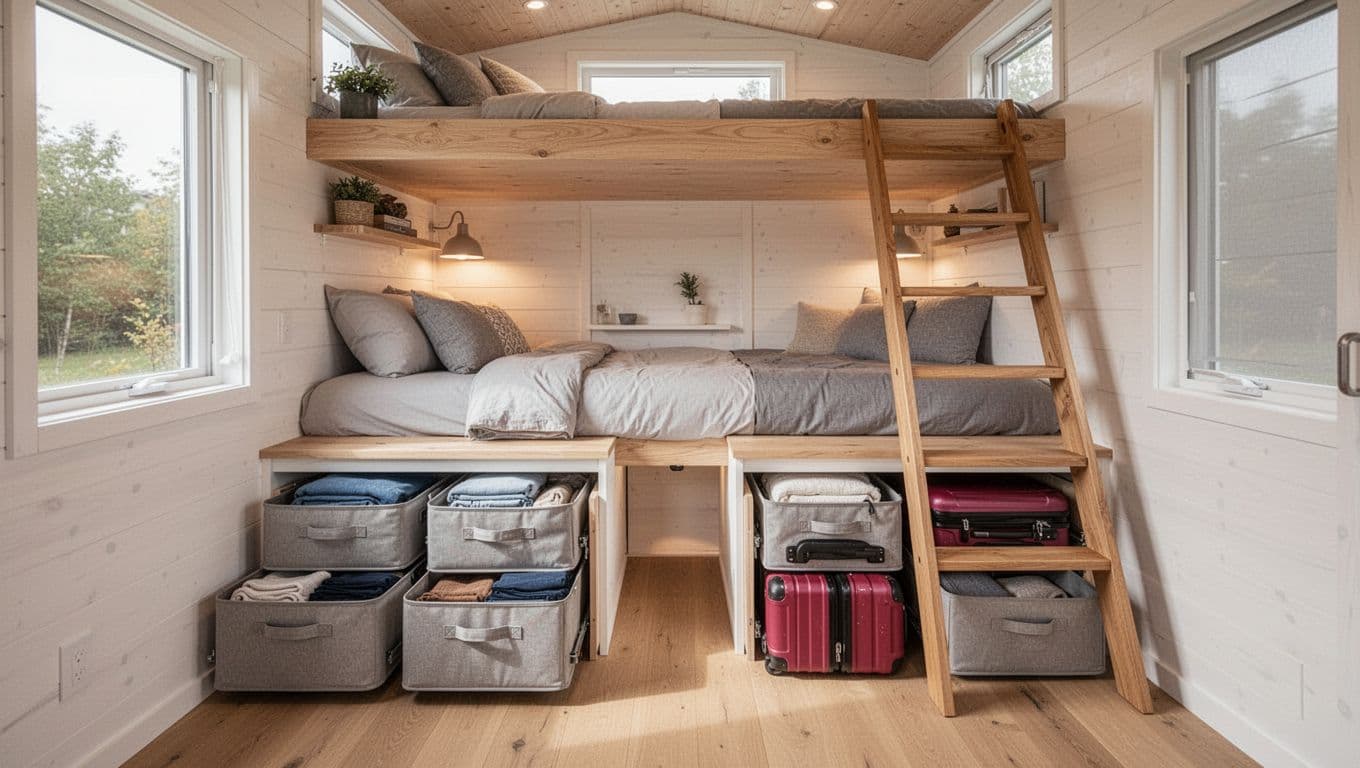
Sleep spots demand peace. But they hide gold in tiny house with storage. Use the under-bed zone wise.
Choose drawers over bins for smooth pulls. They stack clothes neat. Bins suit odd shapes but tip easy.
Keep a clear aisle. Walk beside the bed free. No toe-stubs at night.
Pack soft-sided bags in gaps. They squash for seasonal clothes or luggage. Extra bedding rolls tight inside.
Store smart here. Tuck winter coats or quilts. Stash guest pillows. Luggage waits for trips.
Prioritize safe access. Lofts need sturdy ladders. Don’t block exits with stacks. Fire rules matter.
These keep rest cozy. For instance, drawers slide silent. So you drift off clutter-free.
Hidden and vertical storage tricks that make tiny spaces look bigger
Tiny houses thrive on smart illusions. You grab space from walls and furniture without adding bulk. These tricks keep your tiny house with storage calm and open. Focus on light displays up high, hidden spots in everyday pieces, and tidy systems inside drawers. Anchors hold everything secure, especially if your home rolls on wheels. As a result, rooms feel twice as big. In addition, matching containers and fewer visible items boost that airy vibe.
Go up the walls, but keep it light and secure
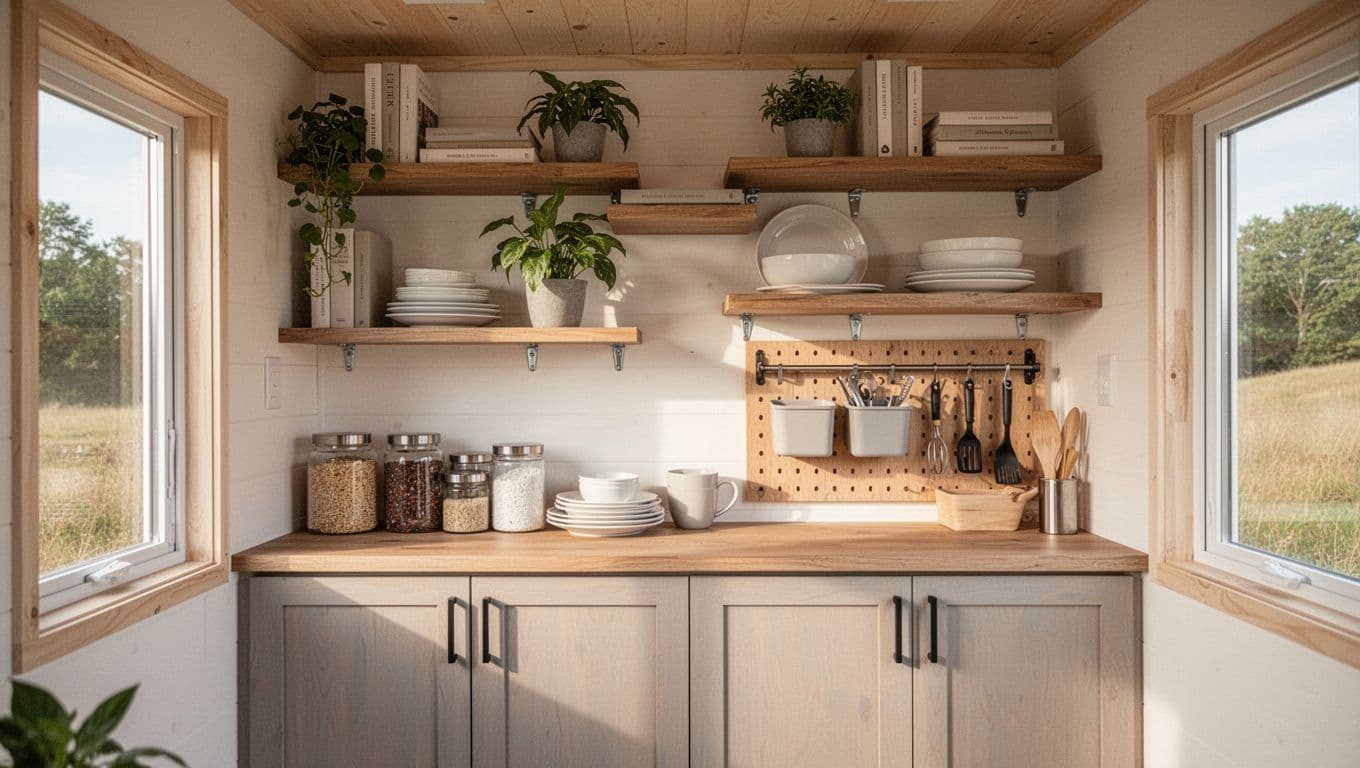
Walls offer free real estate in a tiny home. But choose open shelves or closed cabinets based on your needs. Open shelves work great for daily grabs like dishes or books. They display light items to draw the eye up. However, closed cabinets hide bulkier stuff such as linens or tools. This cuts visual clutter.
Place shelves high, around eye level or above. Stagger them for a modern look that adds depth. Keep loads light, under 20 pounds per bracket. Heavy items go low in cabinets. Anchors matter most. Bolt shelves into wall studs, not just drywall. Your tiny house might tow or park on uneven ground, so secure units prevent falls.
Pegboards add flex without commitment. Hang hooks, bins, or baskets for tools and spices. Swap them as habits change. In 2026 trends, they pop up in kitchens and offices for quick tweaks.
Furniture that stores things, without looking like a storage unit
Pick pieces that blend in, not scream storage. A storage ottoman hides blankets or remotes under a cushy lid. You rest feet on it by day. Meanwhile, a coffee table with a lift top reveals books or games below. No one spots the compartments at first glance.
Beds with built-in drawers tuck clothes or luggage underneath. They save floor space in lofts or main areas. Nesting tables stack small when idle. Pull one out for drinks or work. Flip-up benches along walls double as seats with hidden bins inside.
Follow this rule: choose one or two hero pieces only. More turns calm into cramped. Check weight limits, around 200 pounds for lids. Secure tall items to avoid tips. These fit 2026 multi-use trends perfectly. So your tiny house with storage stays sleek.
Small container system that keeps drawers from becoming junk bins
Drawers turn chaotic fast. Fix that with a simple system. Pick one family of bin sizes, like small, medium, and large from the same line. They nest and match for visual calm. Label the front edge with categories: socks, tools, linens. Use sticky tags or chalkboard strips.
Assign spots strict. Socks bin holds only socks. Tools stay with screwdrivers and tape. No mixing. This stops the junk drift.
Reset takes five minutes daily. Pull the drawer. Toss strays back to homes. Wipe labels if needed. Straighten bins. Done. Your tiny house with storage gains peace. Bins in clear plastic let you spot contents quick. As a result, grabs stay fast and frustration-free.
Outdoor and utility storage that protects your indoor space
Your tiny house with storage stays clutter-free when you push extras outside. Decks, walls, and sheds handle tools, gear, and off-grid items without crowding rooms. This setup follows 2026 trends for outdoor add-ons that boost indoor-outdoor flow. Big doors slide open, and matching floors connect spaces. You gain room inside while keeping gear handy. However, watch weight limits on trailers, moisture buildup, and local zoning rules. Lightweight composites beat heavy wood. Vented designs fight damp air. As a result, your home feels bigger and runs smoother.
Deck boxes, bench seating, and under-deck compartments
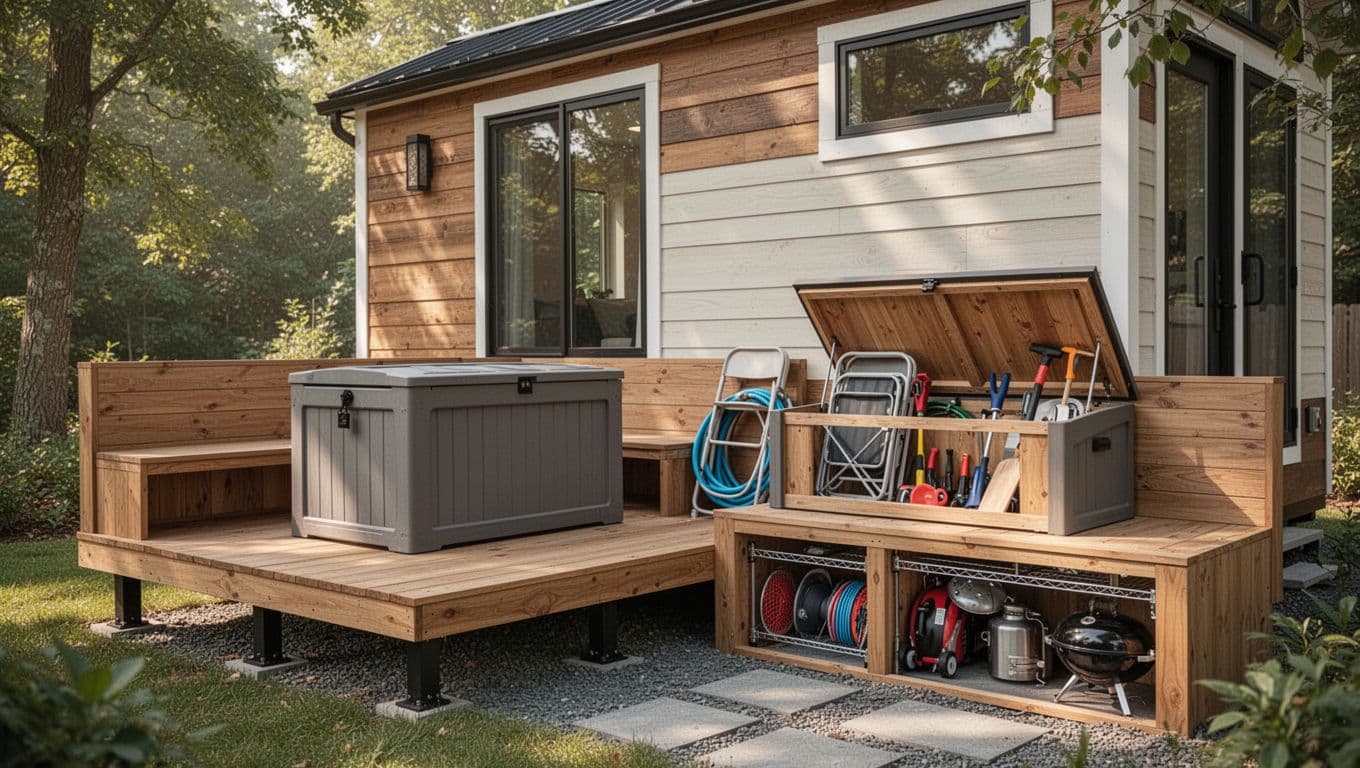
Deck boxes work best outdoors because they vent air, lock tight, and raise off wet ground on legs. Pick ones with cushioned lids that double as seats. They hold folding chairs, hoses, or grills without tipping. Nearby benches lift up to stash tools and sports gear like kayaks or balls. Built-in compartments under decks use racks or nets for bins and firewood. These save floor space and stay dry.
For example, hang zip-close bags under decks to grab items fast. Aluminum frames keep weight low, around 50 pounds empty. So your tiny house trailer stays balanced. Check local codes before bolting in. These spots protect indoor calm by hiding bulky stuff outside.
Utility wall for off-grid gear and maintenance items
Mount a utility wall on your house exterior for compact off-grid storage. Weatherproof shelves and hooks hold lithium-ion batteries, inverters, water filters, and cleaning bins. Leave gaps around panels for easy service access. Rust-proof metal or recycled wood lasts years. Label bins clear, like “Batteries” on one front. This keeps hoses, ladders, and compost off floors too.
In addition, solar locks add security without wires. Place it near decks for quick checks. Weight stays light at 30 pounds total. Meanwhile, it frees indoor walls. Local rules often allow these as they hug the structure. Your tiny house with storage gains power spots without indoor mess.
Climate and pest protection for stored items
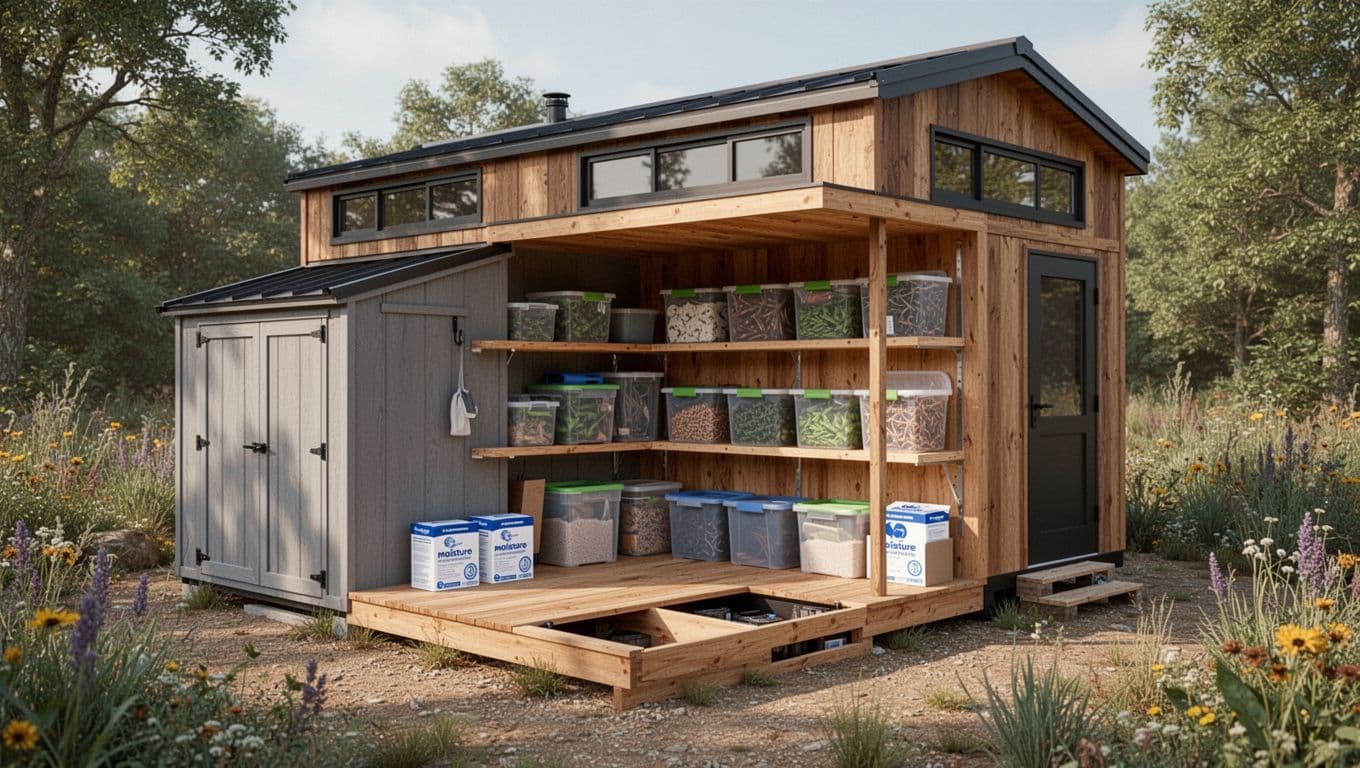
Hot, humid, or cold spots demand smart protection. Sealed totes block moisture in sheds or under eaves. Breathable bags suit fabrics like cushions. Bug-proof metal containers keep sports gear safe. Drop moisture absorbers in open boxes; they pull damp air fast. Native plants around bases fight pests naturally.
Check items each season. Wipe down grills before winter. Rotate bins in sheds for air flow. Vented weather-proof cabinets near decks handle rain. Drip edges over eaves stop leaks. These steps match 2026 picks for auto covers tied to weather apps. Therefore, gear lasts longer. Your indoor space stays dry and open.
Exterior sheds grow popular, up 5.8% yearly. Small ones assemble quick for bikes or batteries. Under-eave racks stack totes high. Always distribute weight even to avoid trailer stress.
Common storage mistakes in tiny houses, and how to avoid them
You build a tiny house with storage, yet clutter creeps back in. Common slip-ups like too many open shelves or spots that block light turn wins into headaches. However, quick fixes keep spaces open. First, spot these errors. Then apply simple checks. As a result, your home stays tidy without constant fights.
Buying organizers before measuring, and other expensive slip-ups
Rushing buys leads to waste. You grab bins or racks that don’t fit. Money down the drain. So measure first. Check door swings to avoid blocks. Test drawer depths for pots. Gauge loft headroom so heads don’t bump.
Other pitfalls hurt too. Too many open shelves display dust magnets. No spots for in-between items like mail or hats create piles. Overbuilt storage hogs light and air. Ignoring daily flow means tools hide far from use.
Here are six fixes to dodge them:
- Measure twice: Tape door arcs. Note drawer needs at 18 inches deep. Mark lofts at 36 inches high.
- Mock it up: Use painter’s tape for shelves. Cut cardboard for bins. Live with it a day.
- Limit open shelves: Cap at three per wall. Pair with closed doors below.
- Carve in-between zones: Add a tray by doors for keys. Hooks near sinks for sponges.
- Preserve light: Keep tops clear. Use slim rails, not deep cabinets by windows.
- Map your day: Track grabs for a week. Place items within arm reach.
These steps save cash and stress
Use this checklist before any buy or build:
- Does it clear paths?
- Will light still flow?
- Can I reach daily items fast?
- Does a mockup feel right?
Storage that makes cleaning harder is not a win
Tight cubbies trap dust. They turn into graveyards for lost socks or tools. You skip cleaning because reaches hurt backs. Meanwhile, grime builds. So rethink access.
Fewer large spots beat many small ones. They hold more without crannies. Removable bins slide out full. Clear paths between units let vacuums roll easy. For example, wide gaps under benches beat stacked nooks.
In addition, pick pull-outs over fixed shelves. Wipe surfaces quick. Your tiny house with storage sparkles without hours of work.
The weekly reset that keeps a tiny home feeling open
Clutter sneaks back weekly. A quick reset fights it. Set aside 15 minutes Sundays. Your space breathes again.
Start simple. Empty the drop zone basket by the door. Sort laundry in one pass on a bench: wash now, fold later. Clear counters next. Return tools to zones. Take trash out last.
Keep it real. Skip deep cleans. Focus on high-touch spots. As a result, calm lasts days. Habits stick because it’s short.
Conclusion
You have the blueprint now for a tiny house with storage that works for your life. Smart zones, built-ins like under-stair drawers, and vertical tricks keep clutter out and space open. However, the real winners come from what fits your daily flow. Pick solutions you grab often, such as hooks by the door or bins under the bed. They turn chaos into calm without extra effort.
Start small for big results. Choose one high-impact spot this week. Tackle the entry zone to stop mud at the door. Add under-bed drawers for clothes and gear. Or build a banquette that seats and stores. Measure twice first. Mock it up with tape. Then shop or build.
These steps match what you own and how you move. As a result, your home feels twice as big. In addition, habits stick because resets take minutes, not hours.
Back to Tiny House Storage Ideas
Explore more tiny home living, design, downsizing, building, and lifestyle resources.
- Tiny Homes for Rent in Wyoming: Wild West Getaways to Book
- Tiny Homes for Rent in Washington: Forest Escapes & Cozy Stays
- Tiny Homes for Rent in Utah: Red Rock Retreats to Book
- Tiny Homes for Rent in Oregon: Forest Retreats You’ll Love
- Tiny Homes for Rent in New Mexico: Desert Gems & Starry Skies
- Tiny Homes for Rent in Nevada: Desert Hideaways Worth Booking