Beyond Off-Grid: Your Guide to Electricity and Water in Tiny Homes

Thinking about living in a tiny house but worried about the basics like electricity and water? It’s a common question, and honestly, it’s not as complicated as it might seem. Many people worry about how do tiny homes get electricity and water, especially if they’re aiming for a life away from the usual hookups. But with a little planning and the right setup, you can have all the power and clean water you need, even in a small space. Let’s break down how it all works.
Key Takeaways
- Tiny homes can get electricity primarily through solar power systems, which involve panels, charge controllers, batteries, and inverters. Backup generators can also be used for reliability.
- Water for tiny homes is often sourced through rainwater harvesting, utilizing natural water sources like wells or springs, and requires proper storage and filtration.
- Energy efficiency is a big deal in tiny homes. Choosing appliances that use less power and using LED lighting significantly reduces energy demands.
- Off-grid power systems often combine solar panels with battery banks to store energy, with inverters converting this stored power for household use.
- Water conservation is achieved through methods like composting toilets and greywater systems, which reuse water and reduce waste, minimizing the strain on your water supply.
Understanding Tiny House Electricity Sources
When you’re thinking about living in a tiny house, especially if you’re aiming for that independent, off-grid lifestyle, figuring out your electricity is a big deal. It’s not as complicated as it might sound at first, though. Most tiny homes, whether they’re parked in a backyard or out in the wilderness, need a reliable way to get power. For those that aren’t completely off the grid, simply plugging into a standard outlet or using an RV-style hookup is the easiest route. This is called grid-tied. It’s like having a regular house connection, just on a smaller scale. You’ll need an inlet on the outside and a breaker panel inside to manage it all.
Solar Power Systems Explained
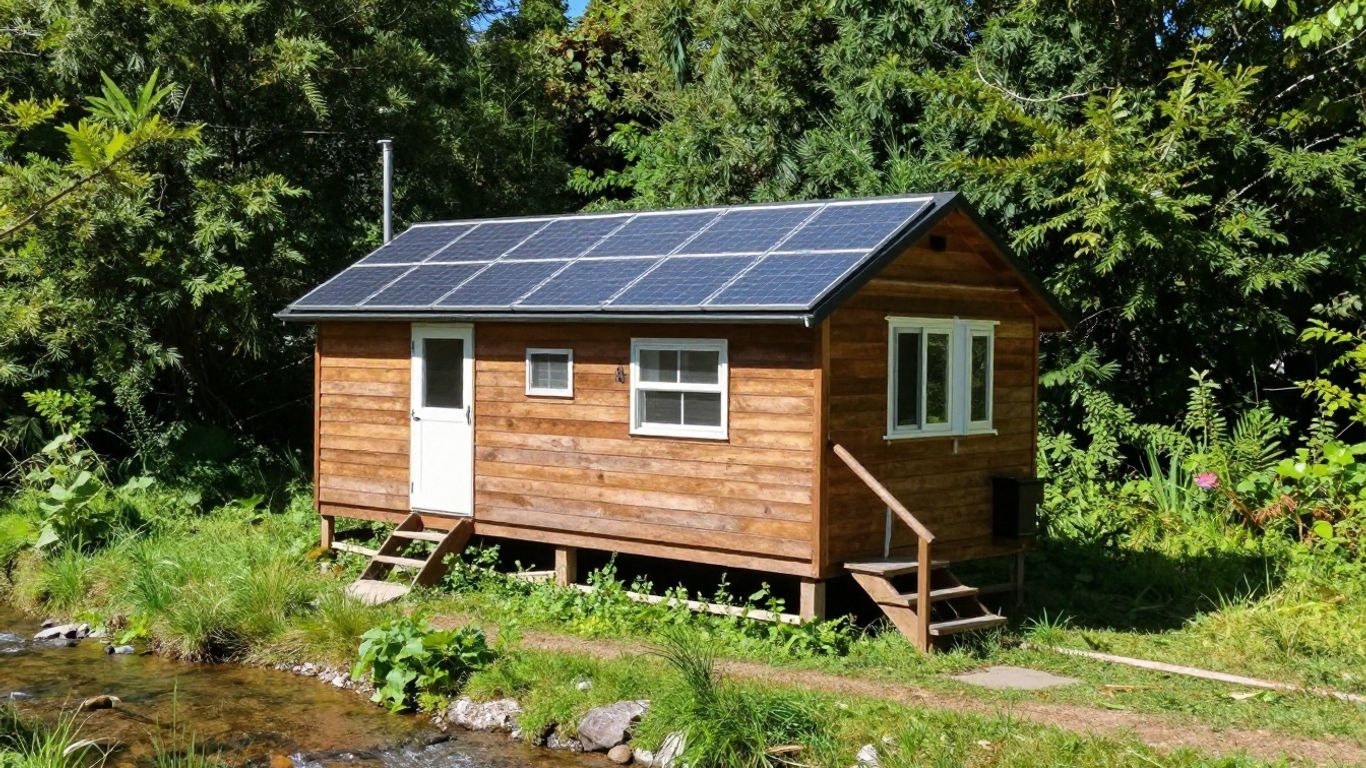
Solar power is probably the most popular choice for tiny homes wanting to go off-grid. It’s pretty neat: photovoltaic (PV) panels soak up sunlight and turn it into electricity. This electricity is usually Direct Current (DC) at first. The main parts of a solar setup are the panels themselves, a charge controller to manage the flow of power into your batteries, the batteries where you store the energy, and an inverter that changes the DC power into the Alternating Current (AC) your appliances use. You’ll need good sun exposure for this to work well, so if your tiny house is always in the shade, you might want to rethink this as your primary source. The number of panels you need really depends on how much power you use daily and how much sun you get. A rough estimate for a tiny home is between 3 to 7 kilowatt-hours (kWh) per day, but this can change a lot based on your lifestyle. For example, running an air conditioner or an electric heater uses way more power than just charging your phone. If you’re thinking about solar panels for tiny homes, it’s often better to size your system a bit bigger than you think you’ll need. It’s much easier to add more panels later than to realize you didn’t have enough power during a cloudy spell.
Wind Turbines for Supplemental Power
While solar is king, wind turbines can be a great supplemental power source, especially in areas with consistent wind. They work by capturing wind energy and converting it into electricity, similar to how solar panels capture sunlight. They can help top up your batteries, particularly during cloudy days or at night when solar panels aren’t producing. However, they do require a certain amount of wind to be effective and can sometimes be noisy or require more maintenance than solar panels. They’re not usually the main power source for a tiny house, but they can definitely reduce your reliance on other methods.
Backup Generators for Reliability
No matter how good your primary power system is, having a backup generator offers peace of mind. This is especially true for off-grid living. Generators run on fuel like propane or gasoline and can provide power when solar or wind isn’t enough. They’re great for those extended periods of bad weather or when you need to run high-demand appliances for a short time. Think of it as your emergency power supply. It’s important to choose a generator that’s appropriately sized for your needs and to store fuel safely. Many people use generators only occasionally, just to keep their battery bank charged or to power specific tools.
When planning your electrical system, it’s wise to think about both your daily energy usage and your peak power needs. Some appliances draw a lot of power all at once, even if they don’t run for long. This is something to consider when sizing your battery bank and inverter.
Securing Your Tiny House Water Supply
Alright, let’s talk water. Because, you know, you can’t live on sunshine and good vibes alone. Having a reliable water source for your tiny home, especially if you’re off the grid, is super important. It’s not as complicated as it might sound, and there are some pretty neat ways to get it done.
Rainwater Harvesting Techniques
This is a big one for many tiny home dwellers. Basically, you’re catching rain as it falls. Think of your roof as a giant funnel. You’ll need gutters to direct the water, and then a way to store it. Big tanks are common, but even barrels can work depending on how much water you need. The key is to make sure your system is clean from the start to avoid yucky stuff in your water. You’ll also want a way to filter it later, but we’ll get to that.
- Gutters and Downspouts: Direct the water flow from your roof.
- First-Flush Diverter: This little gadget is smart; it diverts the first bit of rain, which usually washes the most debris off your roof, away from your main storage.
- Storage Tanks: These can be above ground or buried. Size matters based on your climate and usage.
- Overflow Management: Plan for what happens when your tanks are full.
Utilizing Natural Water Sources
If you’re lucky enough to be near a natural water source like a lake, river, or even a well, that’s another option. It sounds pretty straightforward, right? Just grab a bucket! But hold on. You absolutely must treat water from these sources. You can’t just drink straight from a stream, no matter how clear it looks. That’s where pumps and filtration come in. You’ll need to figure out how to get the water to your home and then make it safe to drink. This often involves a bit more setup than just collecting rain.
Always research the water quality in your area if you plan to use natural sources. Local health departments or environmental agencies can often provide this information. It’s better to be safe than sorry when it comes to what you drink.
Water Storage and Filtration Essentials
So, you’ve got your water, whether it’s from the sky or a nearby stream. Now what? You need to store it properly and, most importantly, filter it. Storing water in clean, food-grade tanks is a must. If you live in a cold place, you might need to insulate your tanks to prevent freezing. Filtration is non-negotiable for safety. There are tons of options, from simple pitcher filters to more complex multi-stage systems. A common setup includes:
- Sediment Filter: Catches larger particles like dirt and sand.
- Carbon Filter: Removes odors, tastes, and some chemicals.
- UV Sterilizer: Uses ultraviolet light to kill bacteria and viruses. This is a really good final step for drinking water.
Choosing the right filter depends on your water source and what you’re trying to remove. Don’t skimp here; your health depends on it!
Energy Efficiency in Tiny Home Living
Living tiny often means living off-grid, and that really makes you think about how much power you’re using. It’s not just about having enough electricity; it’s about using it wisely. Making smart choices with your appliances and lighting can make a huge difference in your daily energy needs.
Choosing Energy-Efficient Appliances
When you’re off the grid, every watt counts. That’s why picking appliances that sip power instead of guzzling it is super important. Look for the Energy Star label; it’s a good indicator of how much energy a product uses. You’ll find that many appliances designed for RVs or off-grid living are already built with efficiency in mind. Think about induction cooktops instead of traditional electric ones, and consider propane for things like water heating if it makes sense for your setup. It’s all about finding that balance between convenience and conservation. For example, a high-efficiency refrigerator can save you a significant amount of power over time compared to an older, less efficient model. You can find some great options for energy-efficient appliances that fit well in small spaces.
The Role of LED Lighting
Lighting is a big energy user in any home, and tiny homes are no exception. This is where LED lights really shine. They use way less electricity than incandescent bulbs and last a whole lot longer, meaning fewer replacements too. Think about how many hours a day you have lights on. Switching to LEDs can cut down that energy draw considerably. Plus, they come in all sorts of colors and brightness levels, so you can still create a cozy atmosphere without draining your battery bank. It’s a simple change that has a big impact.
Smart Home Technology for Energy Management
Even in a tiny space, smart technology can help you keep tabs on your energy use. Devices like smart thermostats can learn your habits and adjust heating or cooling automatically, preventing wasted energy. Energy monitors can give you real-time feedback on which appliances are using the most power, helping you identify areas where you can cut back. While it might sound high-tech, these tools can actually simplify your energy management, making it easier to live efficiently. It’s about being more aware and in control of your power consumption.
Being mindful of energy consumption is key when you’re relying on your own power sources. Every appliance choice, every light left on, adds up. Planning ahead and choosing wisely from the start will save you headaches and power down the line.
Off-Grid Power System Components
Setting up an off-grid power system for your tiny house might seem a bit daunting at first, but it’s really about understanding a few key pieces that work together. Think of it like building with LEGOs; you need the right bricks to make something functional.
Solar Panels and Charge Controllers
Solar panels are your primary way to capture energy from the sun. These panels are made of photovoltaic cells that turn sunlight directly into electricity. You’ll see them rated in watts, like 100W or 300W. The more watts, the more power they can generate under ideal conditions. For tiny homes, flexible panels can be a great option because they’re lighter and can conform to curved surfaces, making installation easier. You can even mount them on the roof or sides of your tiny house.
Now, the electricity coming straight from the panels is a bit wild – it fluctuates with the sun. That’s where the charge controller comes in. Its job is to regulate the flow of electricity from the panels to your batteries. It prevents overcharging, which can damage your batteries and shorten their lifespan. Think of it as a smart gatekeeper, making sure the energy is stored safely and efficiently.
Battery Banks and Inverters
Since the sun doesn’t shine 24/7, you need a place to store the energy your panels collect. This is your battery bank. These are typically deep-cycle batteries, designed to be discharged and recharged many times. The capacity of your battery bank is measured in amp-hours (Ah) or kilowatt-hours (kWh), telling you how much energy it can hold. A larger battery bank means you can store more power for cloudy days or nighttime use.
Your solar panels and batteries store and deliver Direct Current (DC) power, which is what most electronics use. However, many common household appliances run on Alternating Current (AC) power. This is where the inverter steps in. It takes the DC power from your batteries and converts it into AC power that your toaster, TV, or laptop can use. The size of your inverter is important; it needs to be powerful enough to handle the total wattage of all the appliances you might run at the same time. This is often referred to as surge wattage.
Understanding Surge Wattage
When appliances start up, they often need a big burst of power, much more than they use when they’re running. This initial power demand is called surge wattage. For example, a refrigerator’s compressor needs a significant surge to kick on, even though it uses much less power to keep things cool afterward. Your inverter needs to be rated to handle these surges. If it’s not, the appliance might not start, or it could even damage the inverter. When sizing your inverter, always consider the surge requirements of your most power-hungry appliances, like pumps, refrigerators, or power tools. It’s better to have an inverter that’s a bit oversized than one that’s too small and can’t handle the startup load.
Water Management and Conservation
If you’re living in a tiny house, managing water wisely is not just a nice-to-have—it’s an ongoing part of daily life. With limited space for big tanks and complex plumbing, every drop counts. Let’s get into practical ways folks handle water in tight spaces, and why doing so can actually make tiny living feel a lot simpler than you’d think.
Composting Toilets for Waste Reduction
Skipping the old-fashioned flush toilet is a game changer for saving water. A composting toilet can cut indoor water use by over 25%. These toilets use natural processes to break down waste, so you won’t need a septic tank or traditional plumbing. Modern composting toilets:
- Greatly reduce water usage
- Break down waste into compost safely
- Are easier to maintain than you might expect
If you’re a bit wary of maintenance or smells, know that newer models have features to make upkeep straightforward and handle odor well. Some folks say cleaning one is no more trouble than scrubbing a regular toilet bowl.
Greywater Systems for Reuse
Don’t toss out what you can reuse. Gray water—think water from your shower or sink—doesn’t have to go to waste. It can be filtered and used for:
- Irrigating lawns or gardens
- Flushing toilets (if you have a flush model)
- Washing vehicles or outdoor gear
Systems range from basic pipe setups to biofiltration solutions using plants. The main thing is to use gentle, biodegradable soaps, so you don’t hurt your soil or plants. Setting up a simple gray water reuse system can be a quick project on a weekend afternoon.
Minimizing Water Usage with Appliances
Choosing water-smart devices is huge in a tiny home. Look for these features:
| Appliance | Typical Use per Cycle | Water-Saving Alternative |
|---|---|---|
| Shower | 15-25 gallons | Low-flow showerhead |
| Kitchen faucet | 2-4 gallons/minute | Aerator spout |
| Washing machine | 15-40 gallons | High-efficiency model |
- Install aerators on every faucet to reduce water flow
- Swap in a low-flow showerhead
- Fix leaks right away
If you’re curious about more simple ways to cut back, using water-efficient appliances makes a real difference no matter the home’s size.
Doing a few small things—like tightening leaky taps or collecting shower warm-up water in a bucket for houseplants—can save gallons every week, and those savings add up fast when your supply is limited.
So, don’t stress about having less water in a tiny house. Most people find that getting creative and paying attention to everyday habits makes managing this resource a lot more doable than expected. And with just a few tweaks, you can stretch your supply and keep things easy to handle.
Planning Your Tiny House Electrical Needs
Thinking about electricity in a tiny home can feel overwhelming, especially if you’re not used to thinking in amps and watts. But really, this is where you set yourself up for comfort. Get it right now, and you’ll avoid headaches once you move in. Early decisions about your electrical system will shape what kind of living you can do, from the appliances you can run to whether you can work comfortably on cloudy days. For folks dreaming of a self-sufficient lifestyle, integrating your electrical needs at the start saves a ton of trouble later on.
Calculating Daily Energy Consumption
Before you do anything else, you need to get real about how much power you’ll actually use in a day. Add up everything—lights, laptops, stovetops, even your water pump. Here’s a quick way to sort it out:
- List every electrical device you’ll use daily.
- Note its wattage (usually found on a label or in the manual).
- Estimate how many hours per day you’ll use each one.
- Multiply watts by hours for each device to get "watt-hours" per day.
- Add these all up for your total daily consumption.
Sample Tiny House Energy Use Table:
| Device | Wattage | Hours/Day | Daily Watt-Hours |
|---|---|---|---|
| LED Lights x5 | 35 | 5 | 175 |
| Mini-Fridge | 60 | 24 | 1,440 |
| Laptop | 60 | 4 | 240 |
| Phone Charger | 15 | 2 | 30 |
| Kettle | 1000 | 0.25 | 250 |
When you add it up, you’ll see where you can cut back or what luxuries you can afford. Most folks are surprised at how quickly the numbers add up, even in a tiny house.
Sizing Solar Panel Systems
If you want to live off the grid, solar panels are a top option. But how many do you actually need? Here’s how to figure it out:
- Take your total daily watt-hours needed.
- Check your local sunshine hours per day (these really vary by region—cloudy or short winter days need more panels).
- Divide your total watt-hours by the hours of sunlight to find the panel output required.
- Factor in at least 20% more panel capacity to cover cloudy days and system losses.
For example: If you need 2,000 watt-hours per day and have about 5 hours of good sun, you need 2,000 ÷ 5 = 400 watts of panels (boost this to 500W or more to be safe).
Battery Capacity Considerations
Your batteries are like your energy savings account—they keep the lights on when the sun isn’t shining. Ways to pick the right size:
- Decide how many days of backup power you want (common is 2 days).
- Multiply your daily energy use by the number of days.
- Most batteries shouldn’t be discharged below 50%, so double your final number for lead-acid batteries (lithium can go lower, but check the specs).
| Usage Days | Daily Watt-Hours | Needed Watt-Hours | Adjusted (Lead-Acid) |
|---|---|---|---|
| 2 | 2,000 | 4,000 | 8,000 |
Sizing your battery bank right isn’t just about cost—it’s about comfort. Undersized batteries mean you’ll be constantly rationing power or running a generator more often than you want.
If you’re starting out, remember: plan your power, not just for today, but for what you might want next year. It’s way easier to manage up front than to rip out walls later.
Integrating Power and Water Systems
Solar-Powered Water Pumps
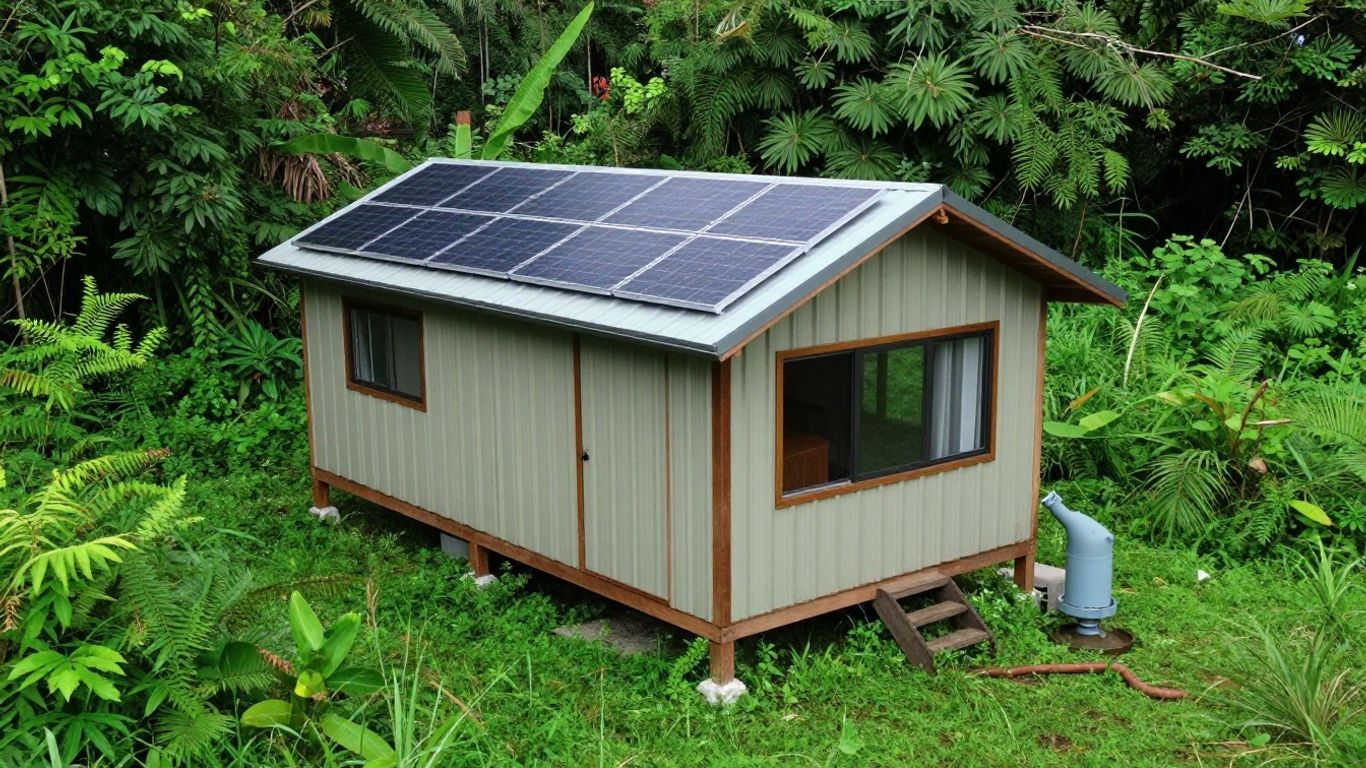
Connecting your water supply to your power system is a smart move, especially if you’re using solar. Solar-powered water pumps are a game-changer for off-grid living. They take the water from your storage tank, whether it’s from rainwater harvesting or another source, and push it through your filtration system and out to your faucets and appliances. You don’t need anything too powerful for a tiny home; a pump that moves around 5.5 gallons per minute is usually plenty to run a couple of things at once. This setup means your water system works hand-in-hand with your solar panels, making the most of that free energy from the sun. It’s a really efficient way to manage your water needs without relying on external power sources.
Synergies Between Energy and Water Conservation
When you’re living tiny and off-grid, every bit of energy and water saved really adds up. Think about it: using an energy-efficient pump means less power drawn from your batteries. Similarly, a well-designed rainwater harvesting system reduces the demand on your power system for pumping water. It’s all connected. For instance, using a composting toilet drastically cuts down on water usage compared to a traditional flush toilet, which in turn means less water to pump and filter, saving energy. Even simple things, like taking shorter showers or using low-flow fixtures, directly impact your energy consumption because you’re heating and pumping less water. The more you conserve water, the less energy you need to manage it.
System Maintenance for Longevity
Keeping your integrated power and water systems running smoothly requires a bit of regular attention. It’s not complicated, but it’s important. Here’s a quick rundown:
- Solar Panels: Give them a wipe-down every few months to clear off dust and debris. This keeps them working at their best.
- Water Filters: Check and replace your water filters according to the manufacturer’s recommendations. This is key for safe drinking water.
- Pumps and Tanks: Inspect your water pump for any leaks or strange noises. Also, periodically clean out your water storage tank to prevent sediment buildup.
- Battery Bank: Keep an eye on your battery levels and connections. Proper maintenance here means your power system lasts longer.
Taking care of these systems means they’ll be there for you when you need them. It’s about proactive care, not waiting for something to break. A little effort now saves a lot of headaches later, ensuring your tiny home remains a comfortable and independent place to live.
Integrating these systems smartly means you can achieve a higher level of self-sufficiency. It’s about making sure your power generation directly supports your water needs, and your conservation efforts reduce the strain on both. This kind of thoughtful design is what truly makes off-grid living a sustainable reality, allowing you to live independently and in tune with your environment. You can find more information on sustainable tiny home living in 2026 off-grid tiny home.
Living Your Tiny Life, Powered and Plumbed
So, you’ve looked into how to get power and water for your tiny home, and maybe it seemed a bit much at first. But really, it’s all about finding what works for your spot and your lifestyle. Whether you’re collecting rain, harnessing the sun, or managing waste with a composting toilet, these systems are totally doable. It just takes a little planning and maybe a willingness to learn something new. The freedom of living off-grid, or even just more sustainably, is pretty great. You’ve got this.
Frequently Asked Questions
What are the main ways tiny homes get electricity?
Tiny homes can get electricity in a few ways. Many plug into a regular outlet or use an RV hookup for power when they’re parked. For homes not connected to the main power lines, solar panels are a popular choice, often paired with batteries to store energy. Sometimes, people use generators or wind turbines as backup power sources.
How much electricity does a tiny house typically use?
A typical tiny house often uses between 3 to 7 kilowatt-hours (kWh) of energy each day. This can change a lot depending on how you live. Using electric cooking, air conditioning, or electric heating can increase usage. Living more simply and using things like propane for cooking can keep energy use lower.
What’s involved in wiring a tiny house for solar power?
Wiring a tiny house for solar usually involves four main parts: solar panels to catch sunlight, a charge controller to manage the power, a battery bank to store electricity, and an inverter to change the stored power into the type of electricity most homes use. The panels can go on the roof or ground, and the batteries and inverter can be inside or outside the house.
How do tiny homes get their water supply?
Getting clean water is super important for tiny homes, especially those off the main water lines. Rainwater harvesting is a common method, where you collect rain from your roof into storage tanks. In some areas, people might use water from lakes, rivers, or underground sources. After collecting water, it’s important to store it safely and filter it to make sure it’s clean to drink.
What are composting toilets and greywater systems?
Composting toilets are an eco-friendly way to handle waste in tiny houses. They break down waste into compost, which saves water and is better for the environment. Greywater systems recycle water from sinks and showers, letting you reuse it for things like watering plants. Both help reduce water use and waste.
What are the most important things to consider for off-grid systems in a tiny house?
When living off the grid in a tiny house, you need to think about how you’ll get electricity, water, and handle waste. Solar panels are a common way to get power, and rainwater harvesting is a good way to get water. Composting toilets and greywater systems help manage waste. It’s also important to use energy-efficient appliances and plan your system carefully to make sure it meets your needs.
Explore more tiny home living, design, downsizing, building, and lifestyle resources.
- Off Grid Living in California: Your Guide to Sustainable Independence
- How Do You Get Water and Electricity in a Tiny House? Essential Guide to Off-Grid Utilities
- Exploring Off Grid Communities in Washington State: Where to Find Sustainable Living Options in 2026
- Tiny Homes for Rent in Wyoming: Wild West Getaways to Book
- Tiny Homes for Rent in Washington: Forest Escapes & Cozy Stays
- Tiny Homes for Rent in Utah: Red Rock Retreats to Book